How to use these worksheets
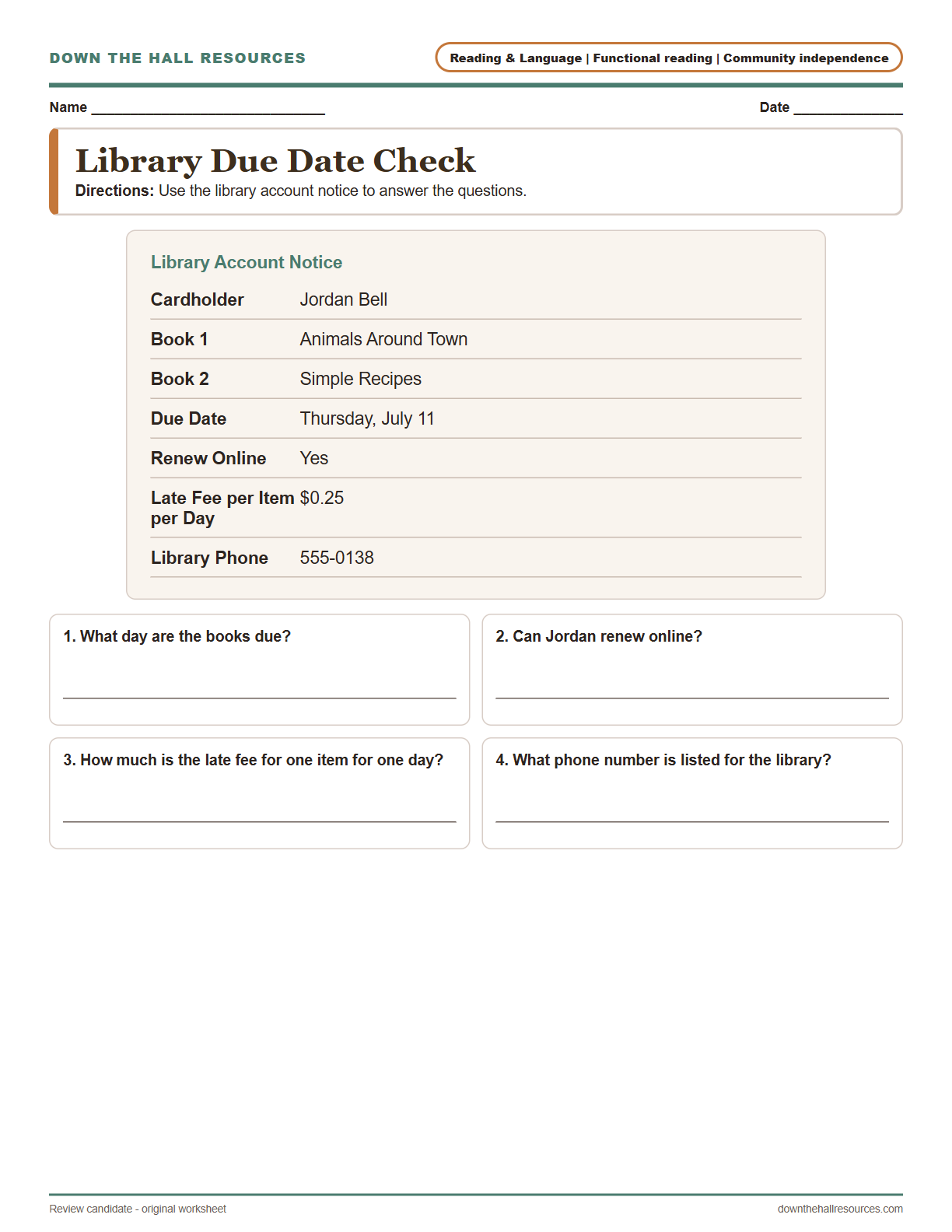
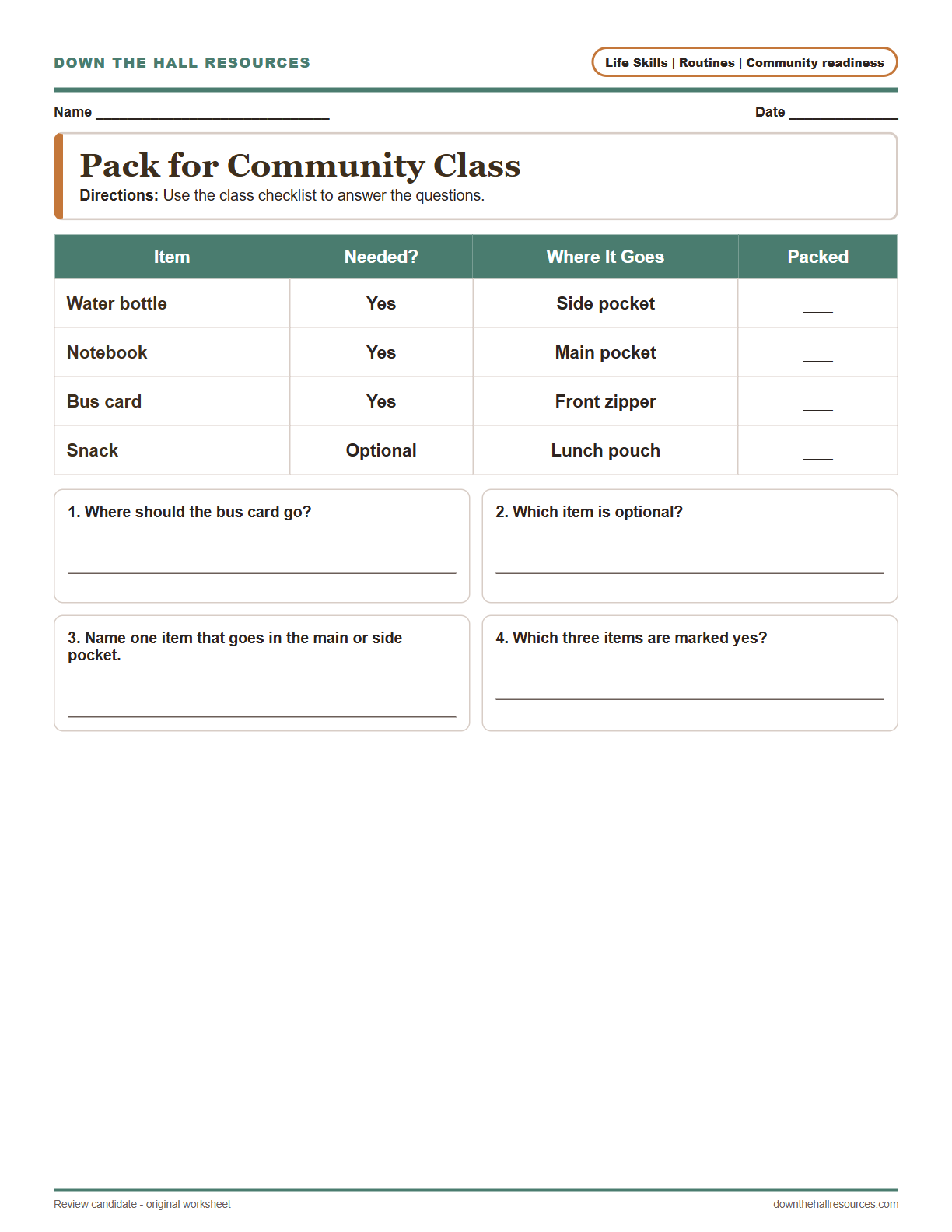
Start with one worksheet that matches the learner's current routine or goal. Read the directions together, model one example, and allow supports such as verbal choices, pointing, writing assistance, real objects, or fewer questions at one time.
- Use the same worksheet more than once if repetition helps the skill stick.
- Connect the printed activity to real routines, places, objects, or conversations whenever possible.
- Adjust the support level instead of assuming the worksheet is too easy or too hard.
Teaching goals for this topic
These worksheets are meant to support practical instruction, not replace the judgment of the teacher, direct support professional, therapist, caregiver, or program staff member who knows the learner. The goal is to make the skill easier to introduce, repeat, and apply.
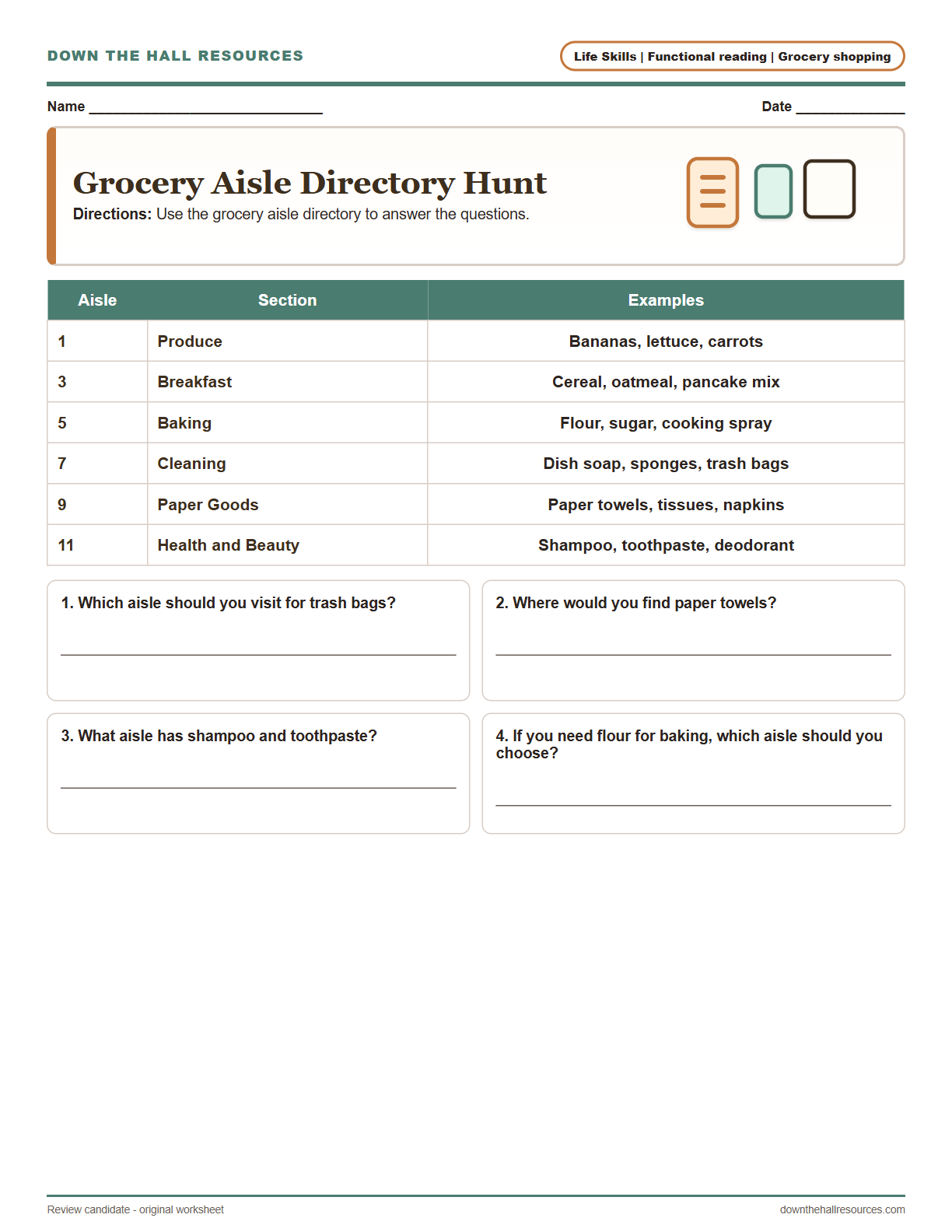
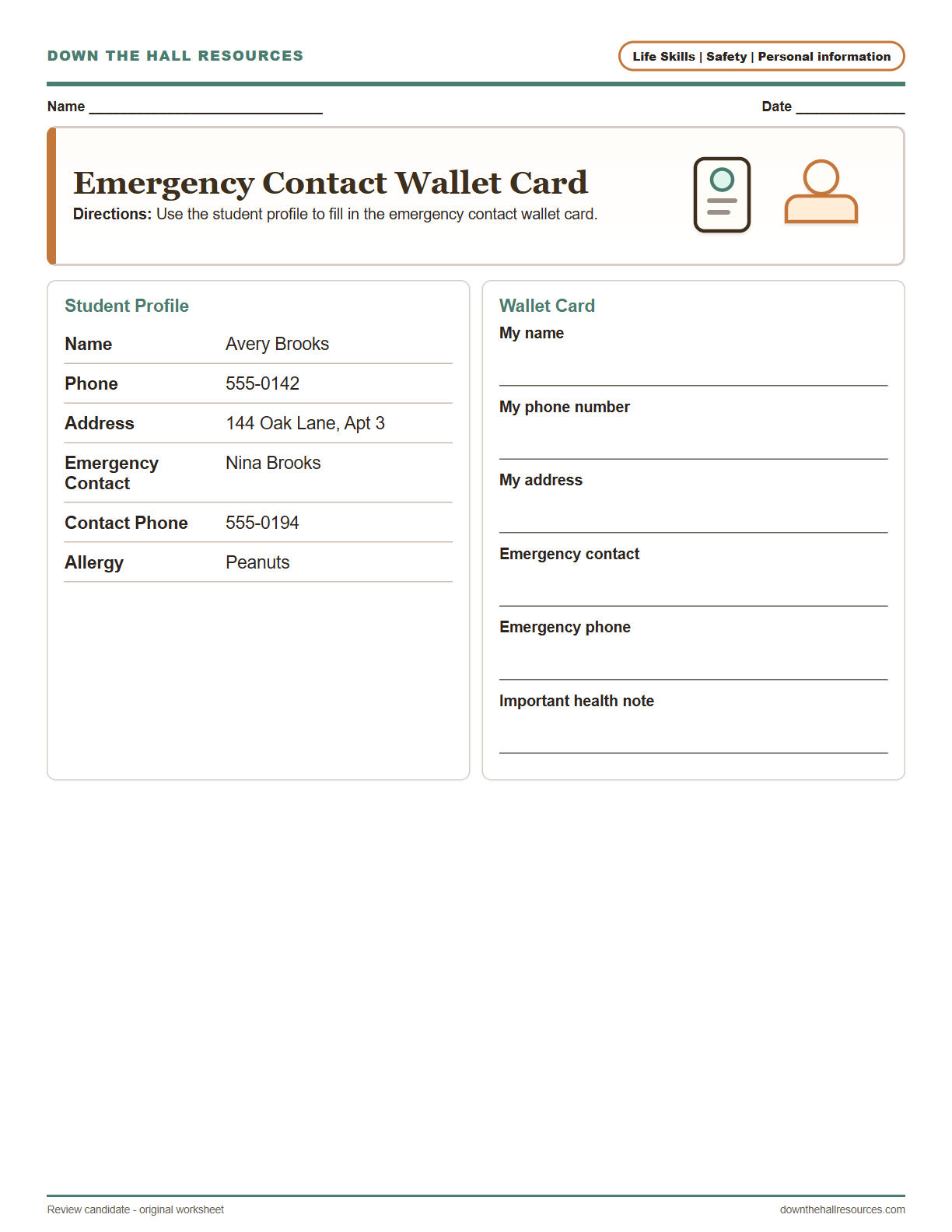
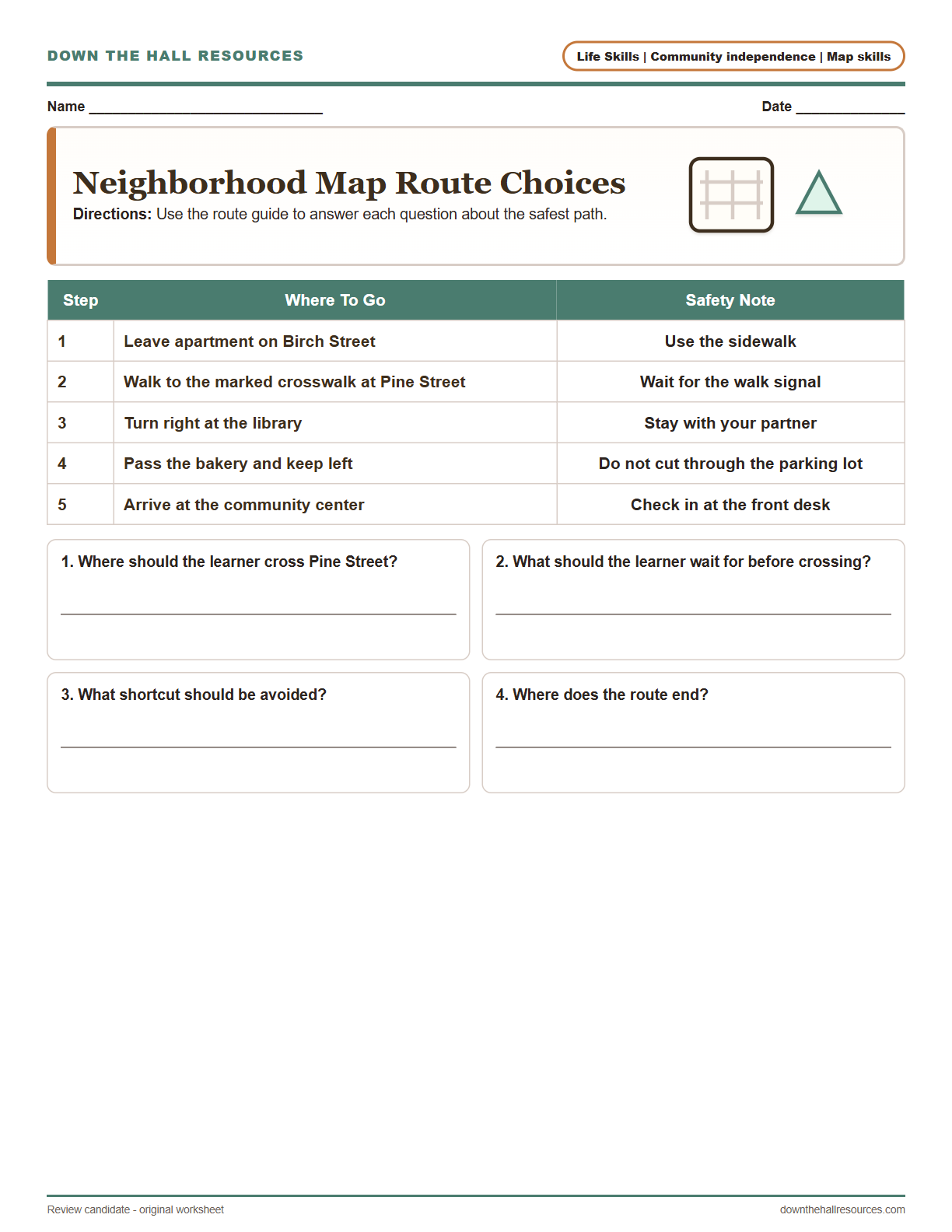
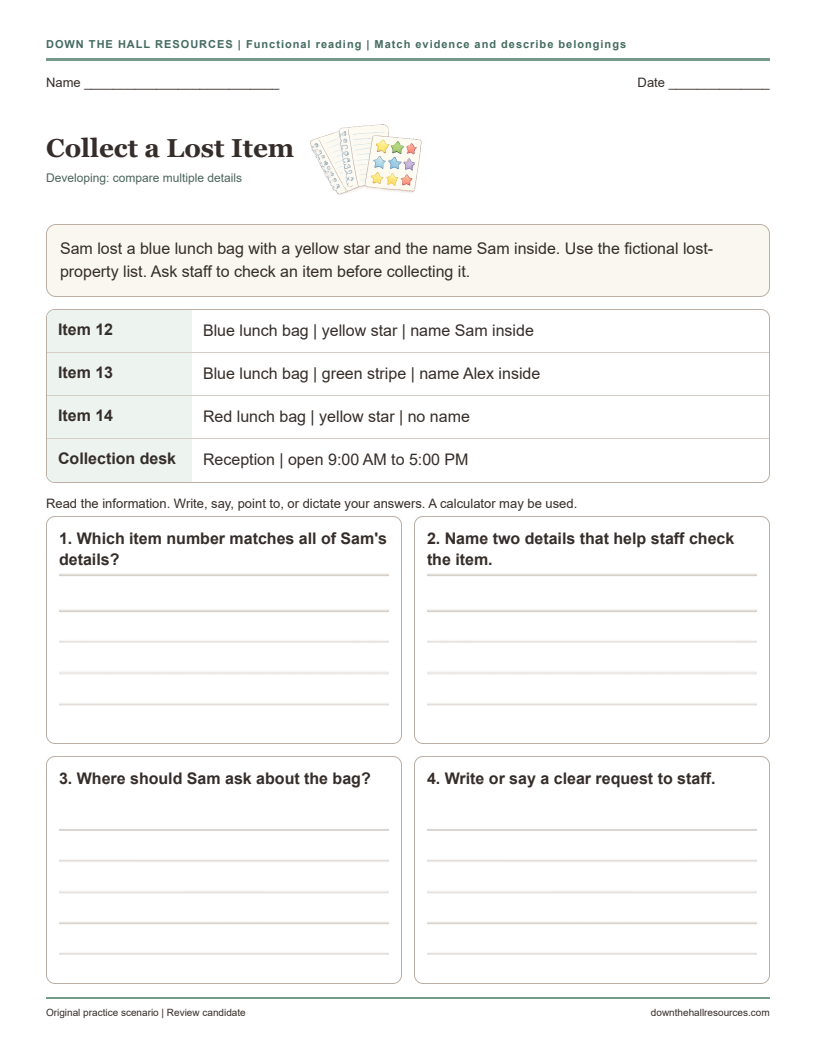
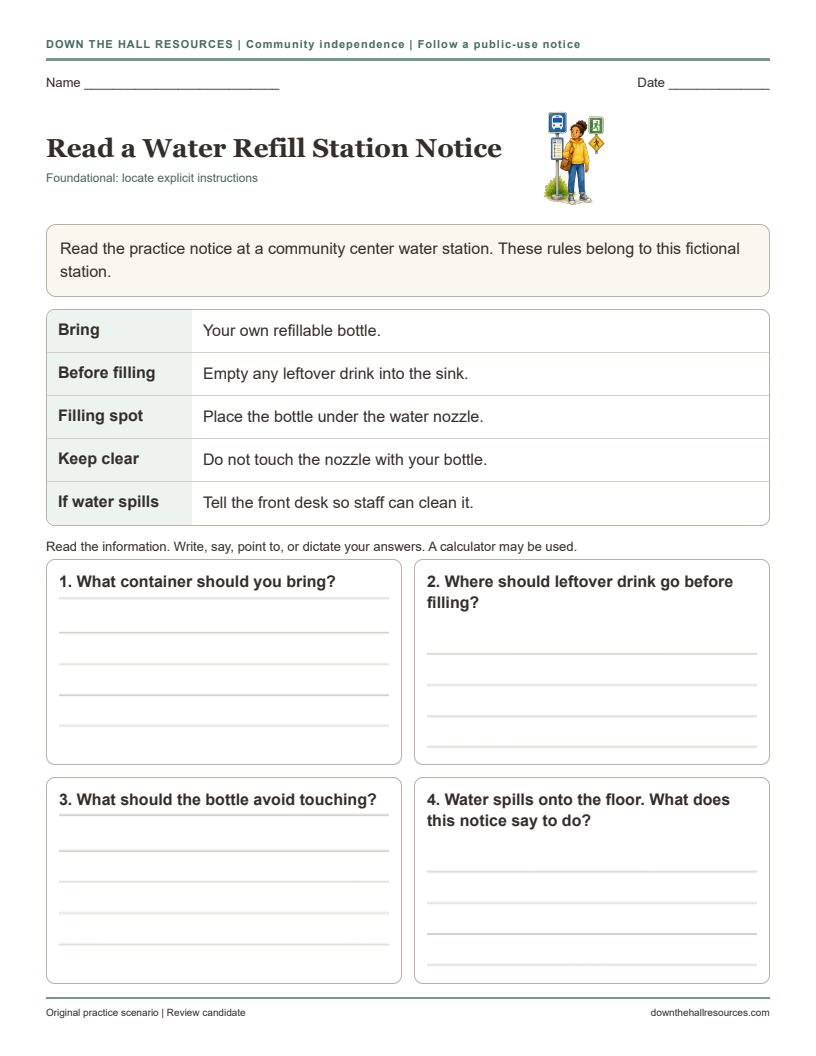
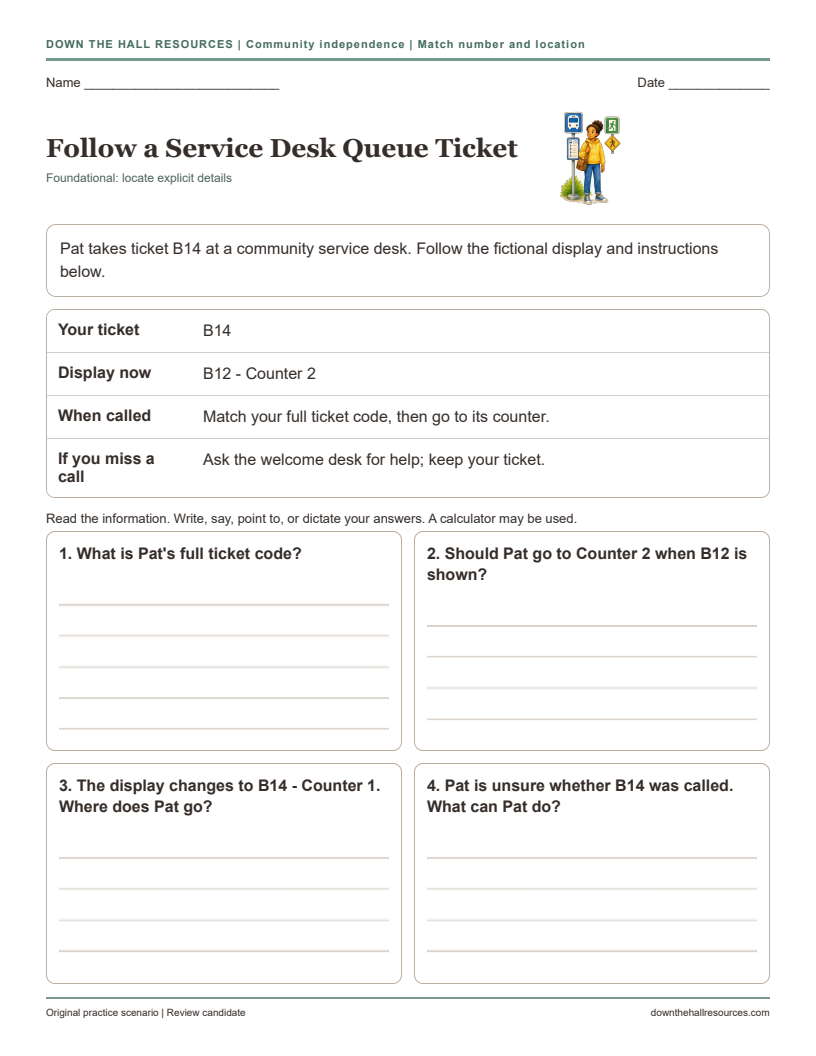
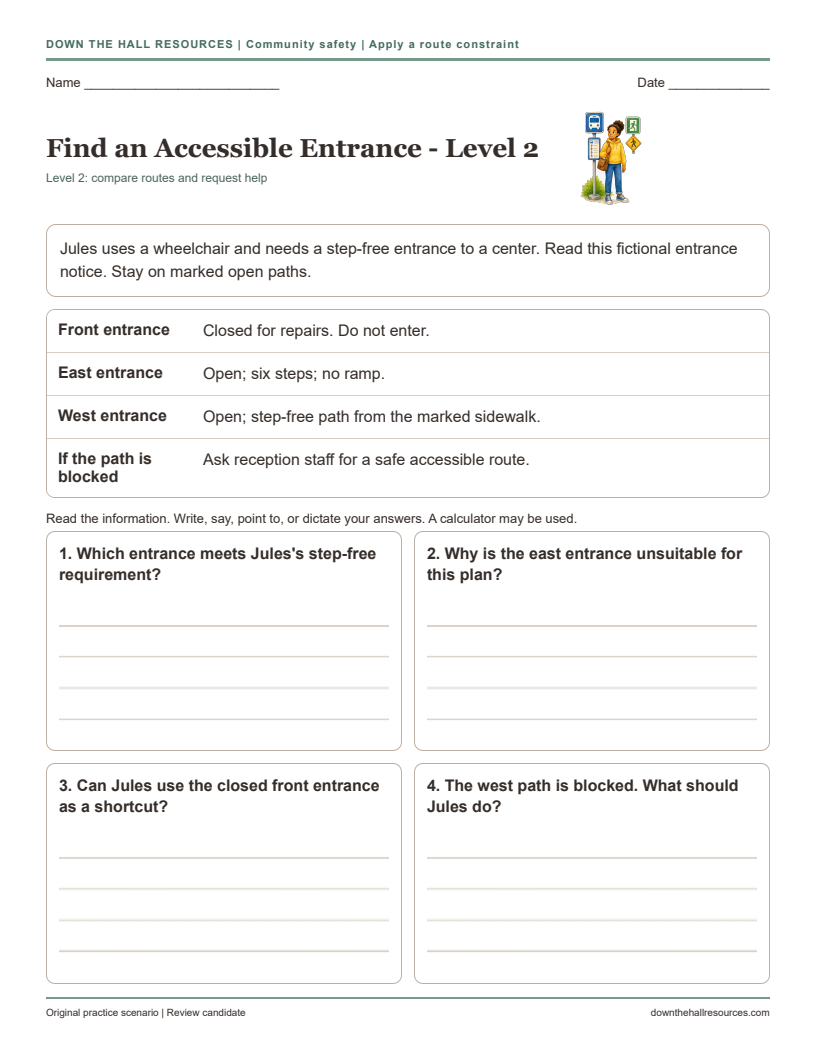
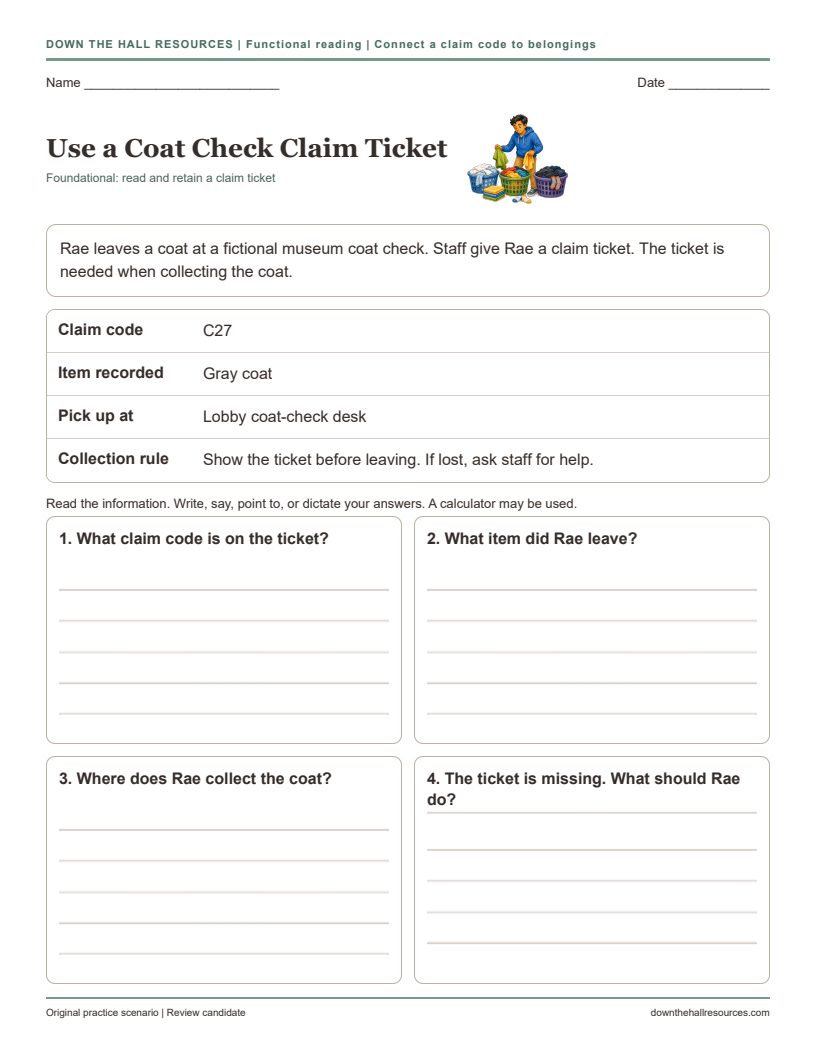
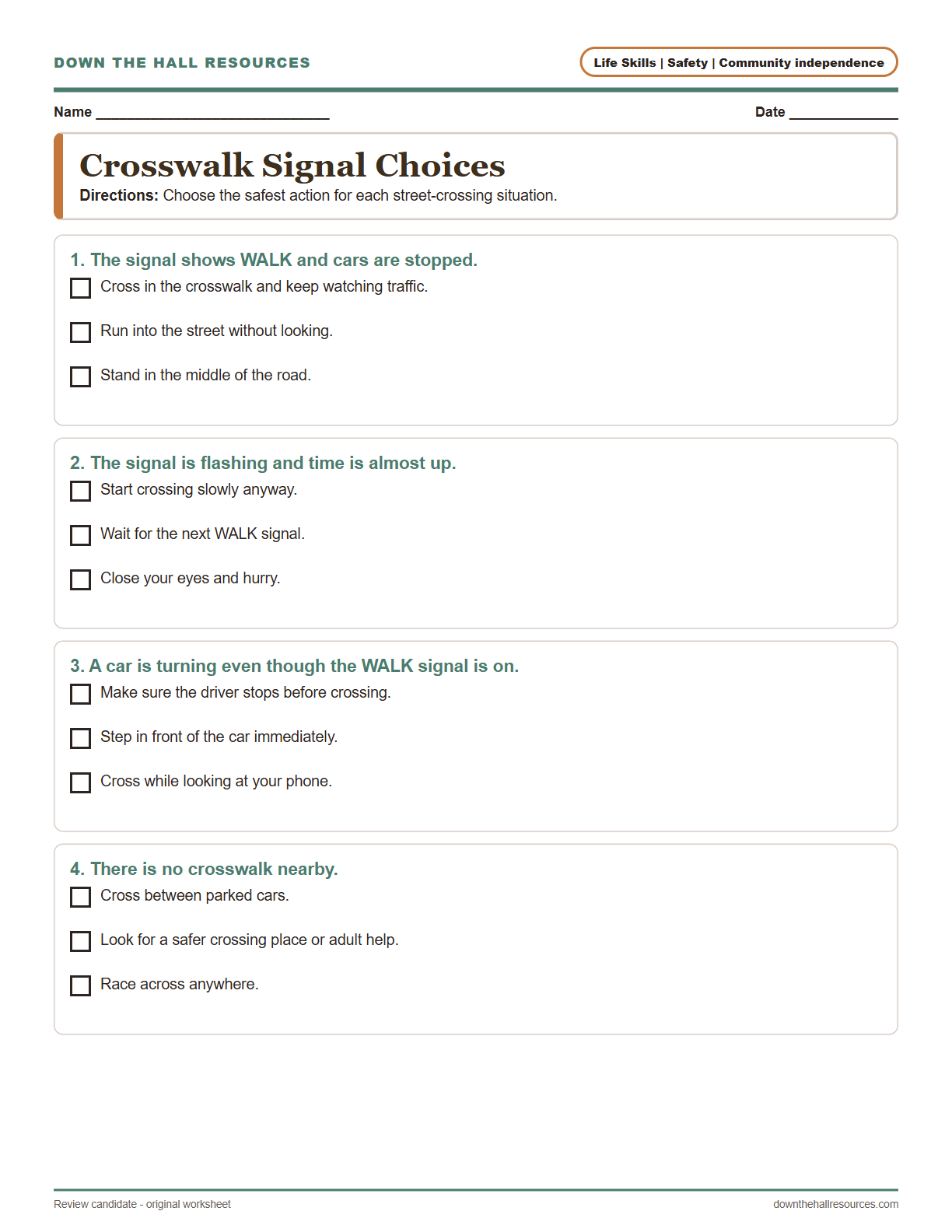
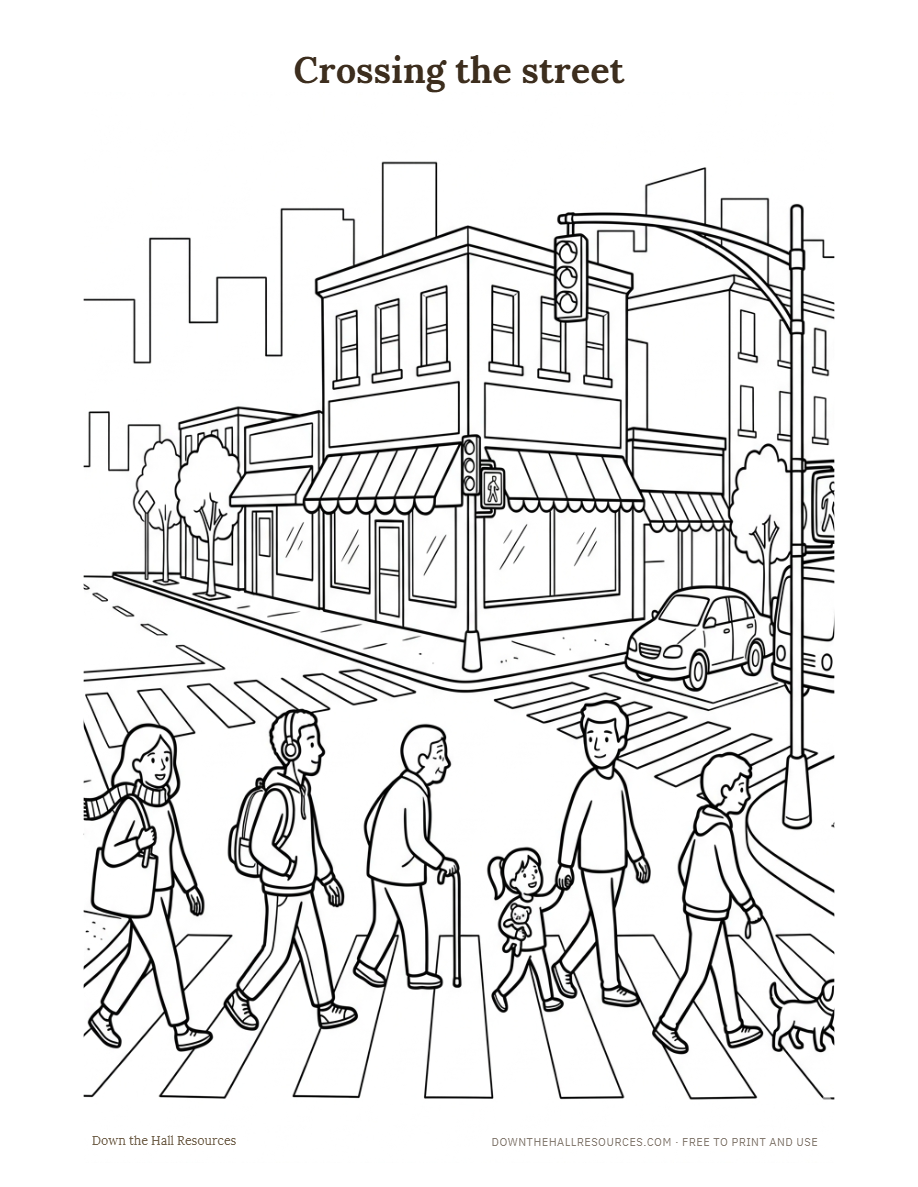
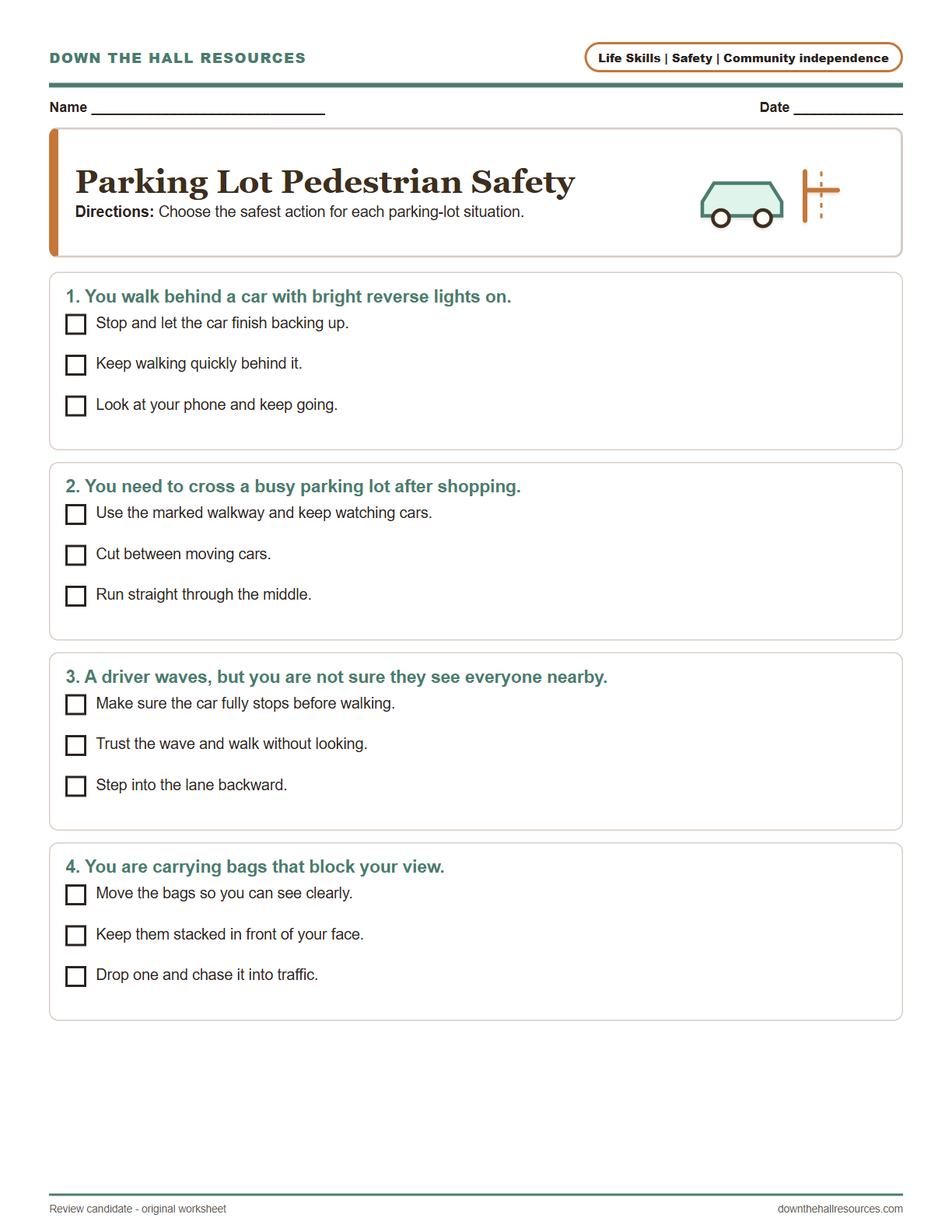
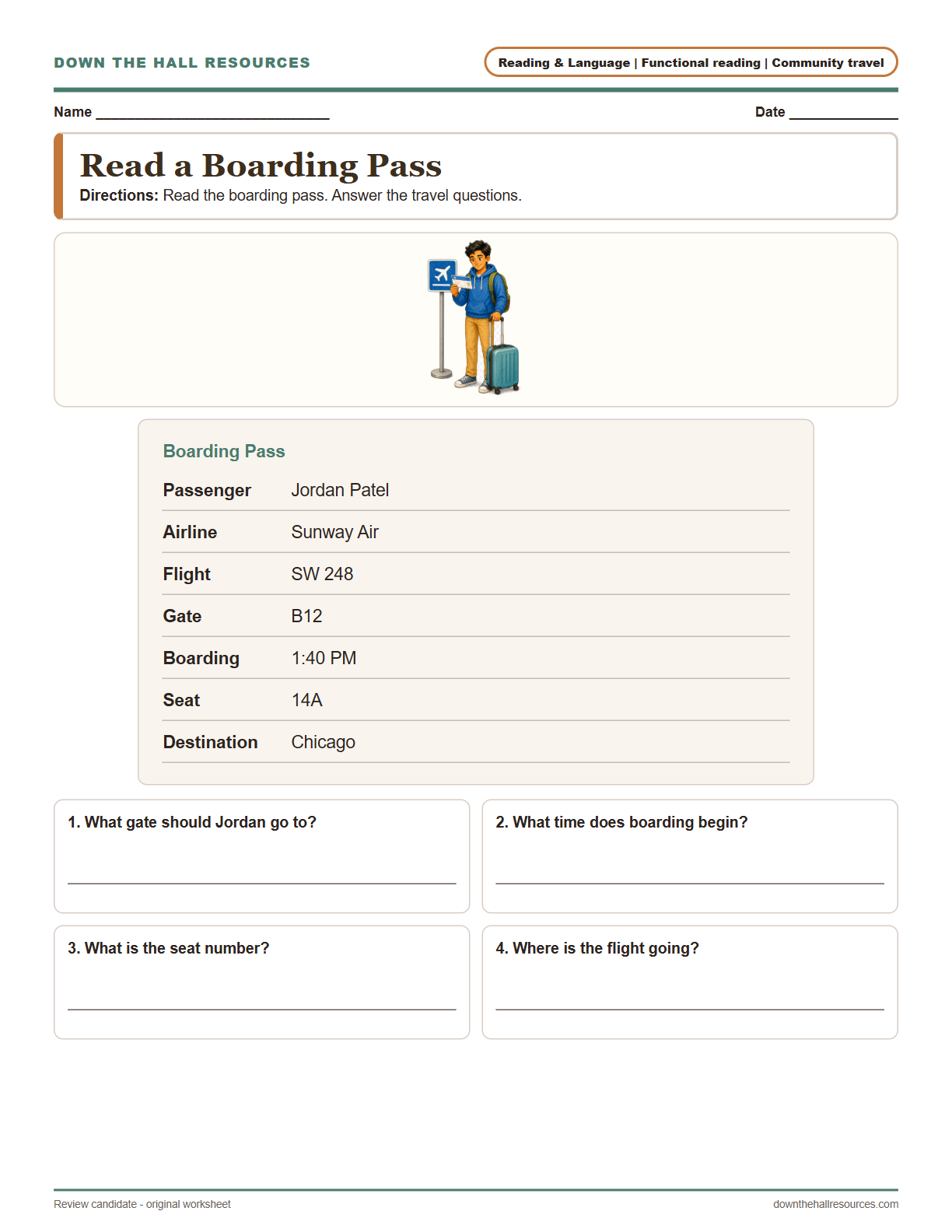
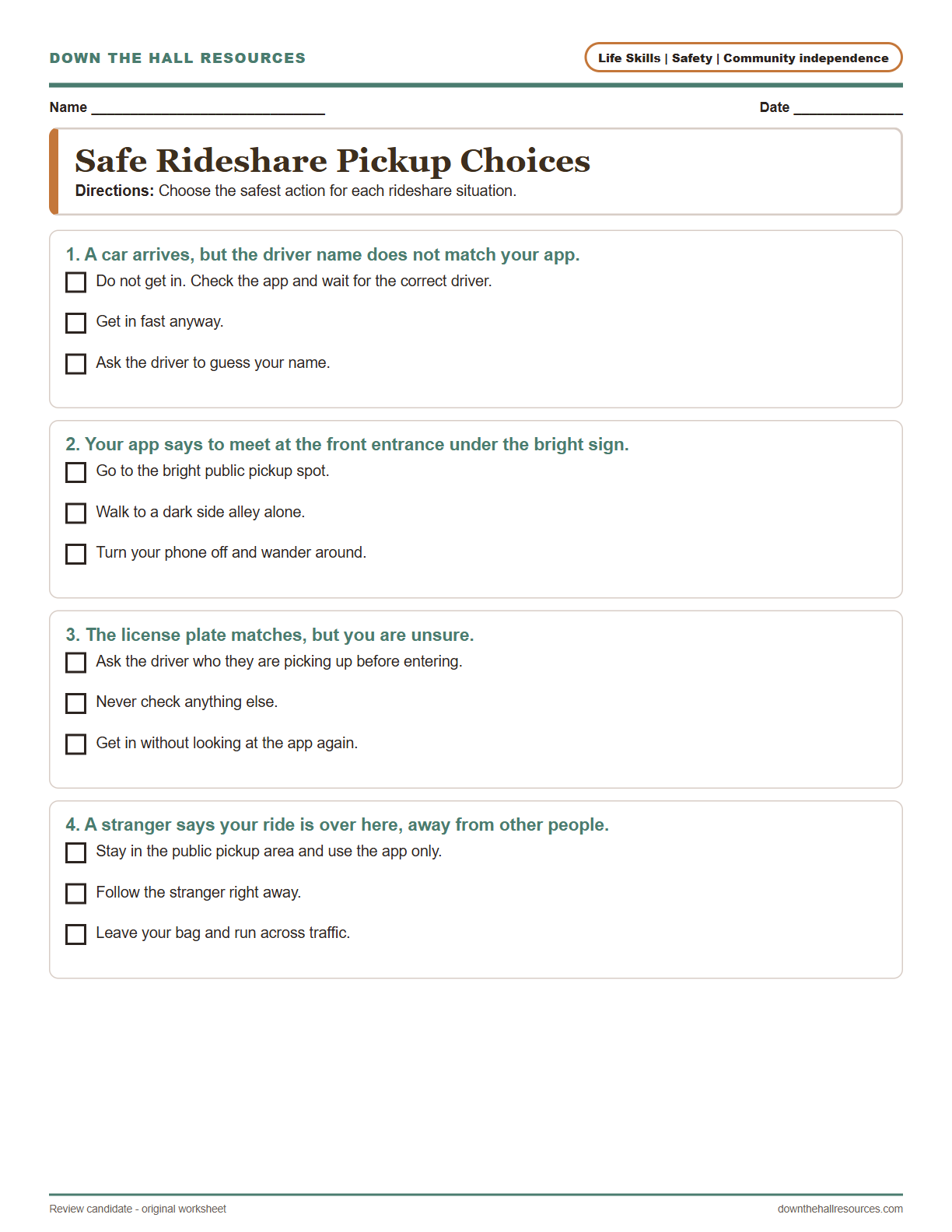
- Prepare learners for signs, crossings, errands, transportation, and safe information sharing outside the home.
- Connect worksheet practice to community outings and travel training.
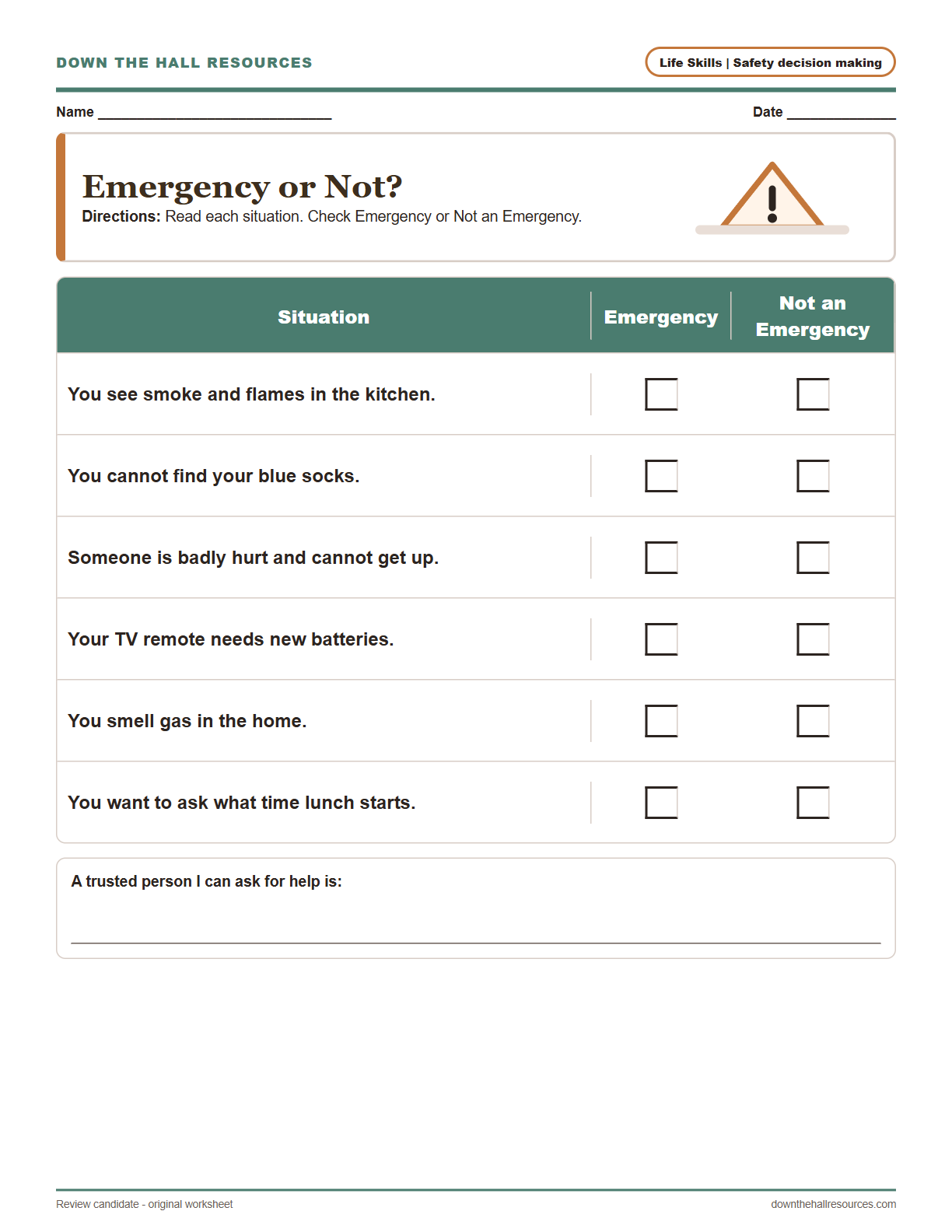
- Build decision-making skills for situations that can change quickly.
Simple lesson plan idea
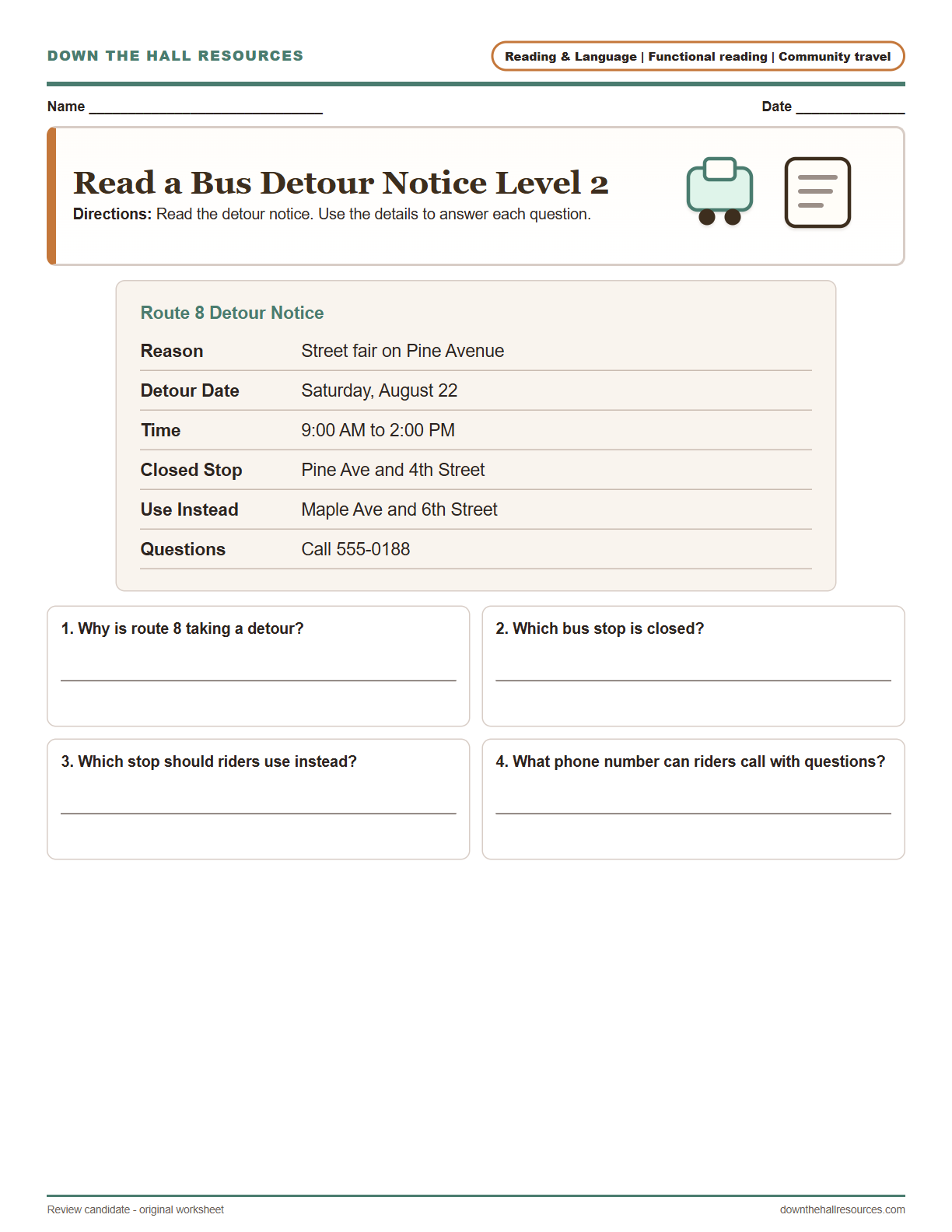
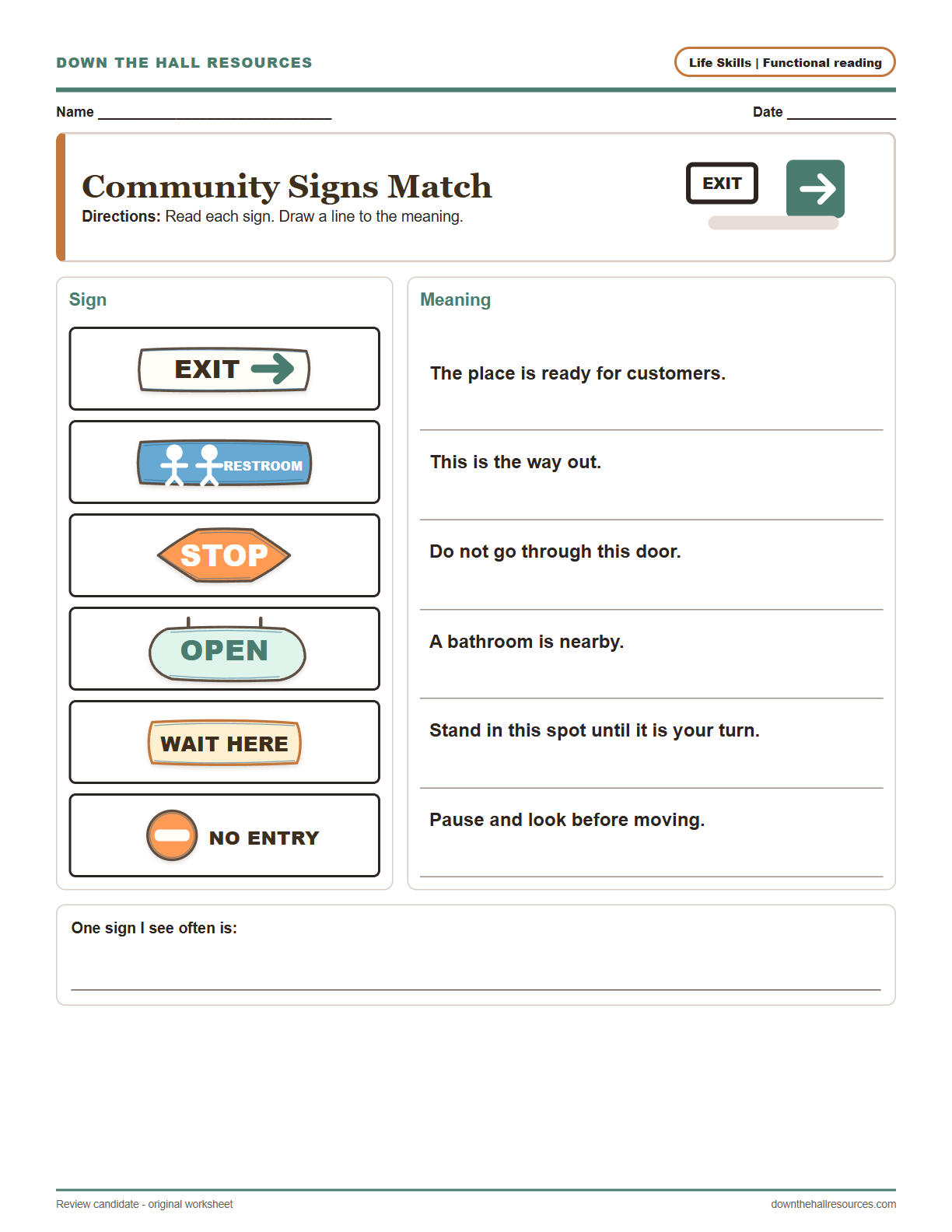
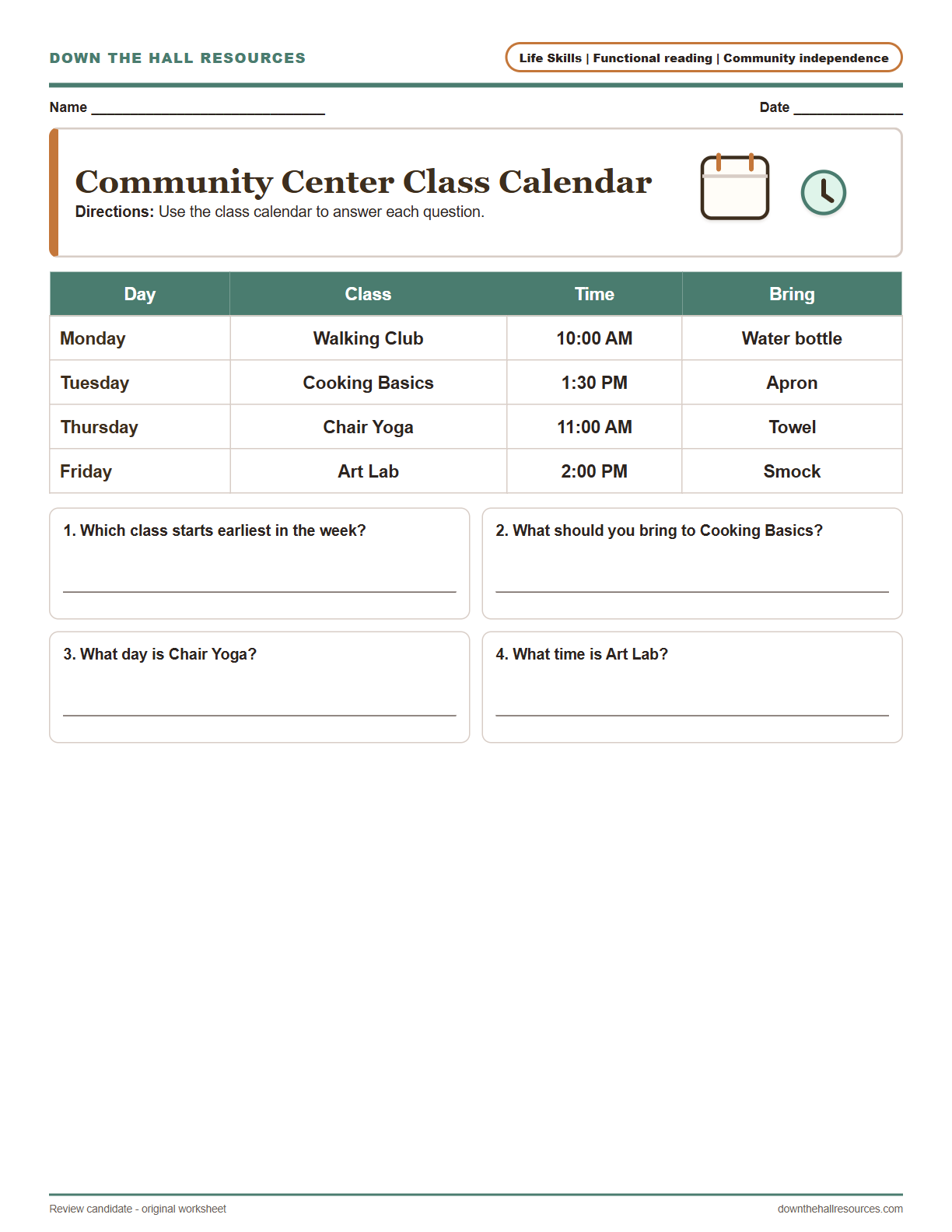
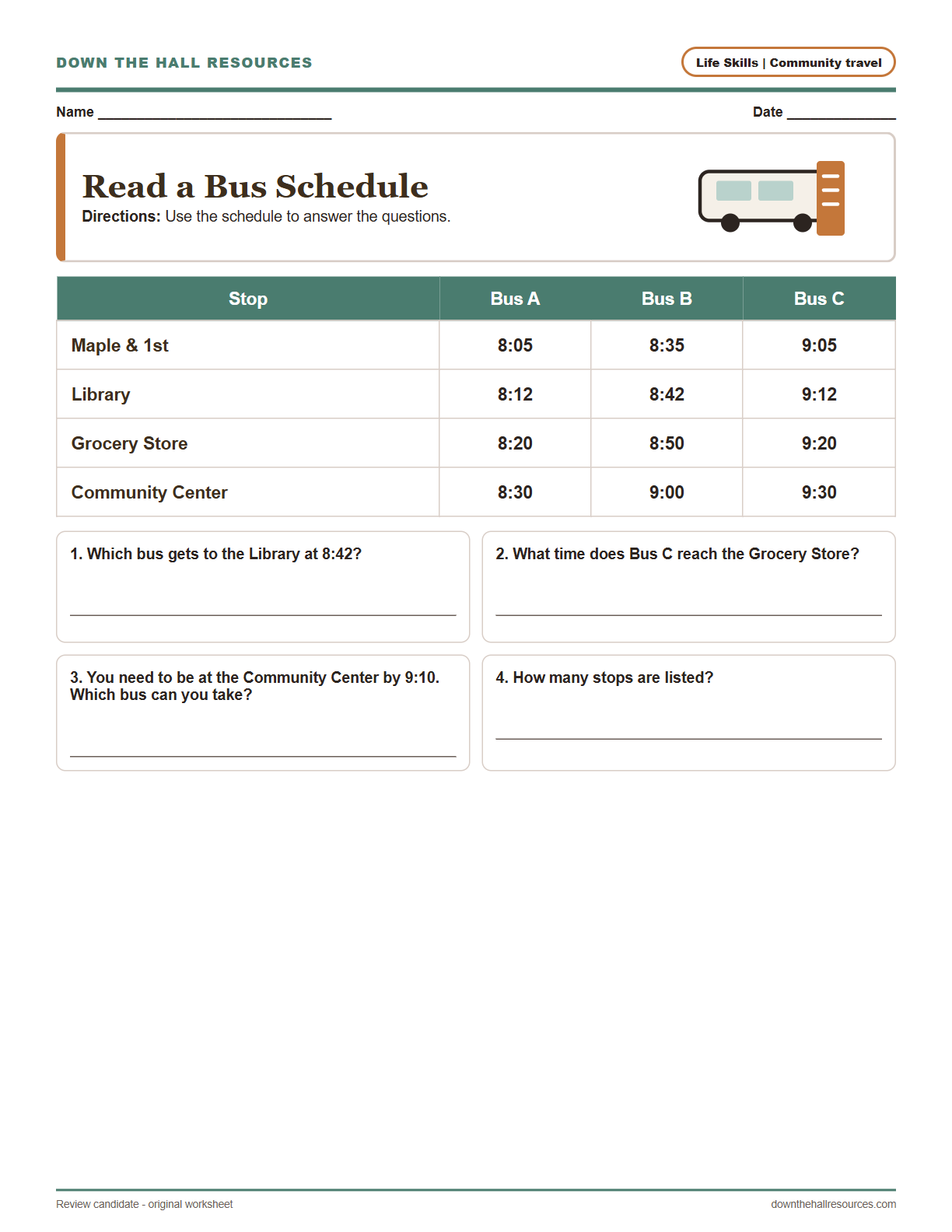
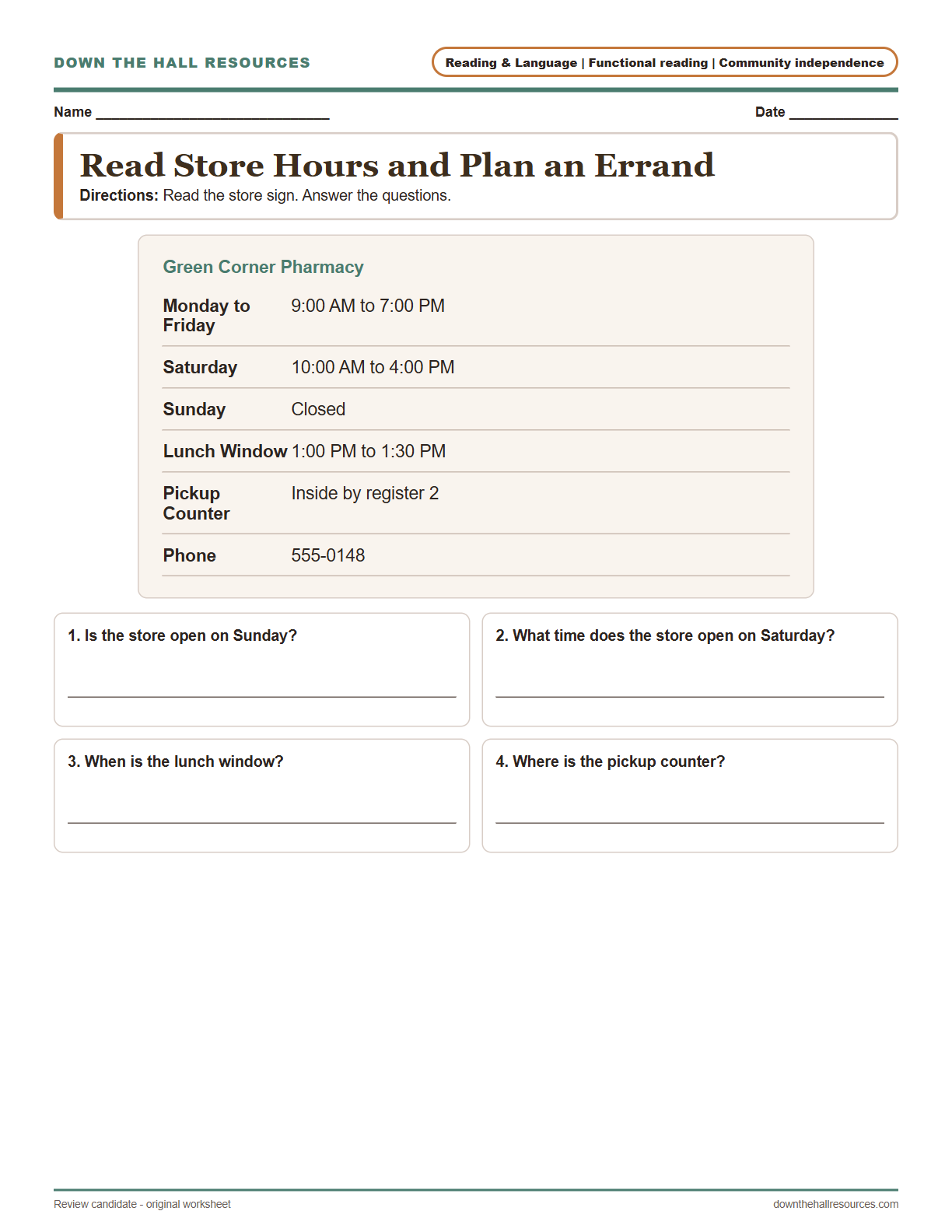
Preview the skill before a community outing, complete the worksheet together, and then look for the same idea in the real setting. For example, practice a signs worksheet before walking through a public building or review a bus schedule before planning a simple trip.
Ways to adapt the activity
For more support, use photos of familiar places and reduce choices. For more challenge, ask the learner to plan a short errand, identify possible problems, and name what they would do if plans changed.