Choose a real-life reading goal
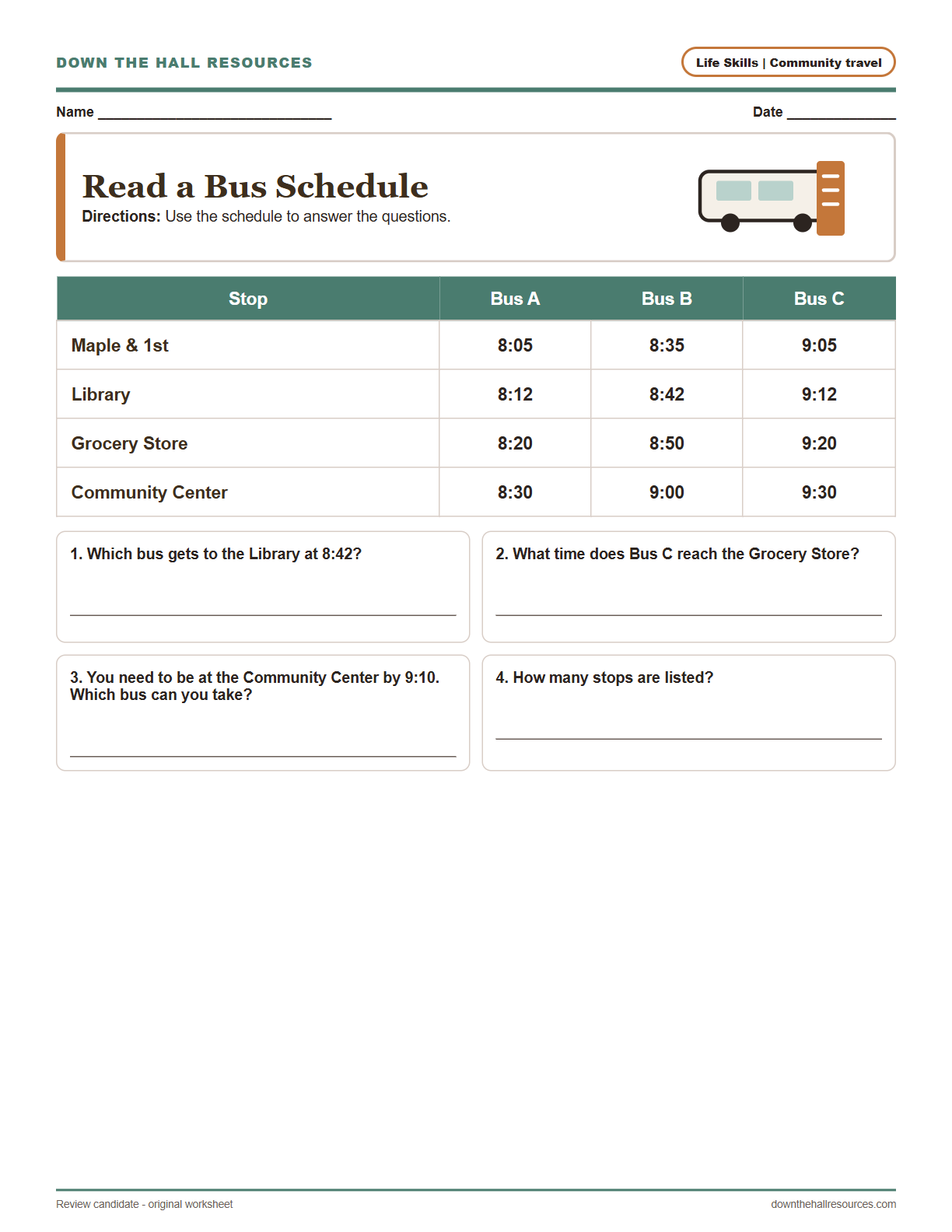
- Getting around: start with Read a Bus Schedule for transportation-related reading practice.
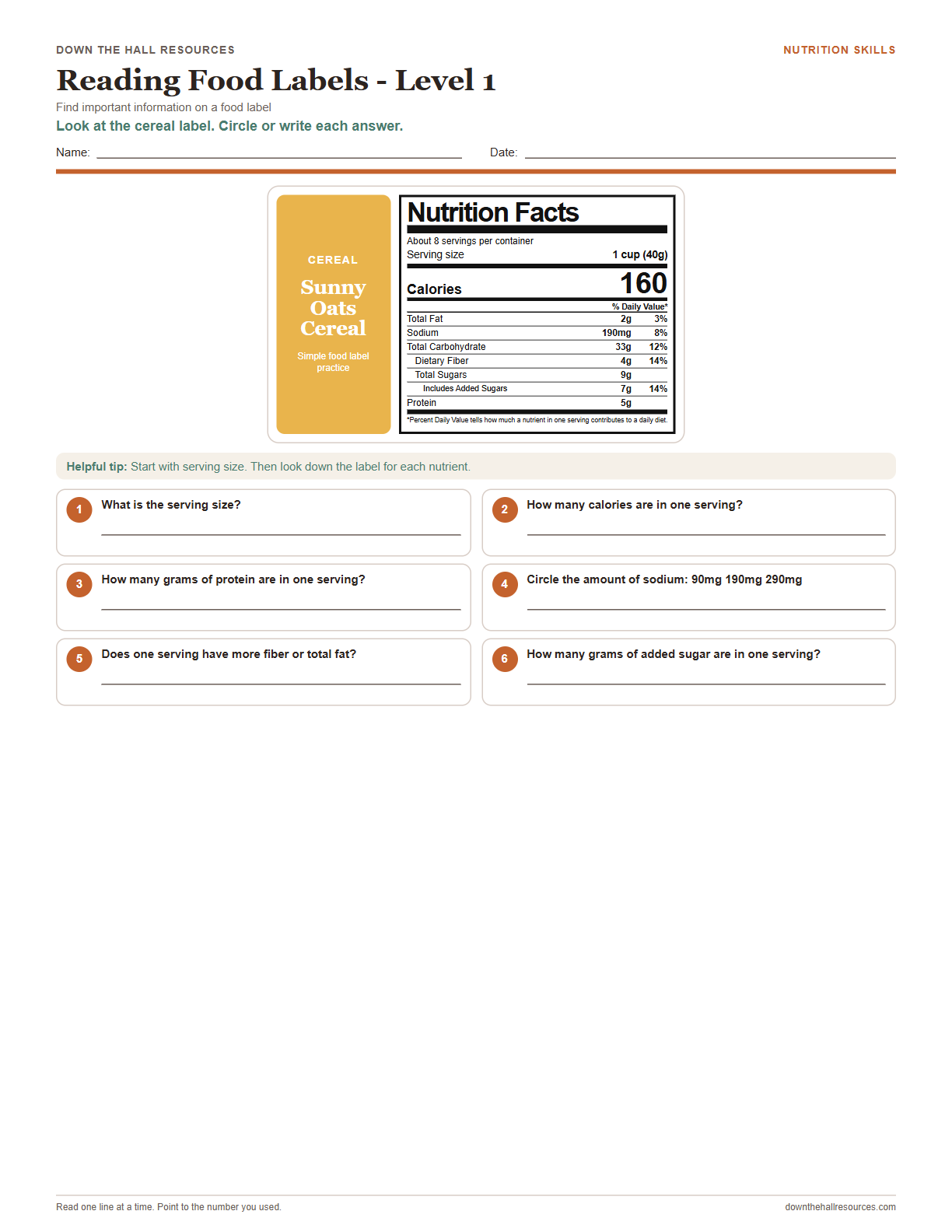
- Reading food packaging: use Reading Food Labels - Level 1 for beginner nutrition-label practice.
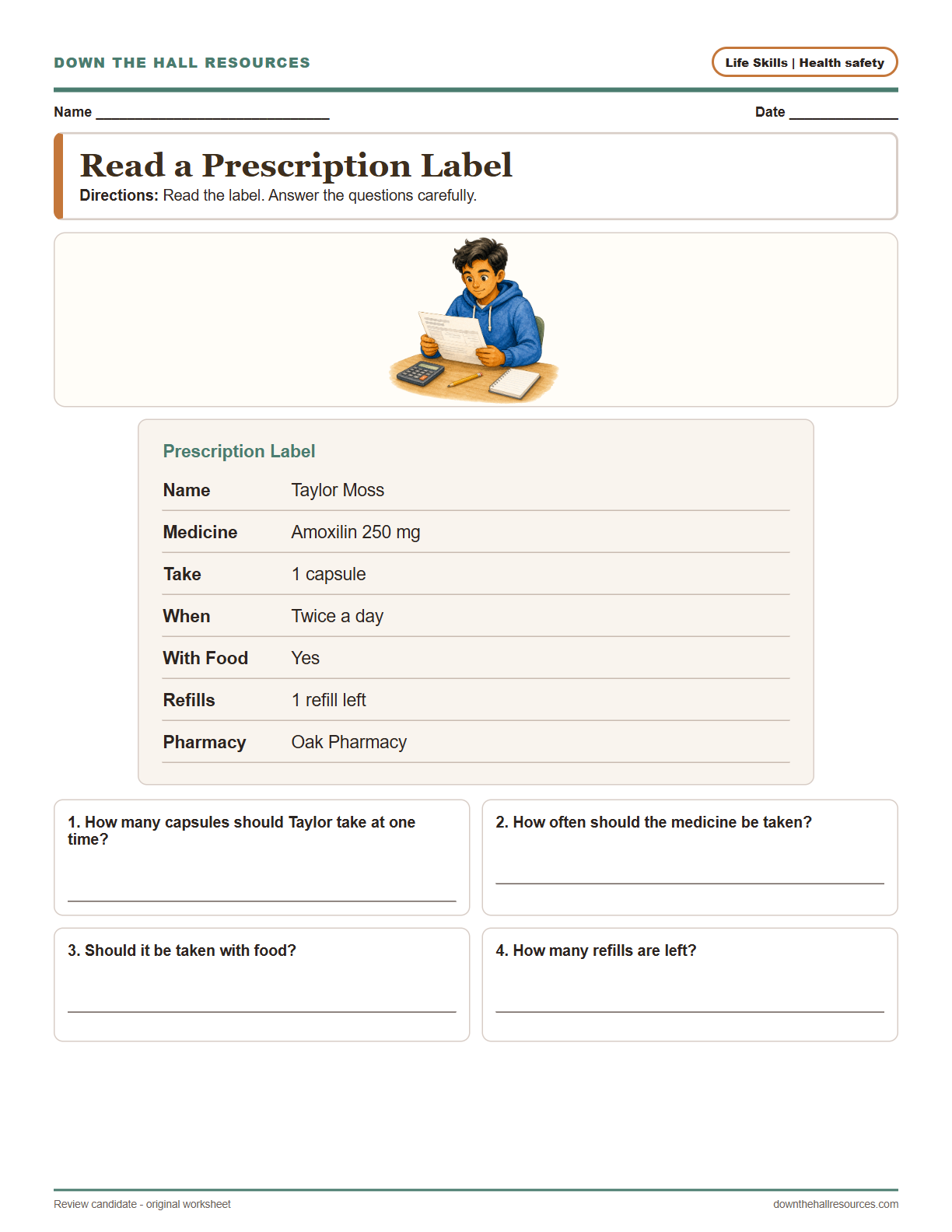
- Reading health information: preview Read a Prescription Label for a supported lesson on label information, not personal medication instructions.
Open a resource to see its preview and download options before printing. Choose a familiar context first, then adjust reading support to the learner rather than selecting by age alone.
How to use these worksheets
Start with one worksheet that matches the learner's current routine or goal. Read the directions together, model one example, and allow supports such as verbal choices, pointing, writing assistance, real objects, or fewer questions at one time.
- Use the same worksheet more than once if repetition helps the skill stick.
- Connect the printed activity to real routines, places, objects, or conversations whenever possible.
- Adjust the support level instead of assuming the worksheet is too easy or too hard.
Teaching goals for this topic
These worksheets are meant to support practical instruction, not replace the judgment of the teacher, direct support professional, therapist, caregiver, or program staff member who knows the learner. The goal is to make the skill easier to introduce, repeat, and apply.
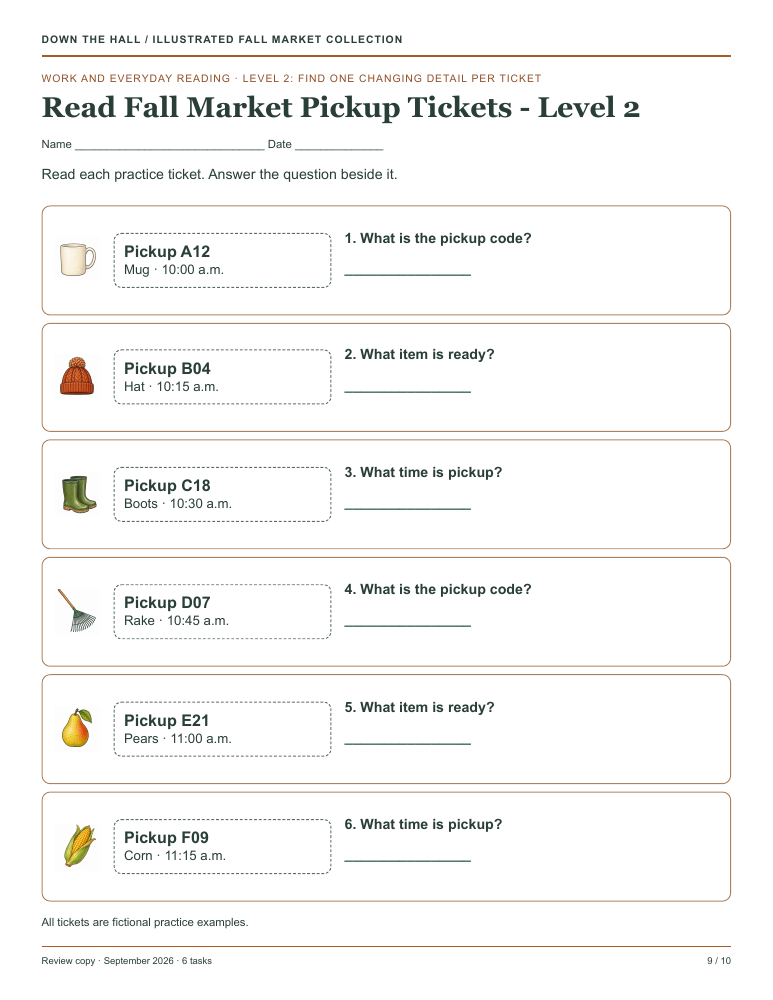
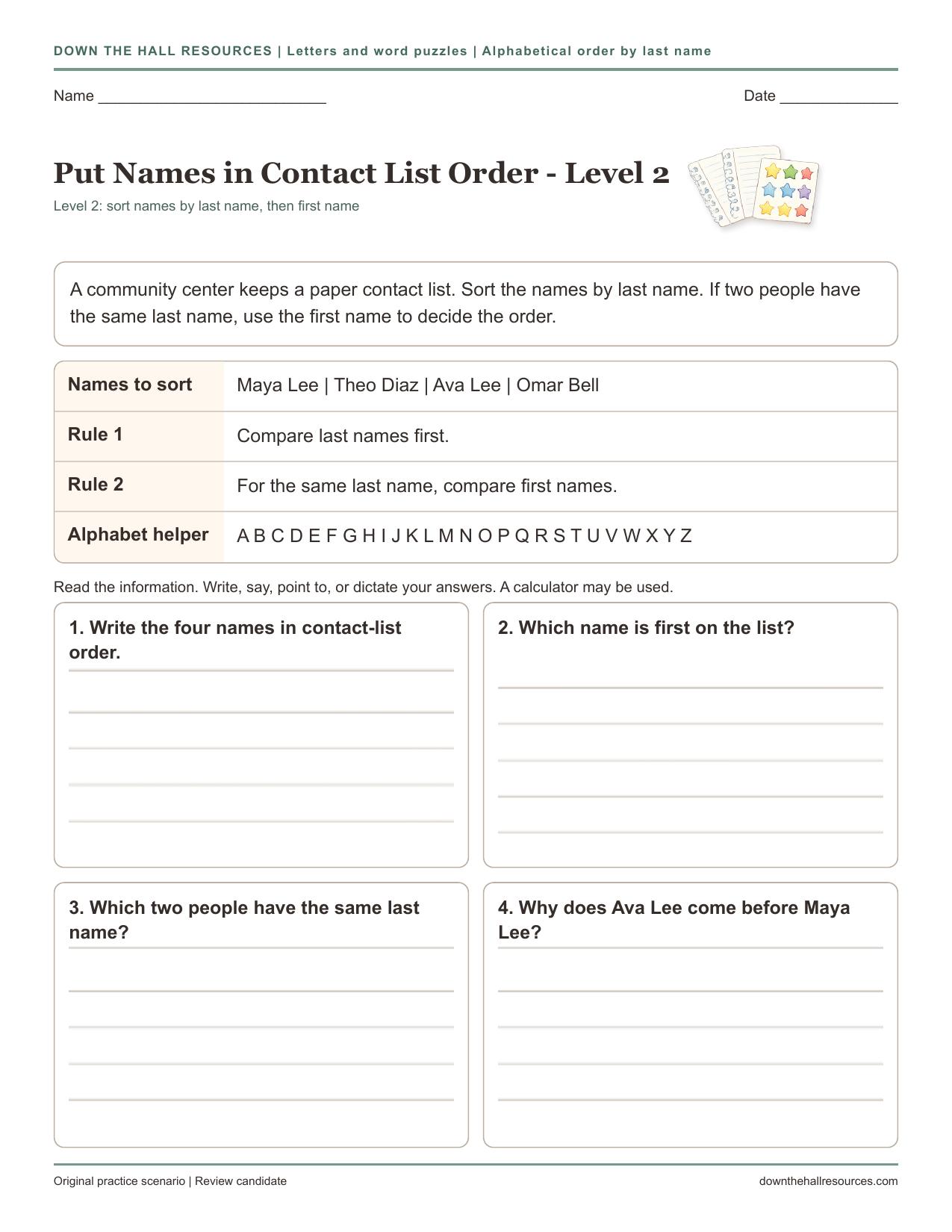
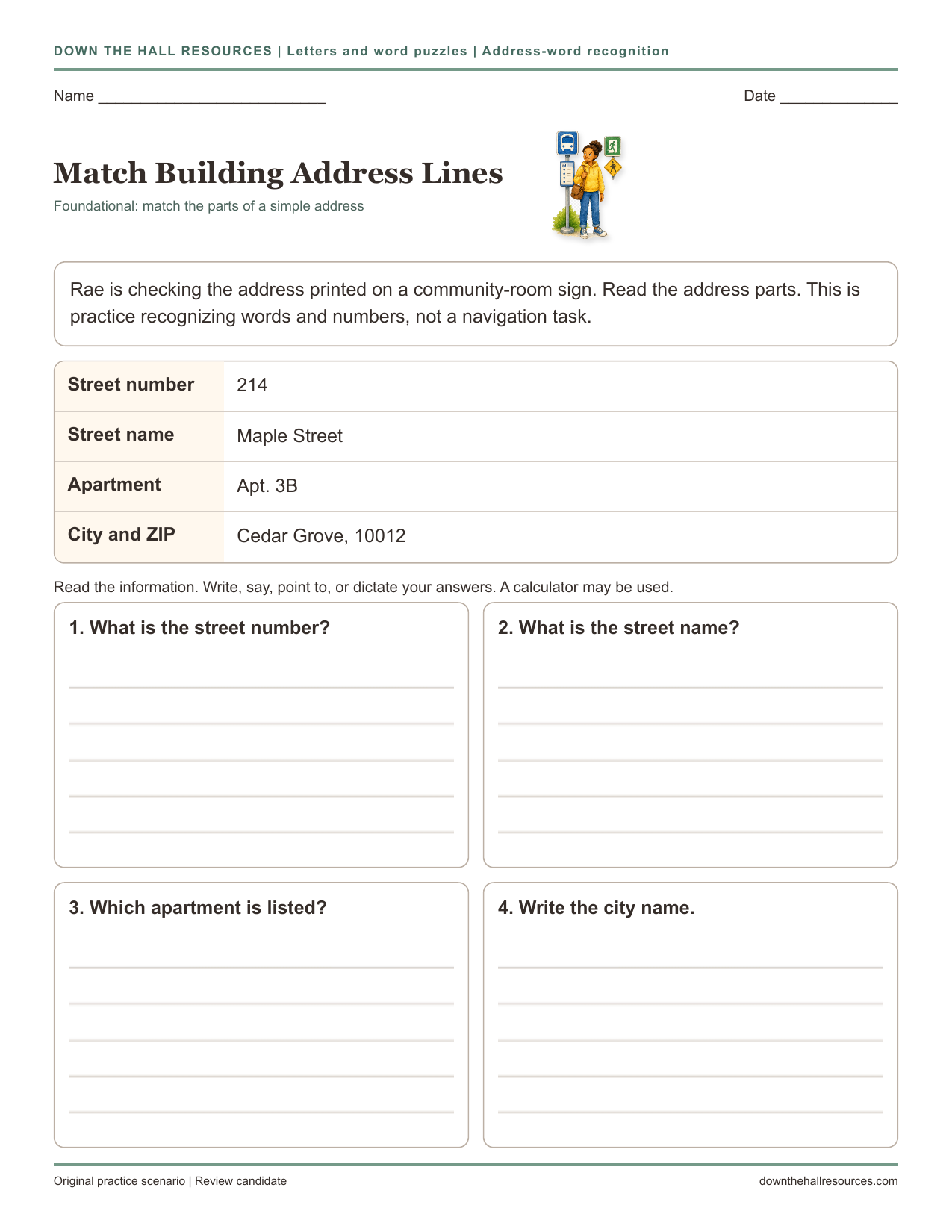
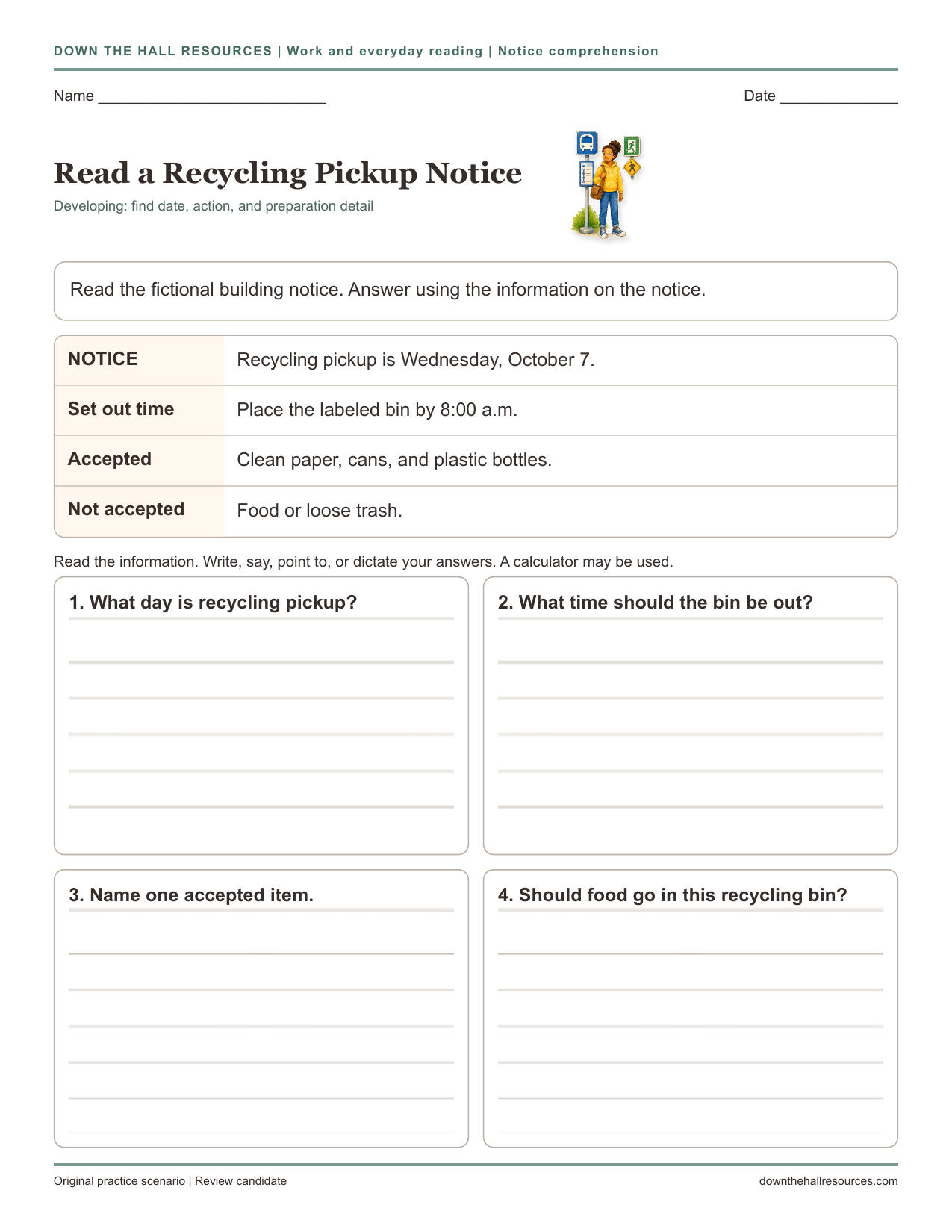
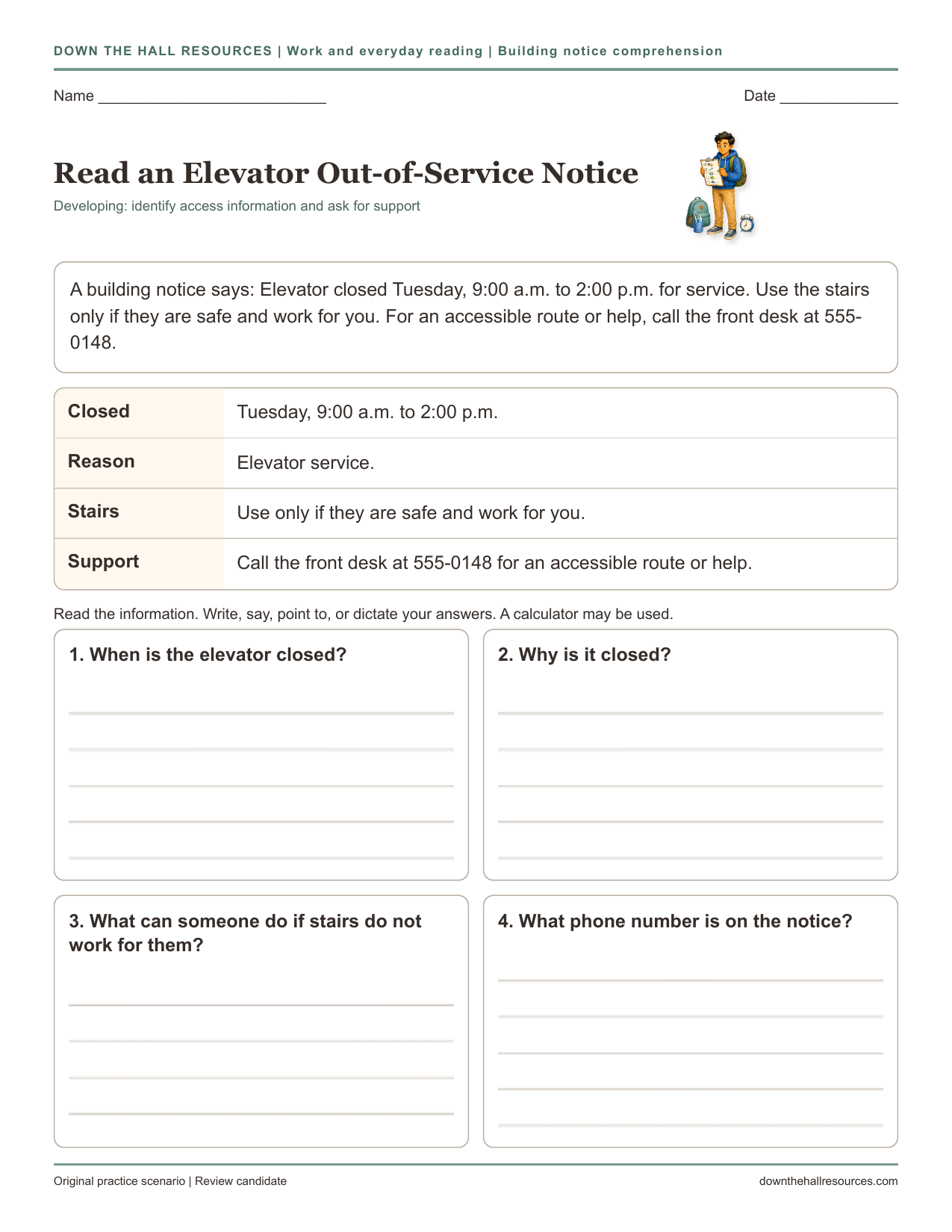
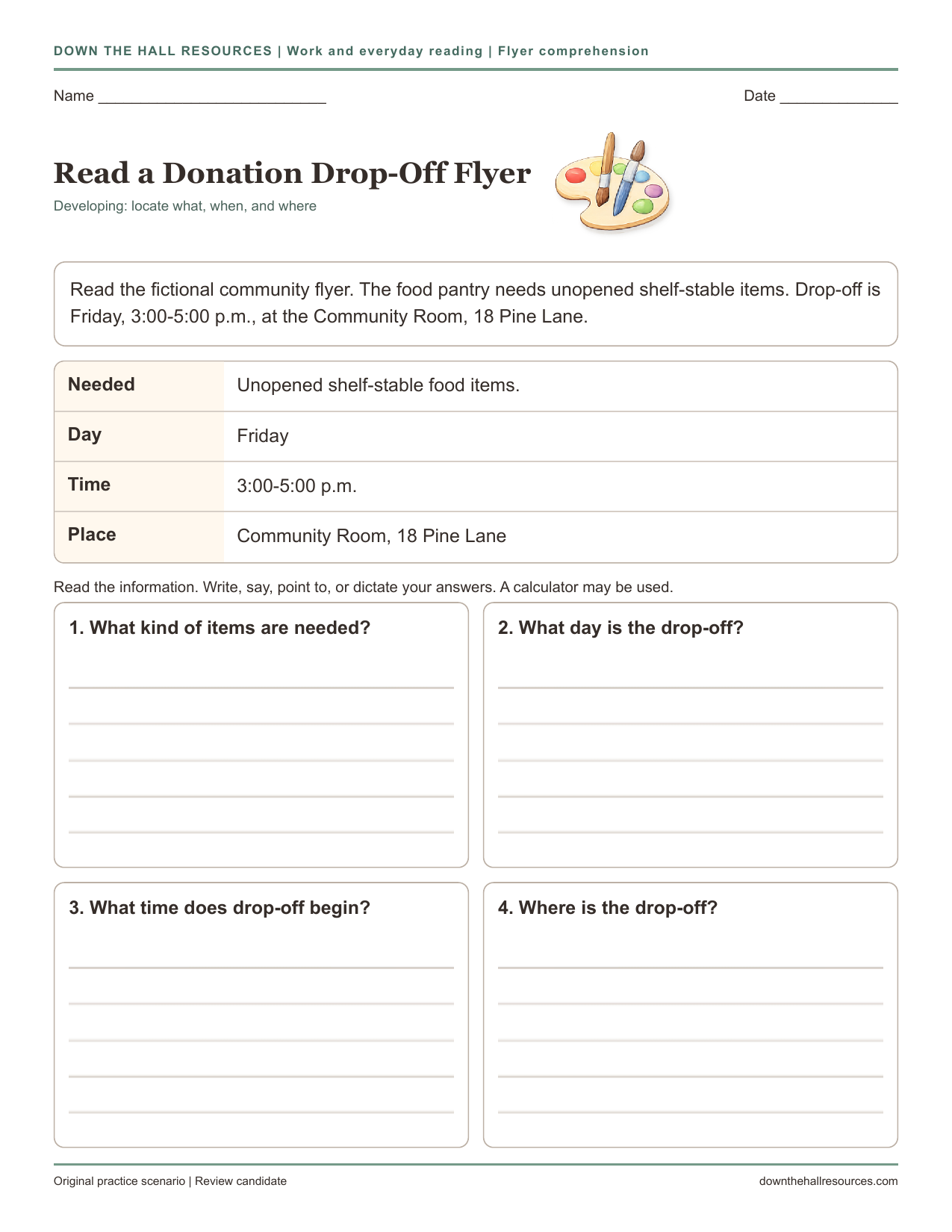
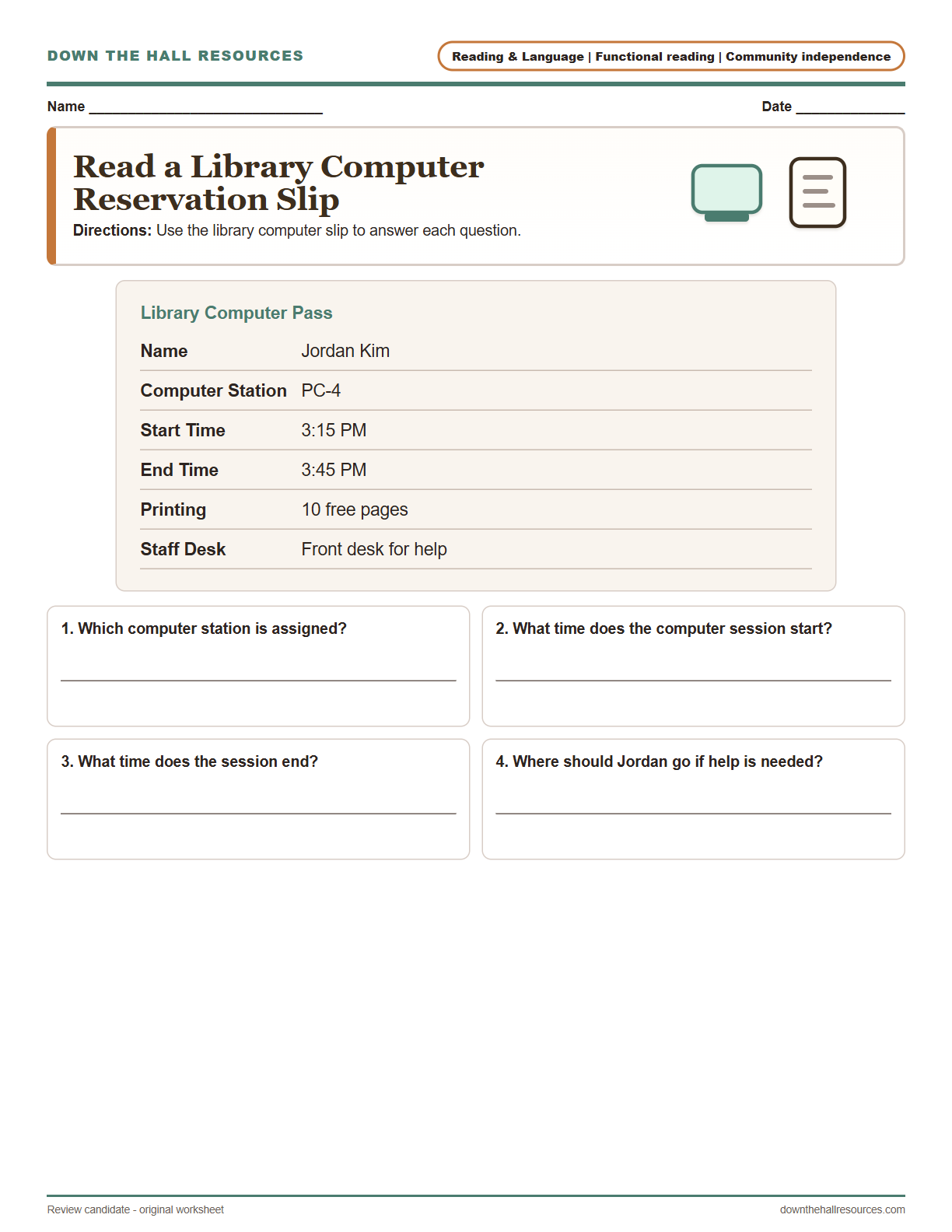
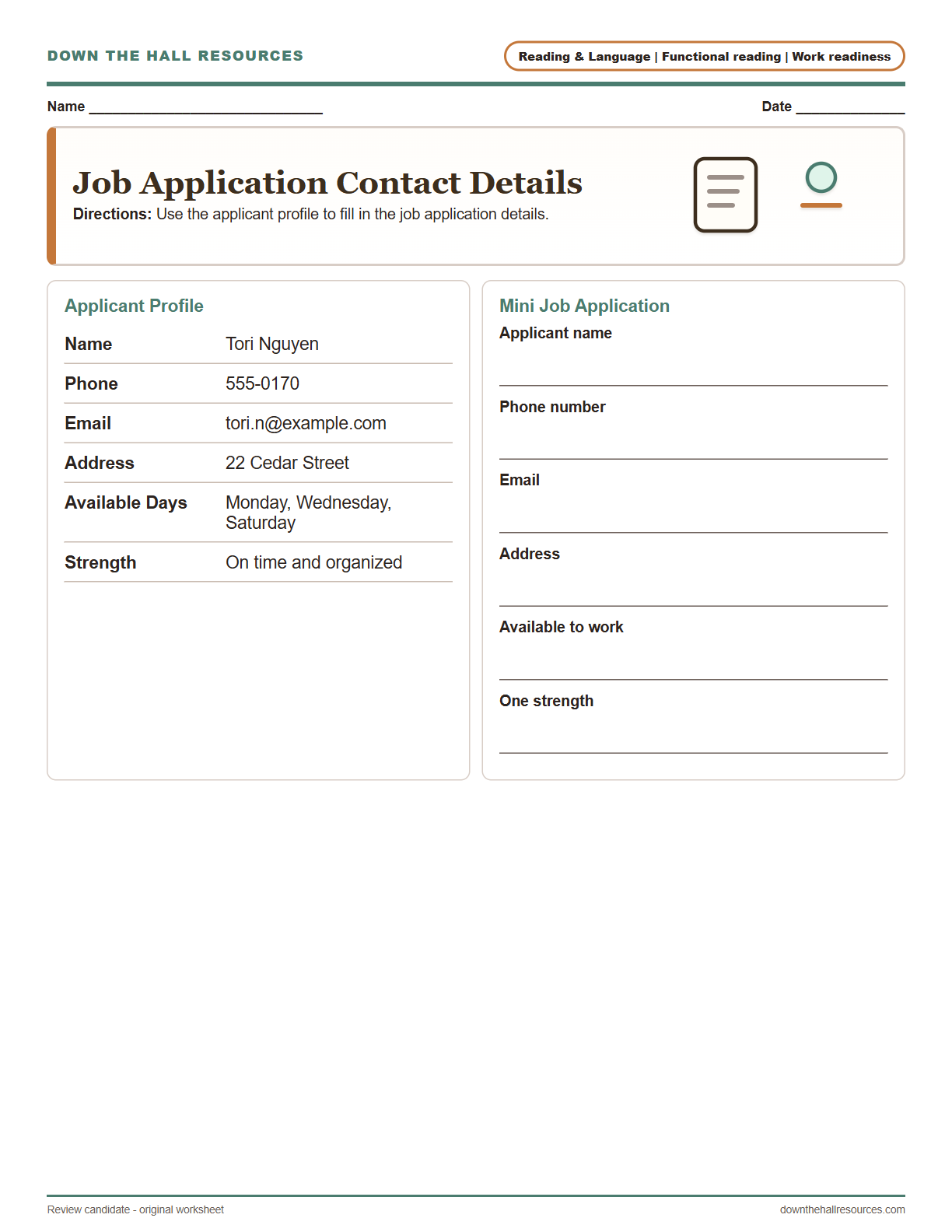
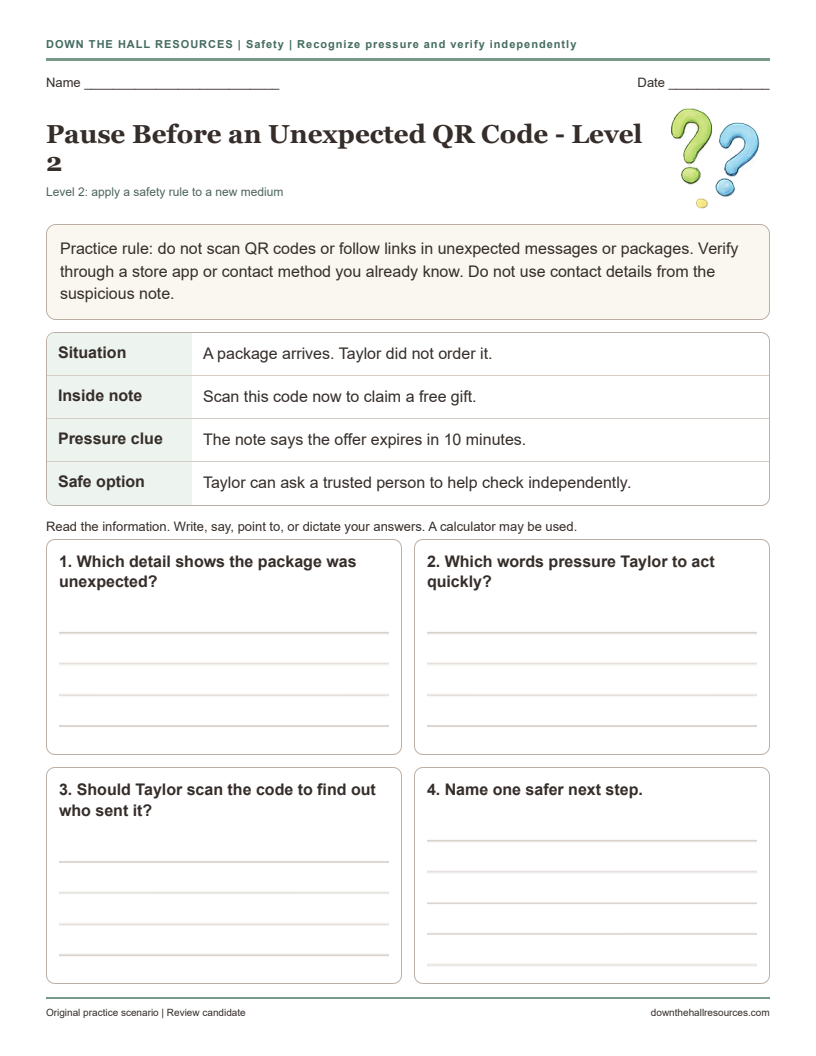
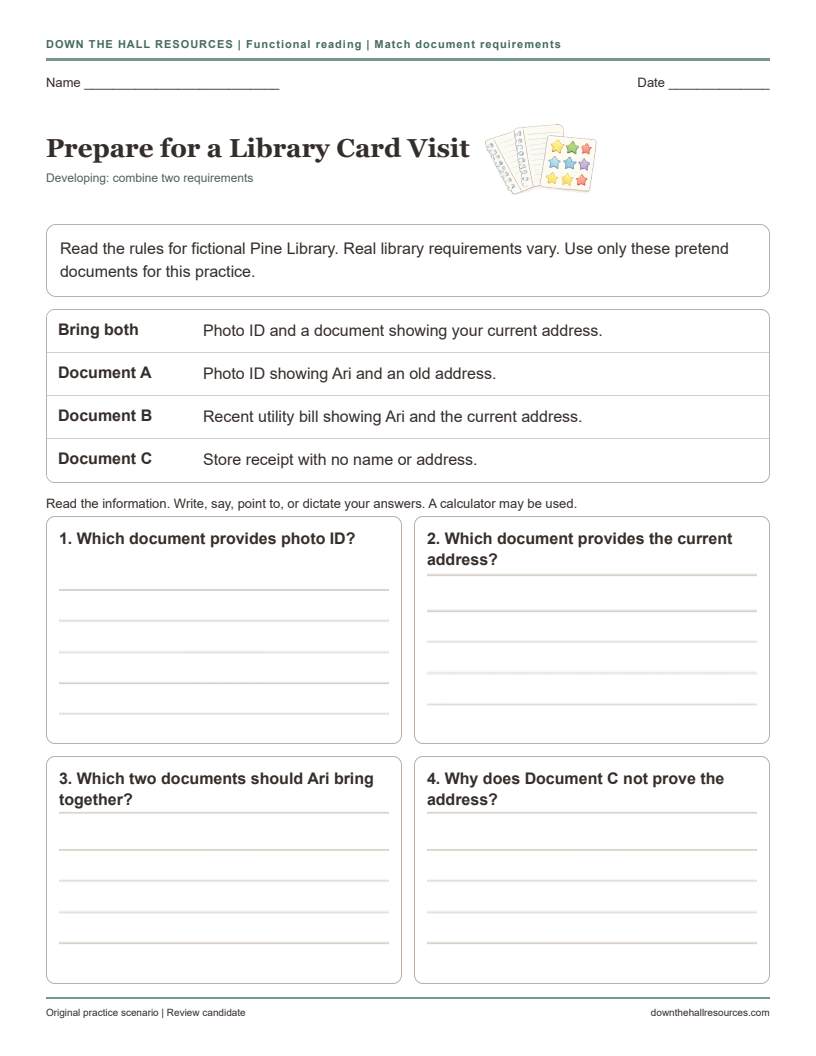
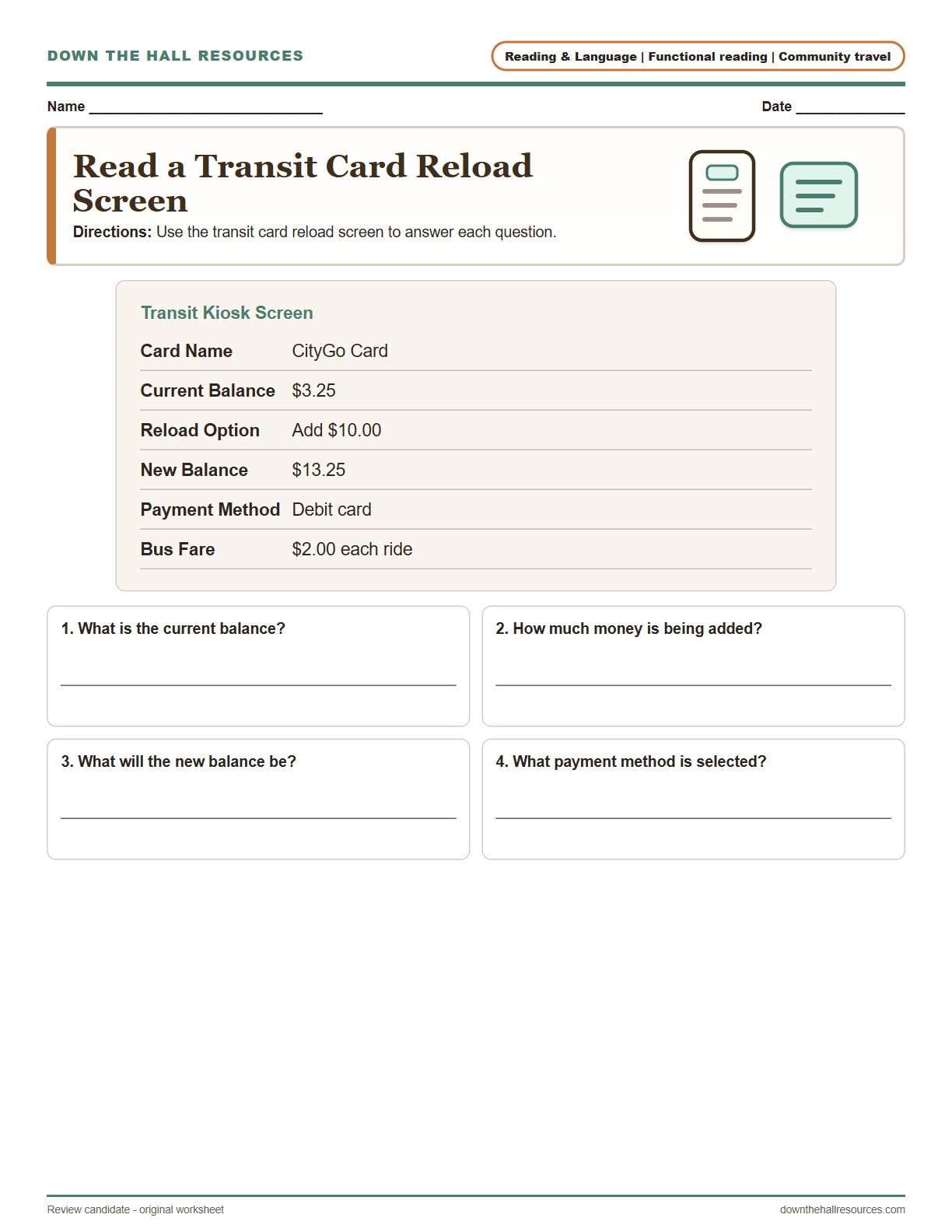
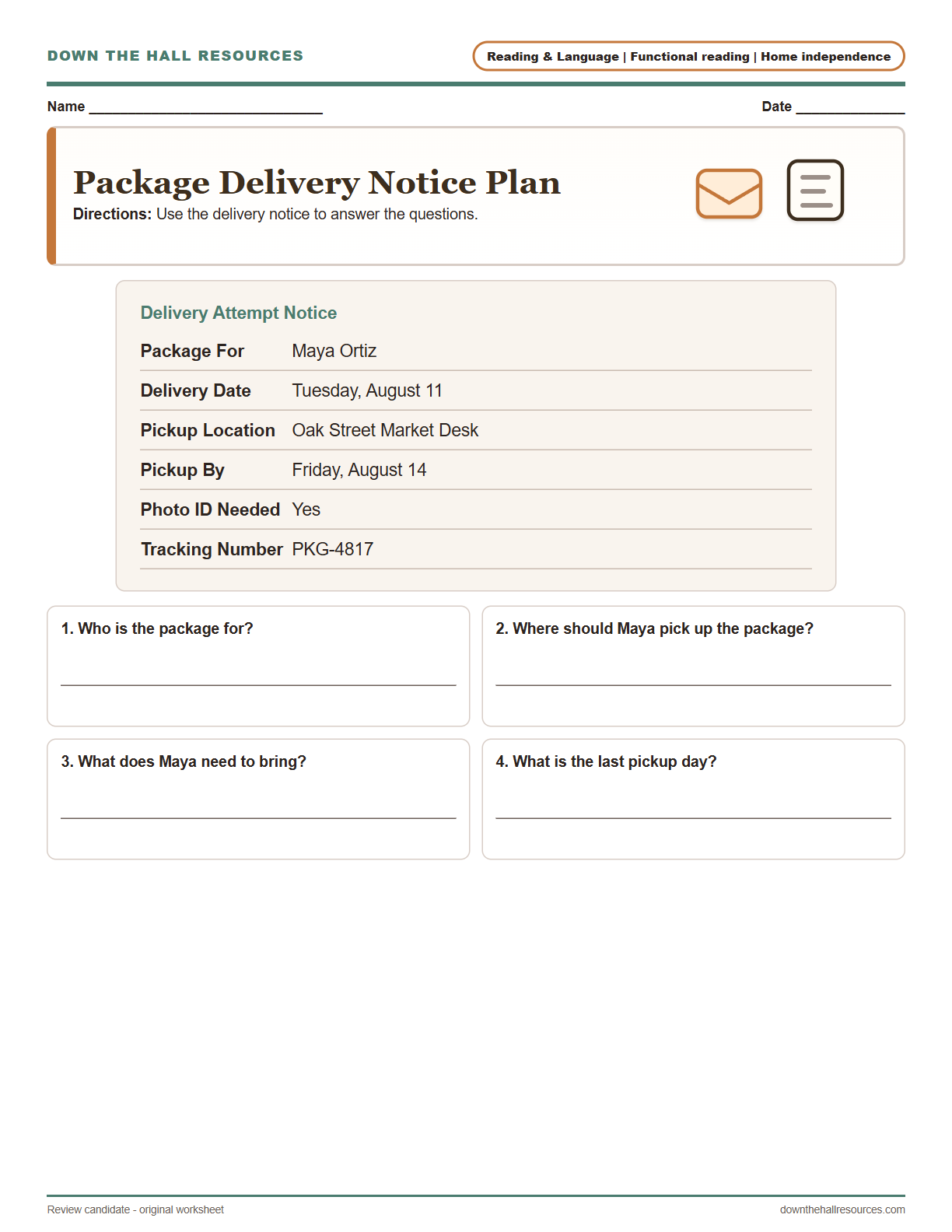
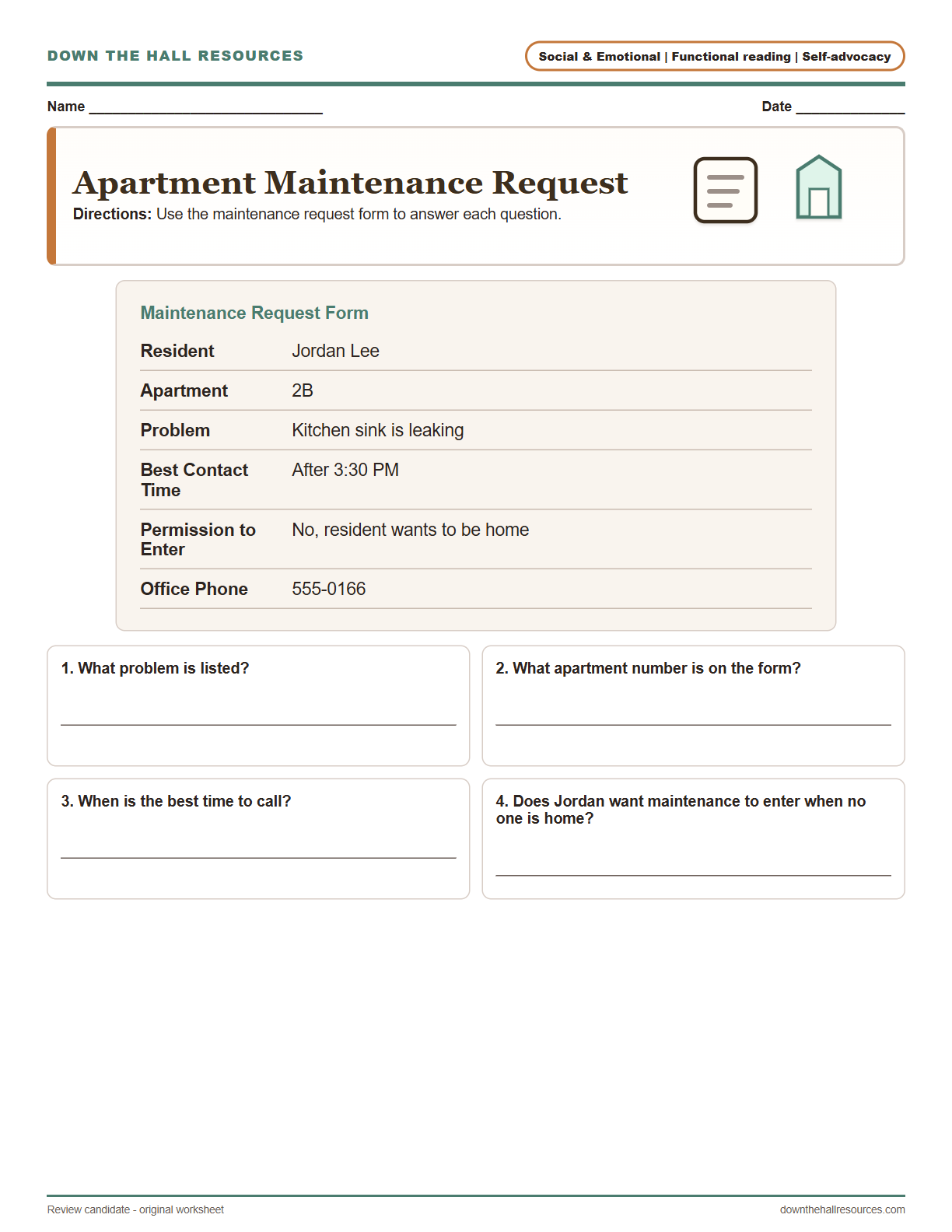
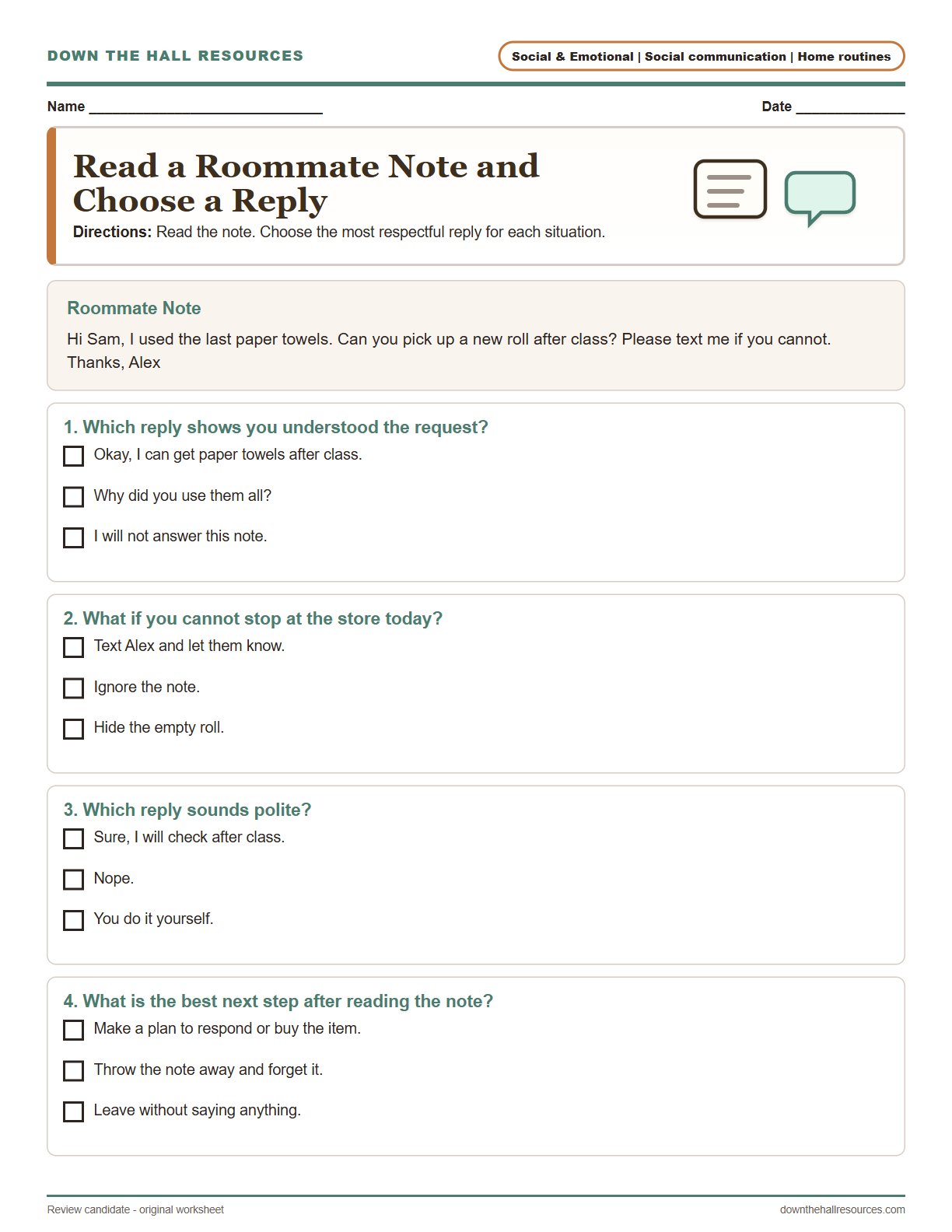
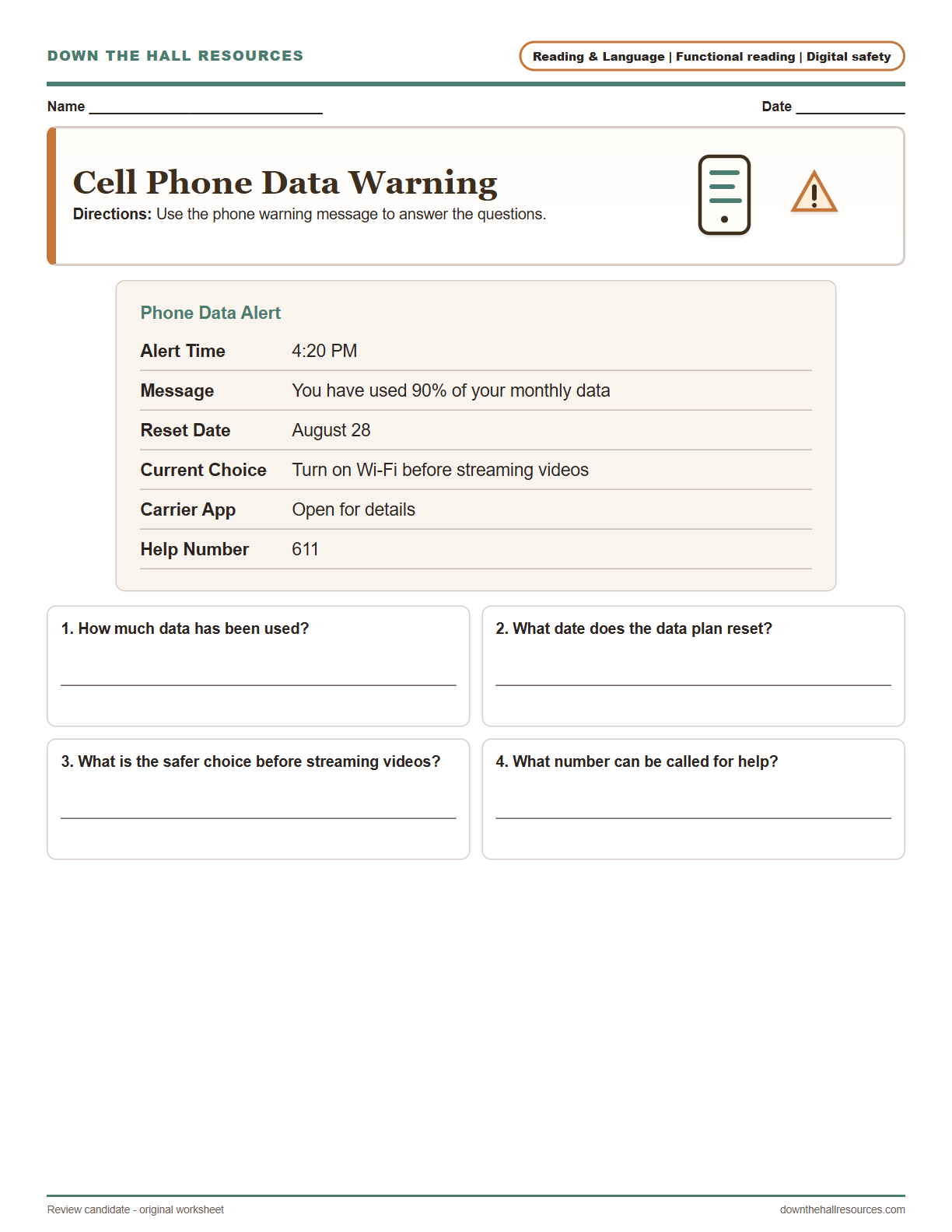
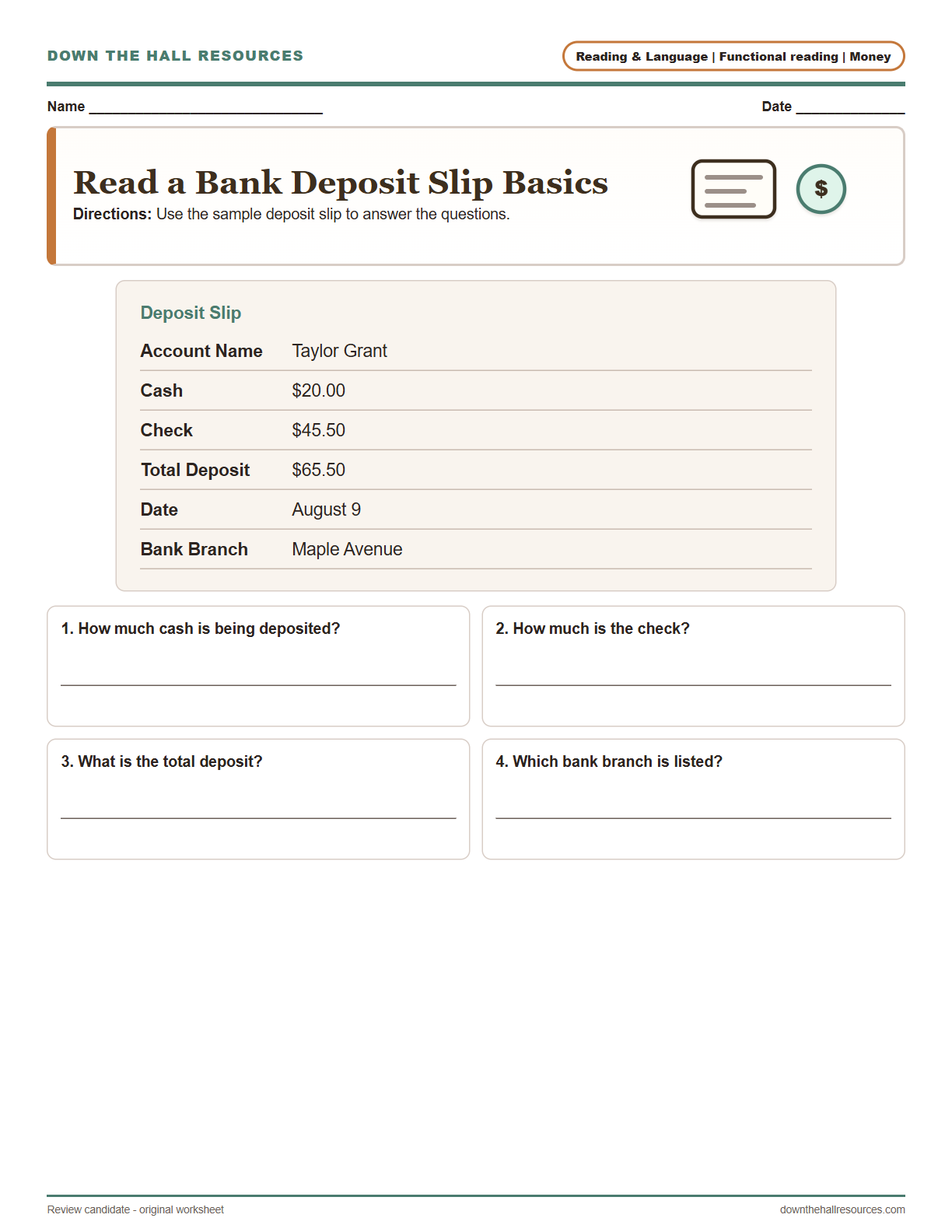
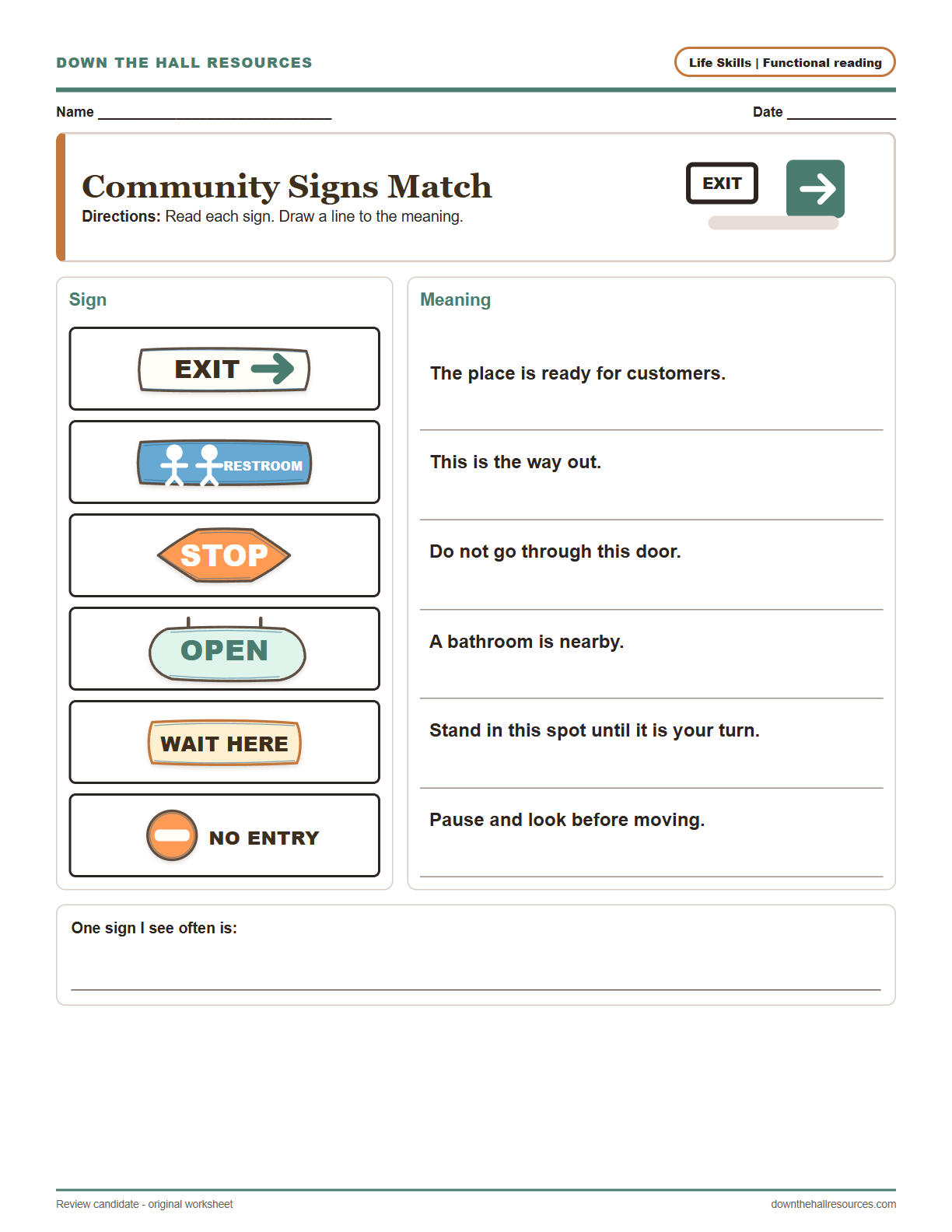
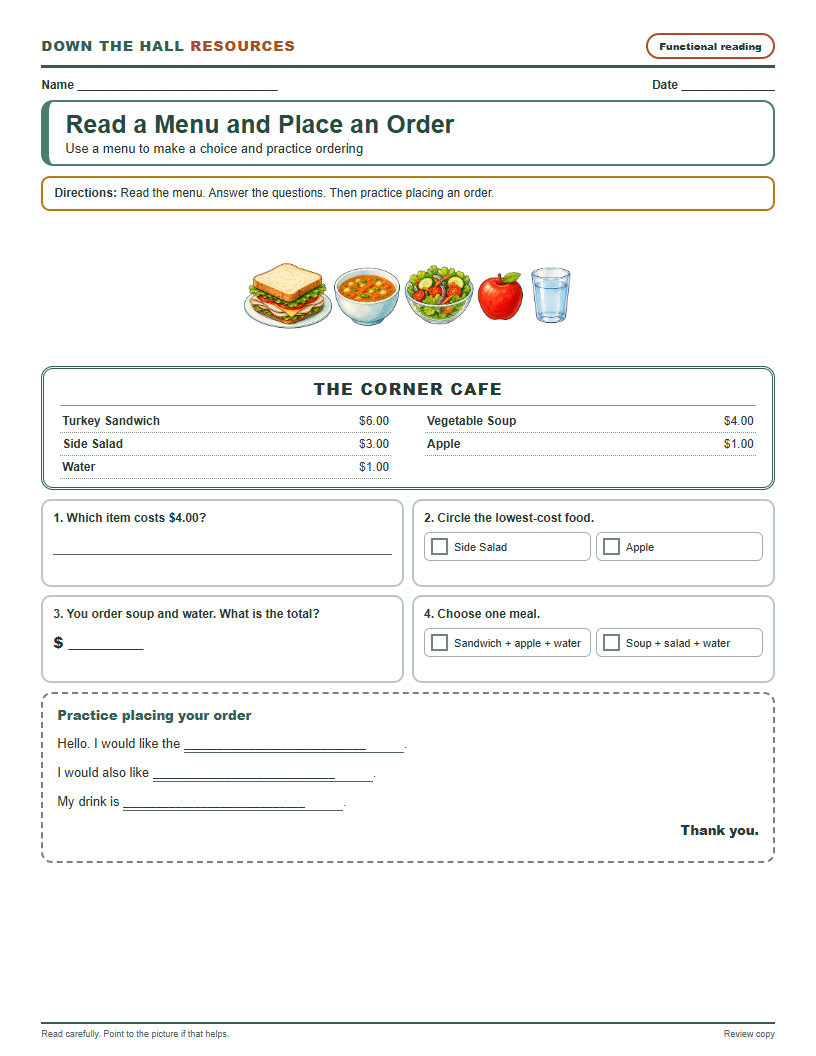
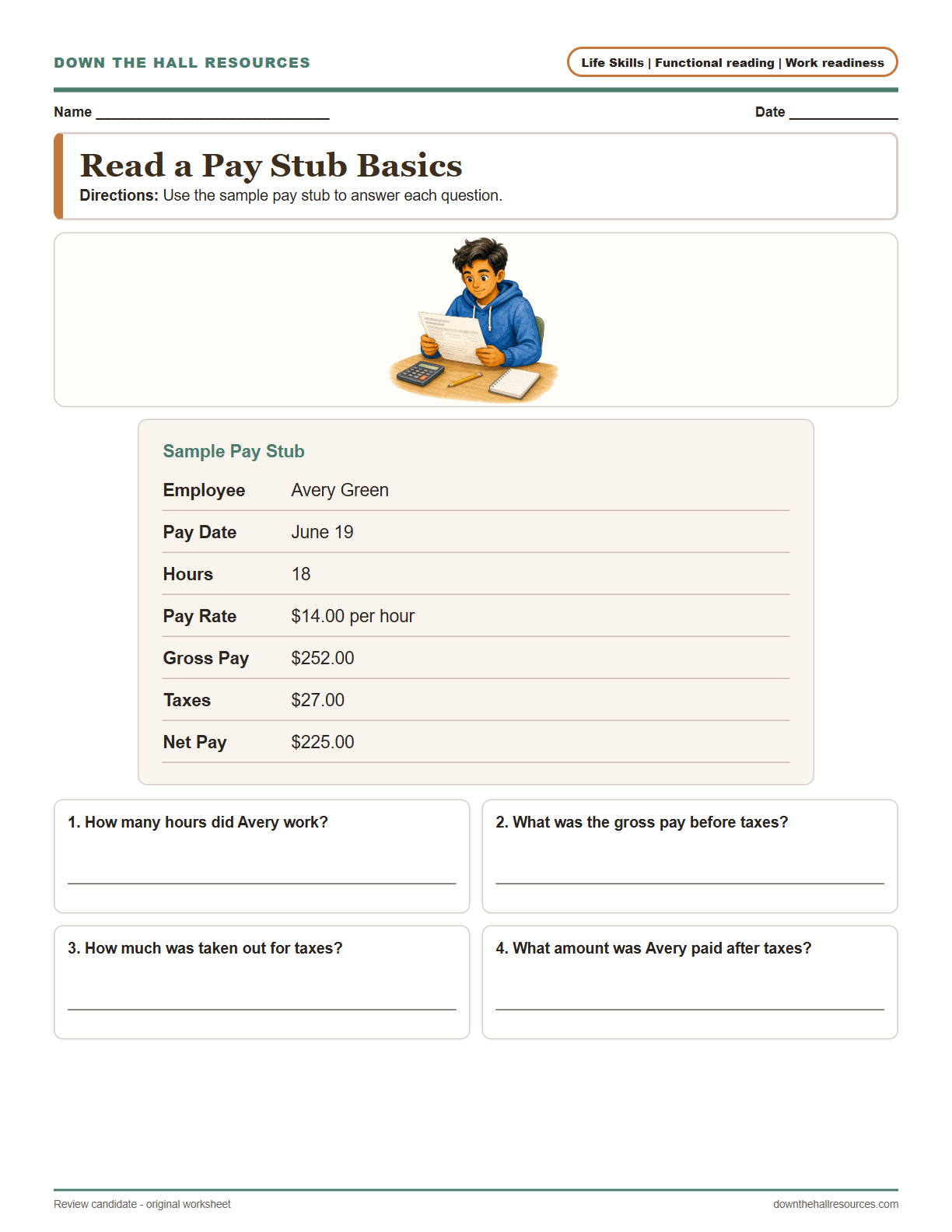
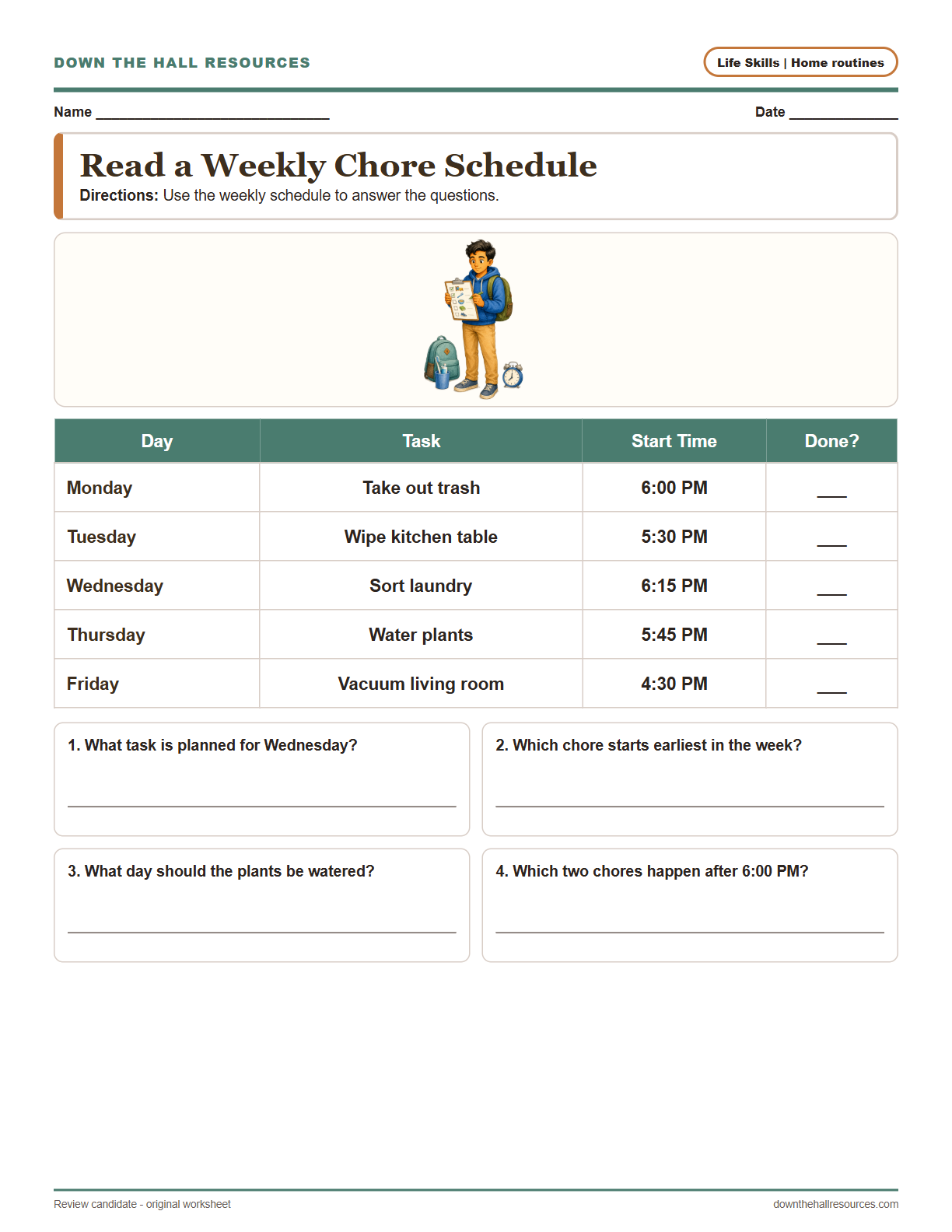
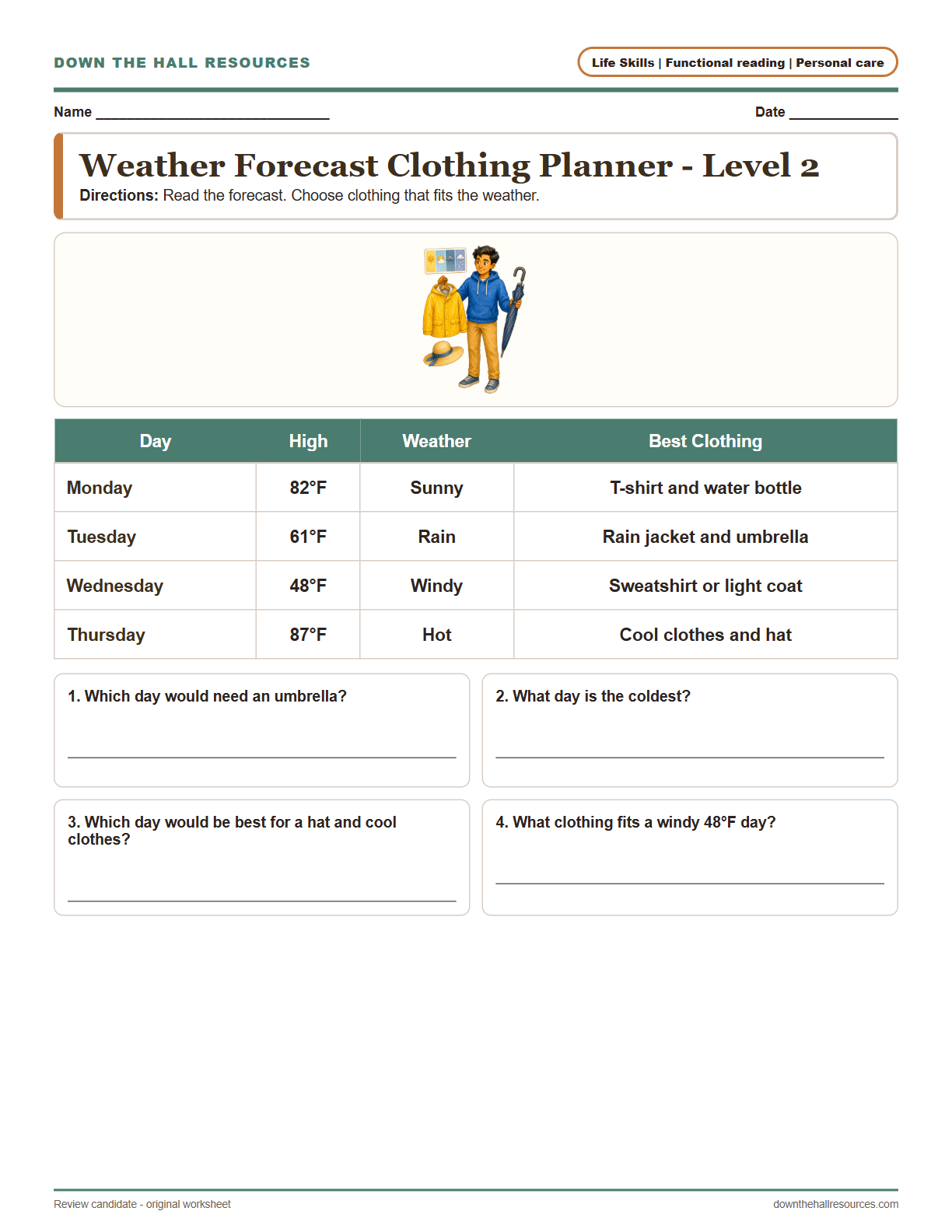
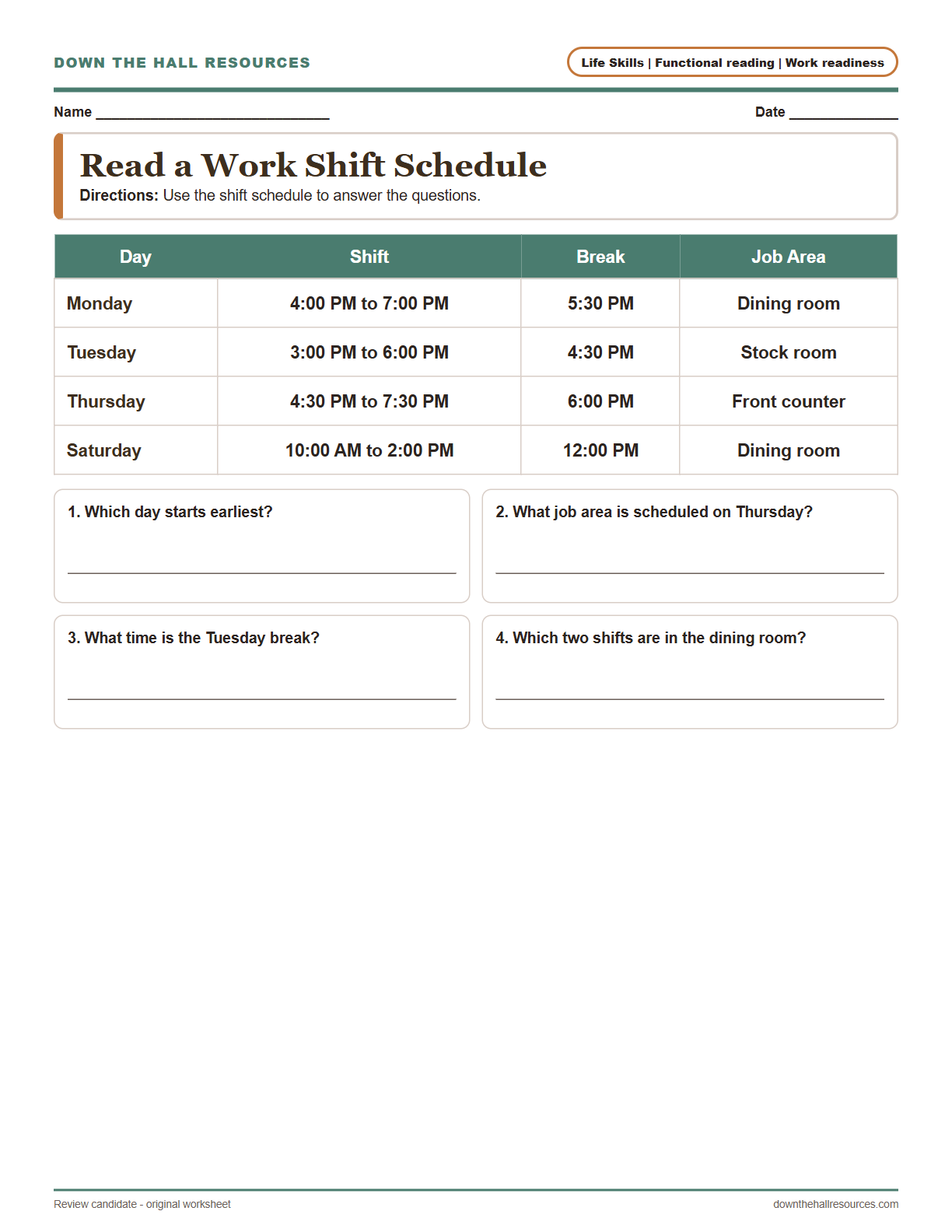
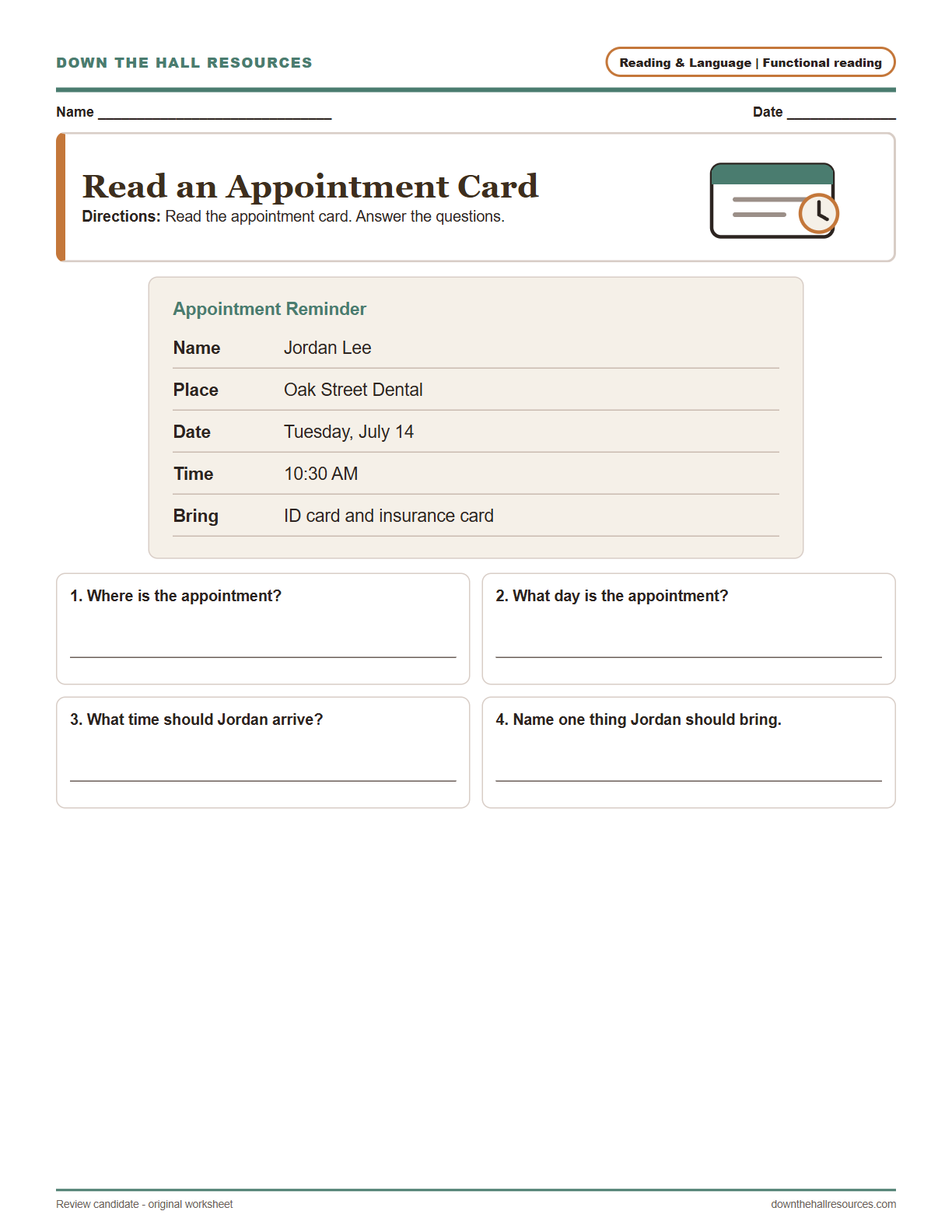
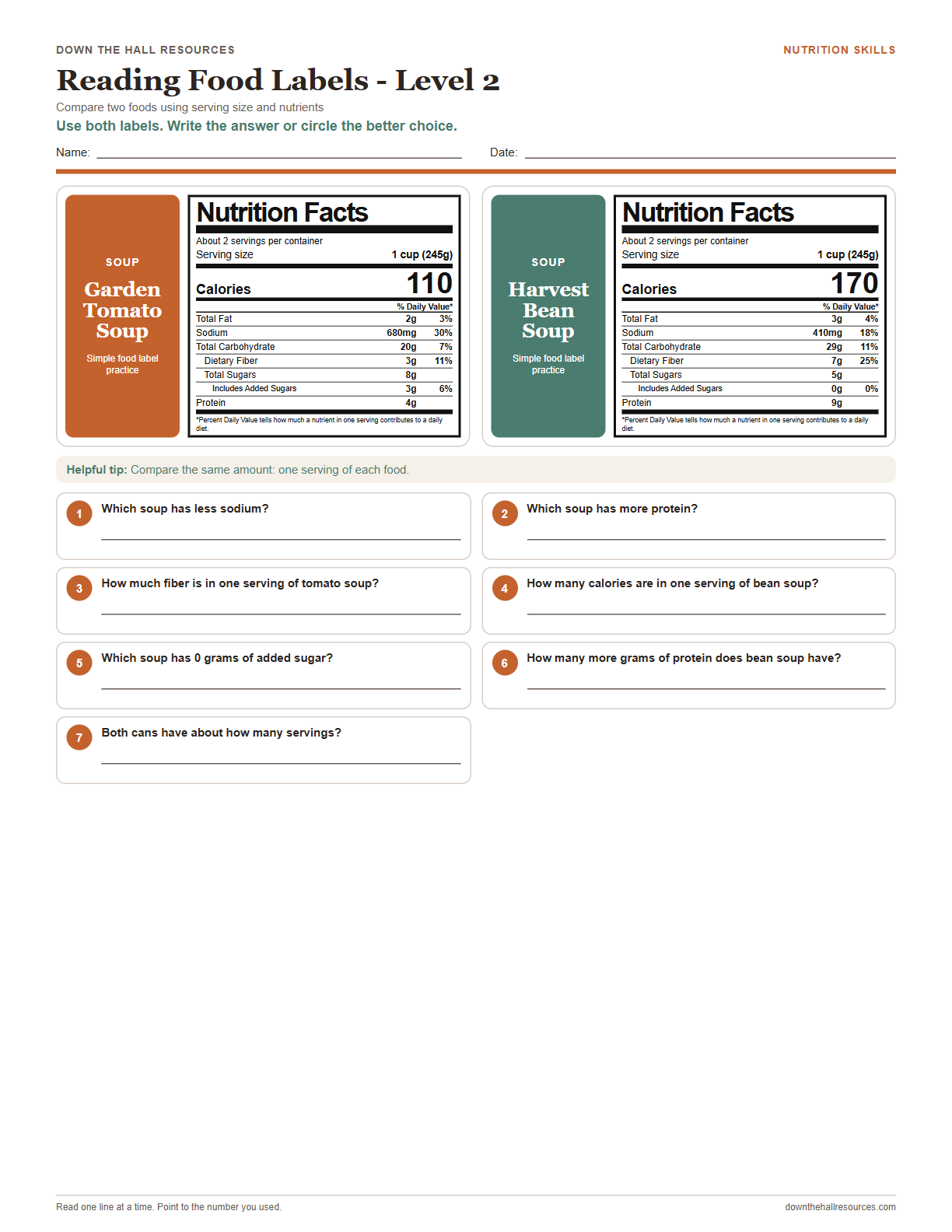
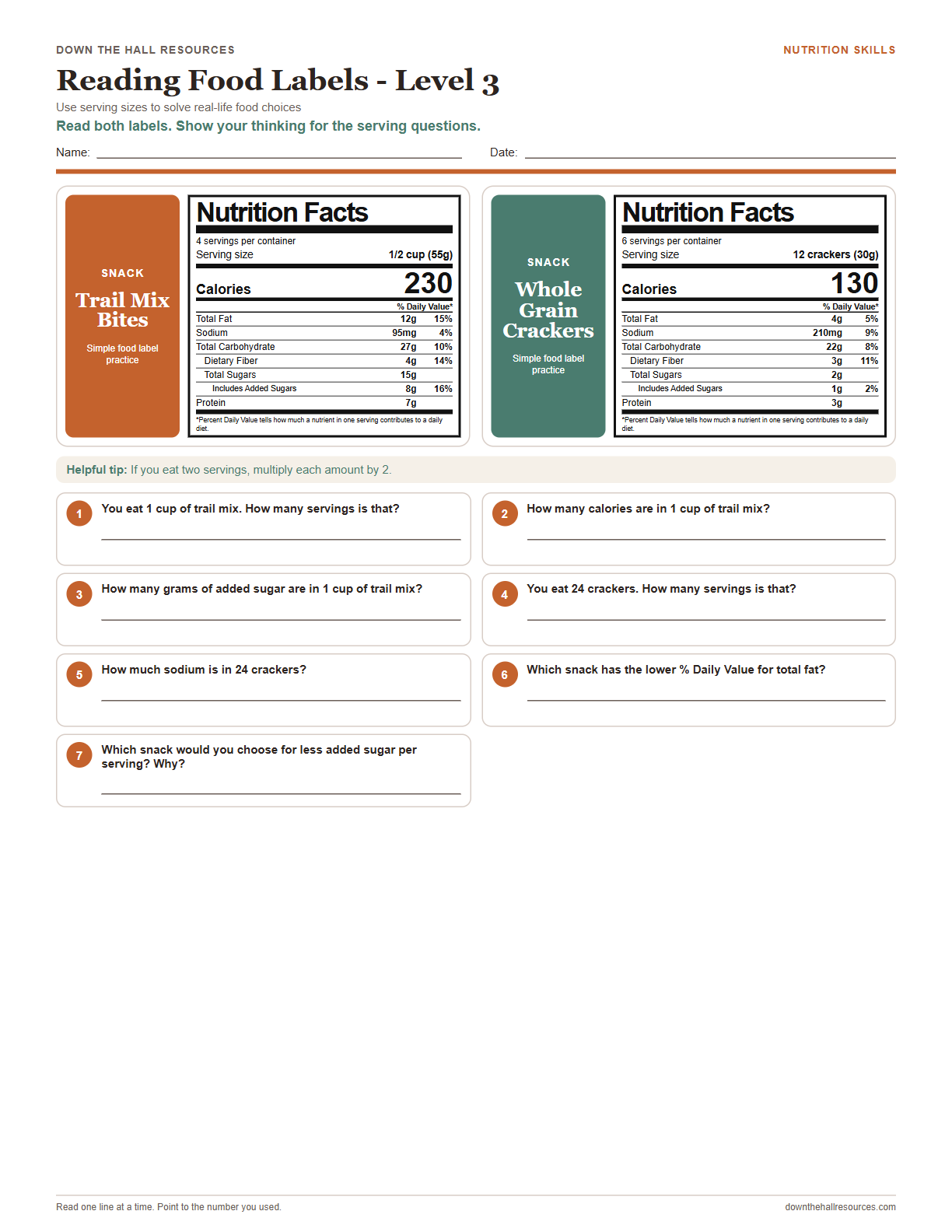
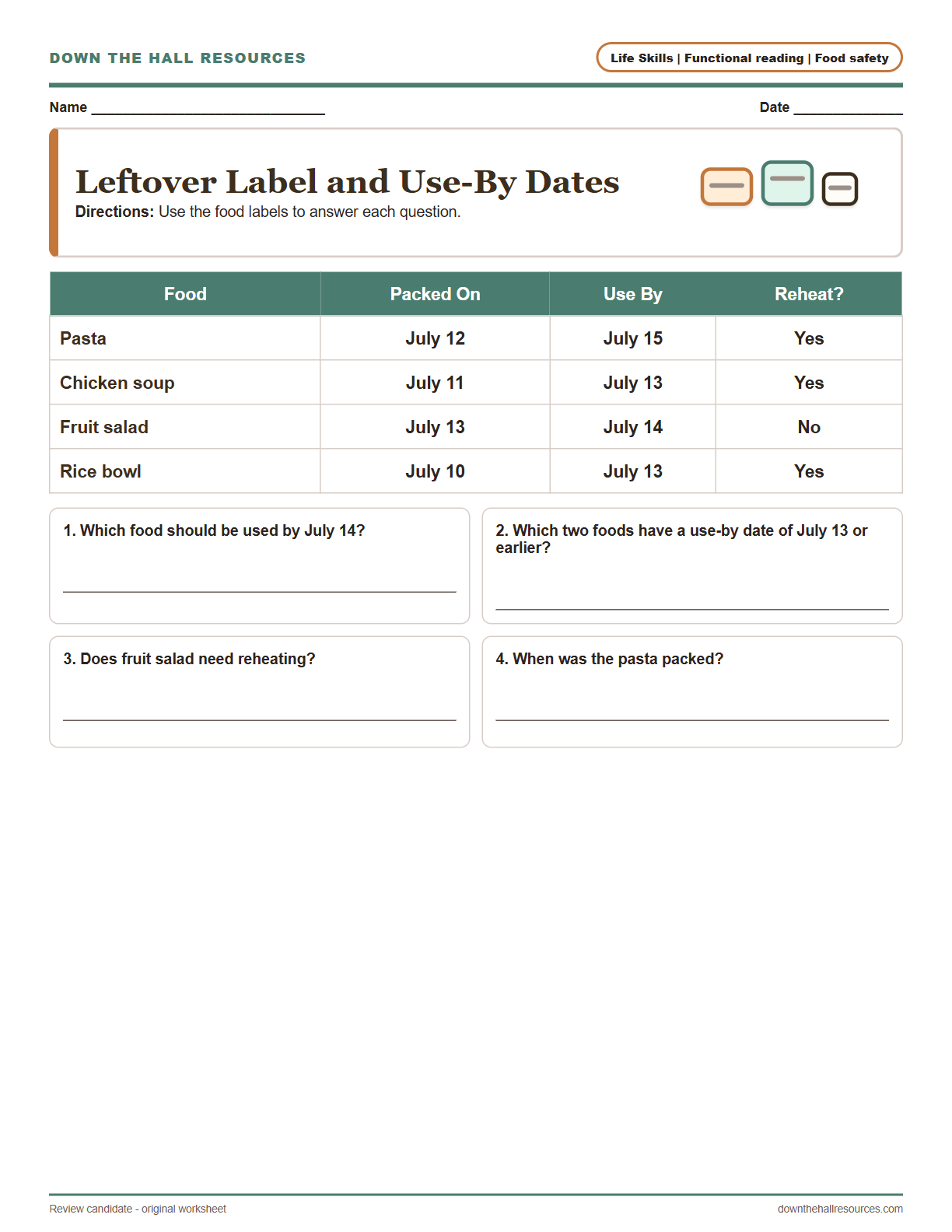
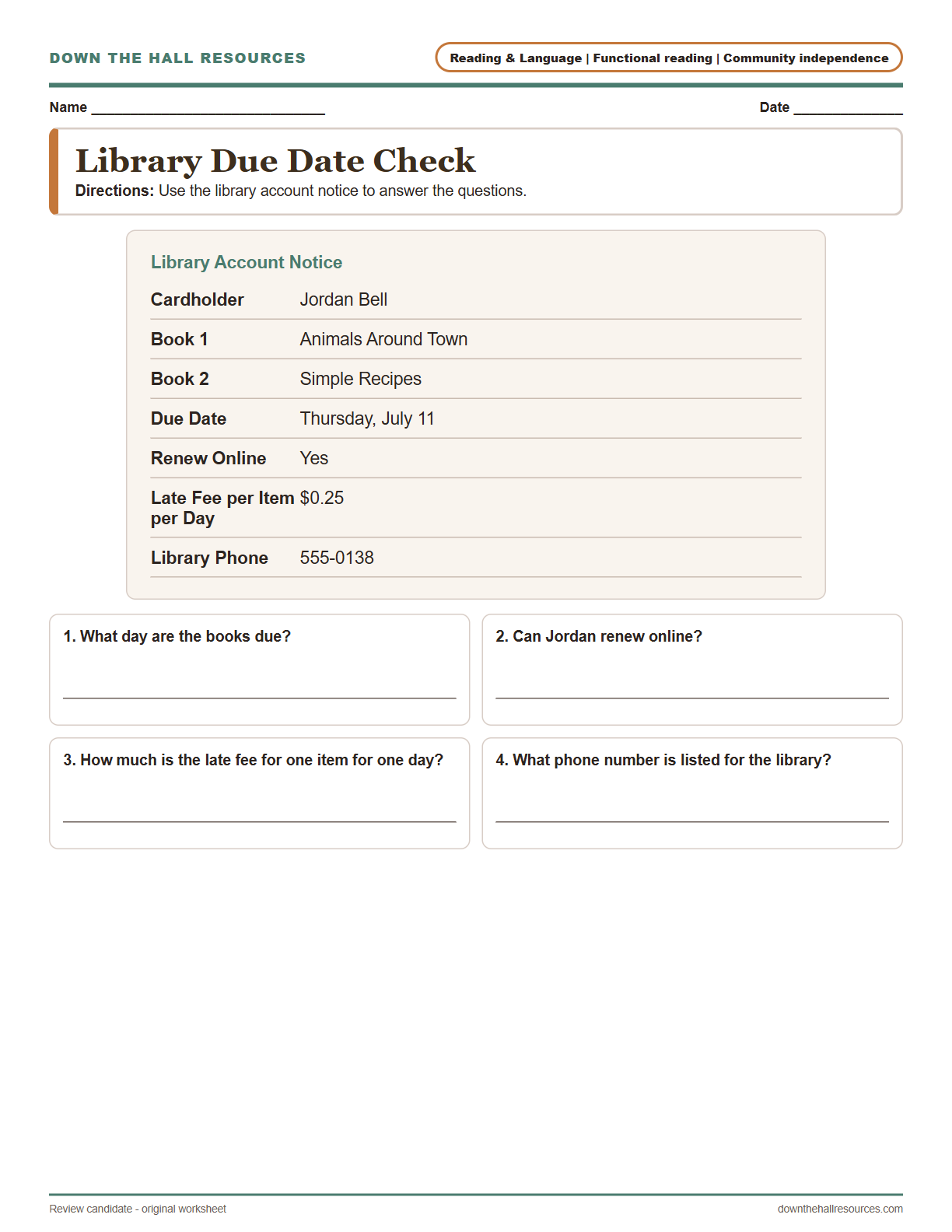
- Practice reading everyday documents such as menus, schedules, labels, forms, signs, and appointment cards.
- Move reading practice beyond isolated words into useful daily-life comprehension.
- Help learners answer practical questions from real-looking text.
Simple lesson plan idea
Before answering questions, scan the document together and name what kind of text it is. Point out headings, times, prices, dates, labels, or icons. Then answer one question together and encourage the learner to point to where the answer was found.
Ways to adapt the activity
For more support, cover extra information and focus on one section. For more challenge, ask the learner to create their own question from the document or explain how they found the answer.