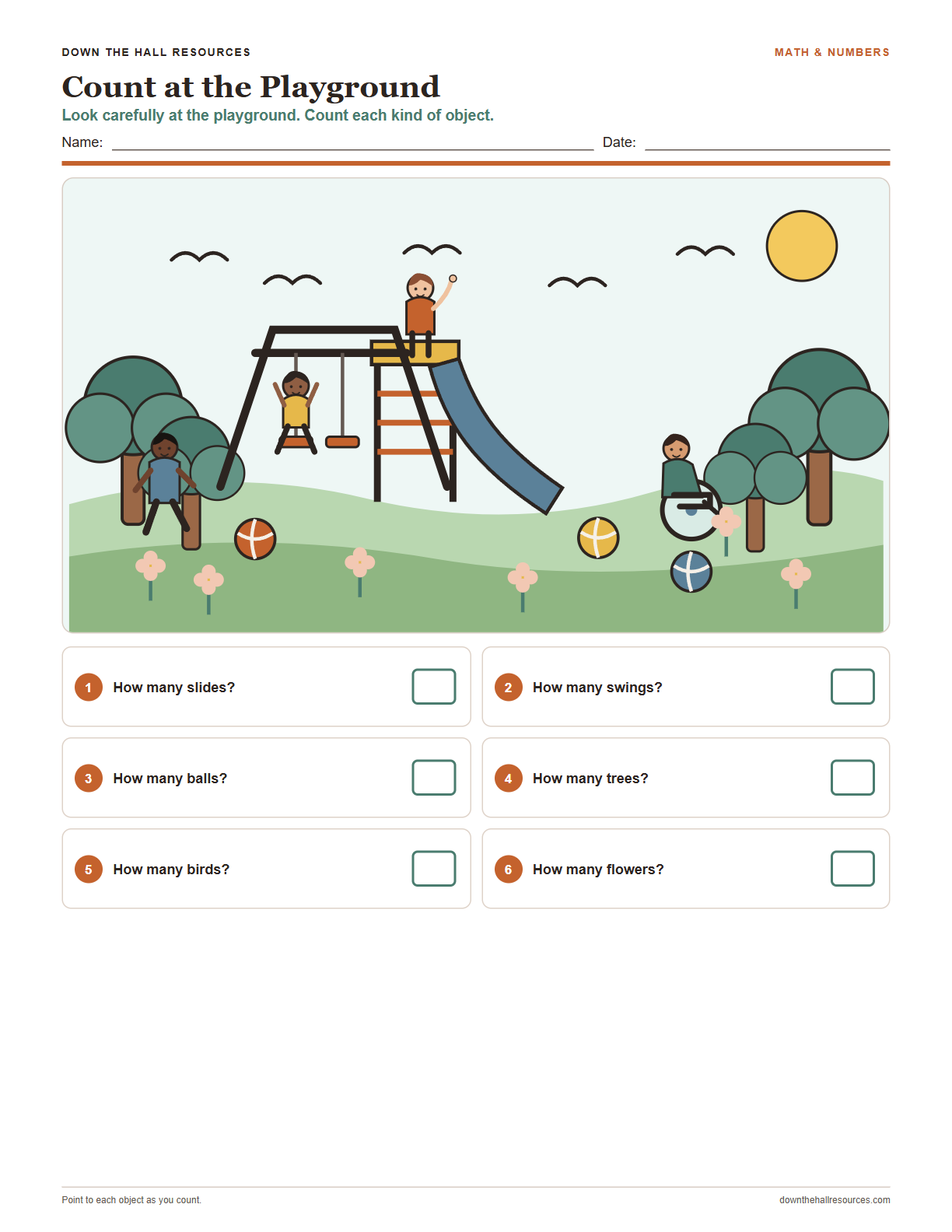
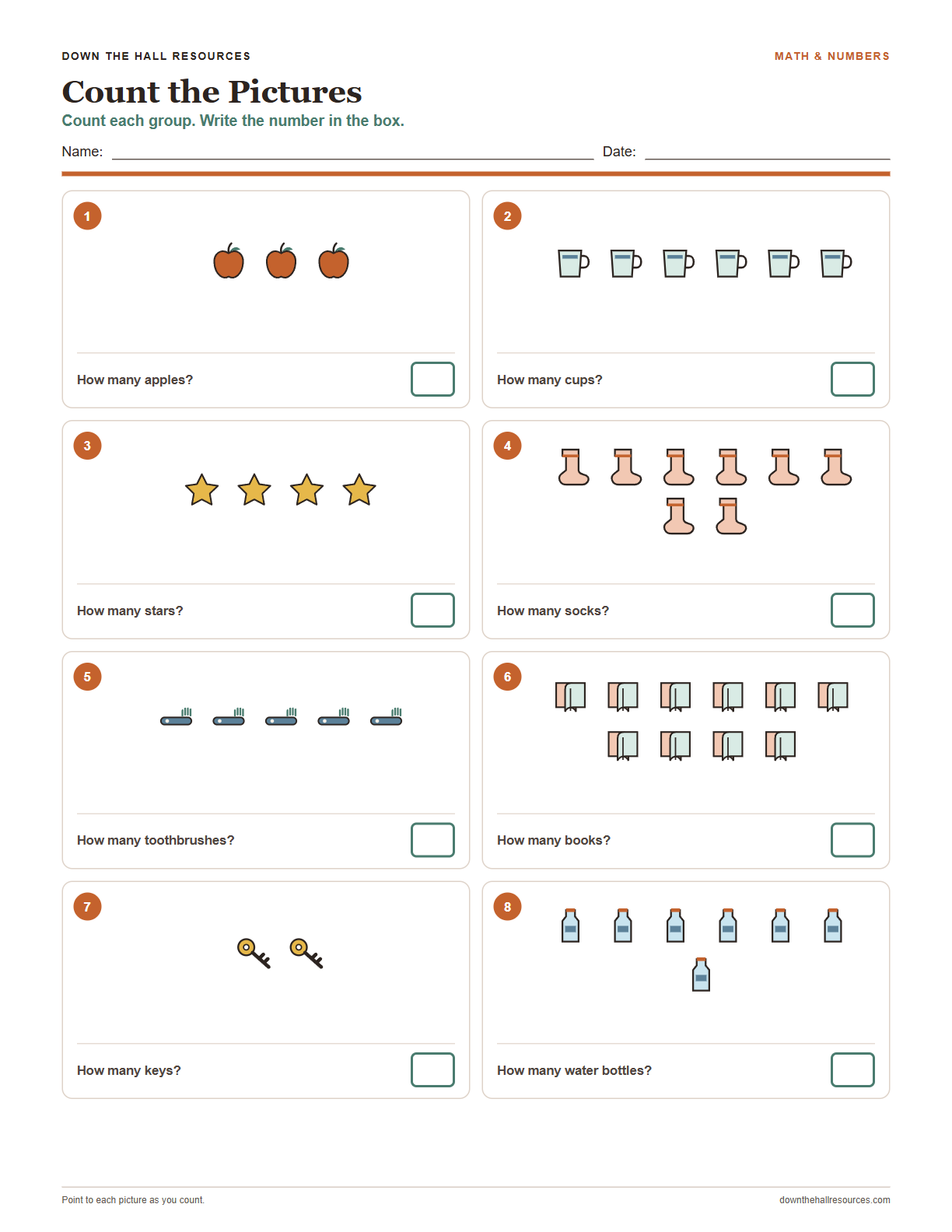
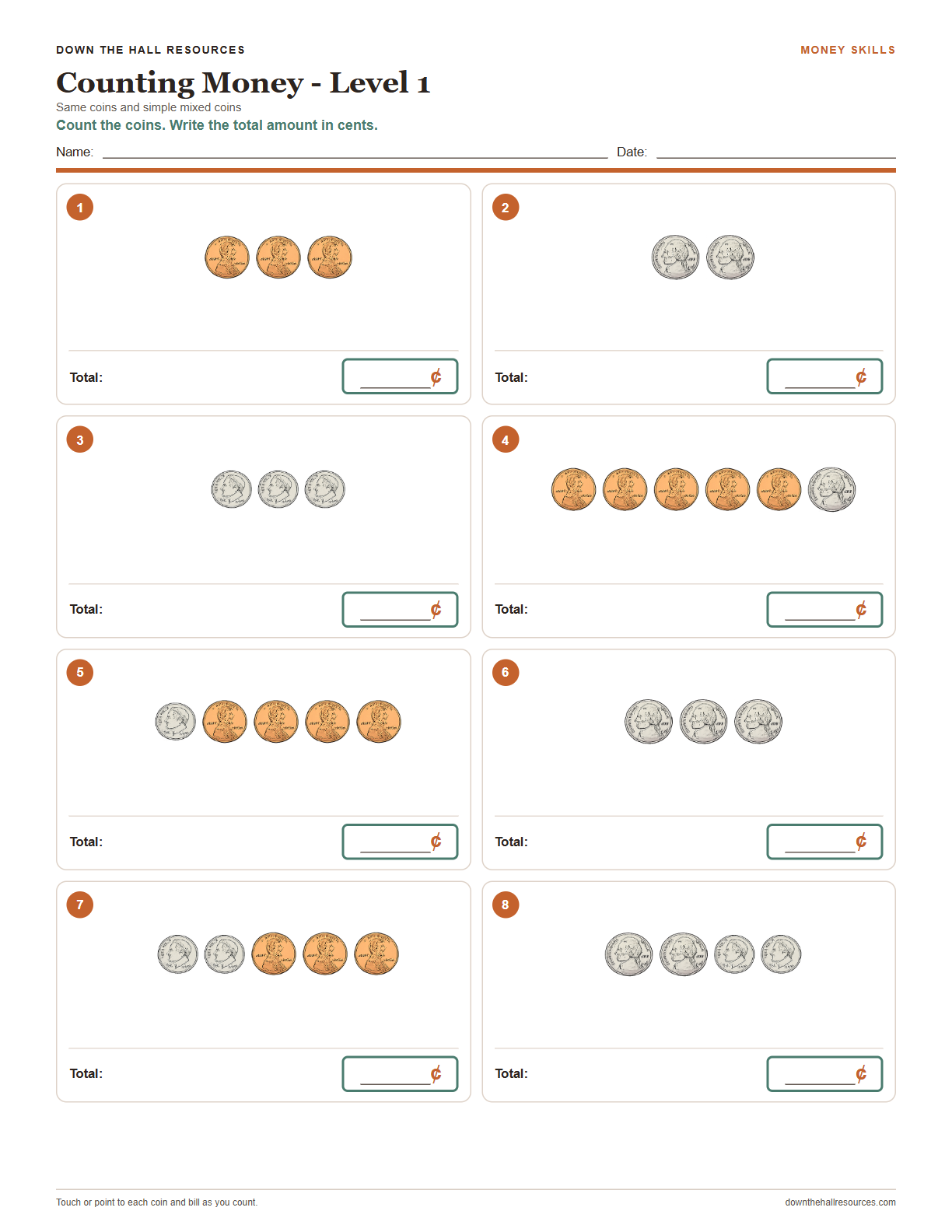
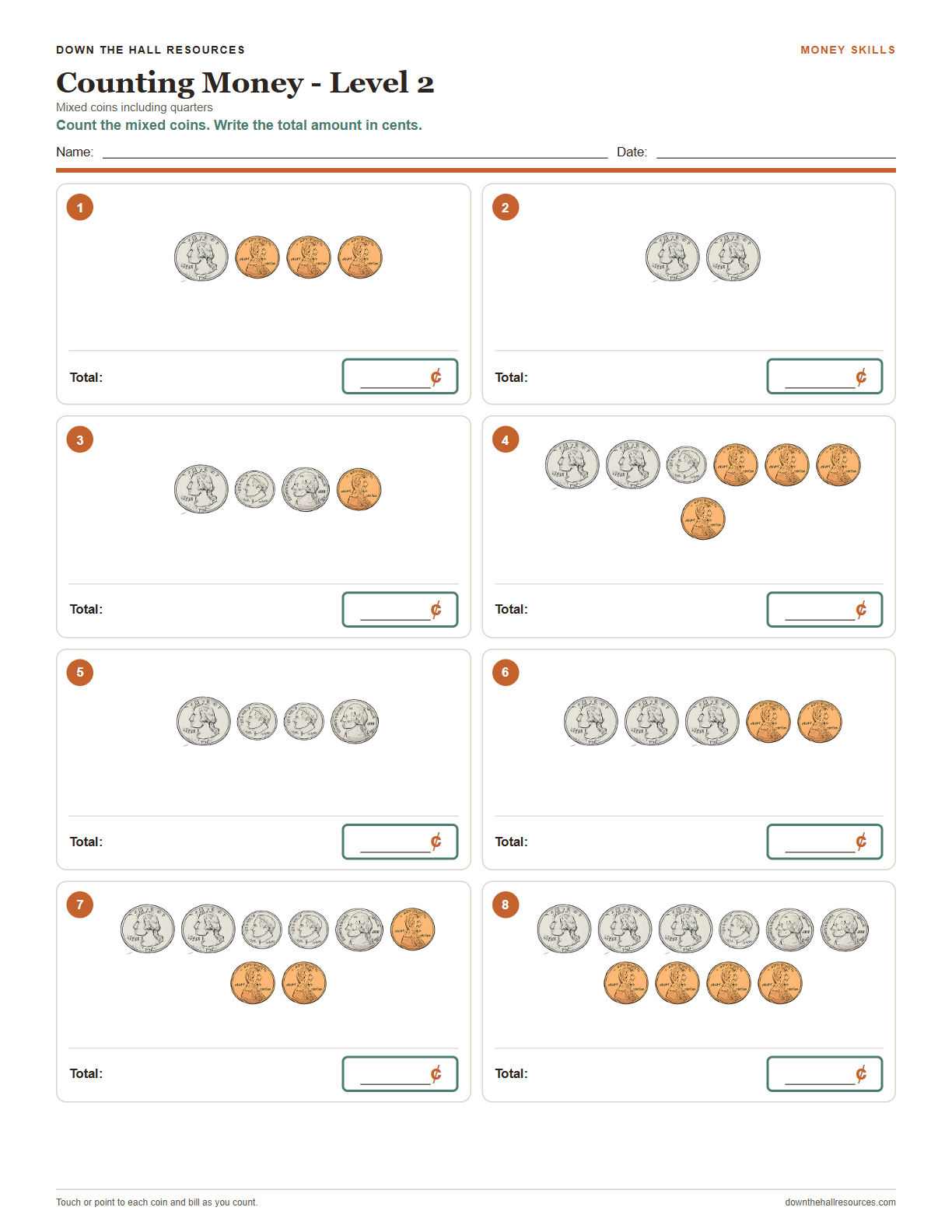
How to use these worksheets
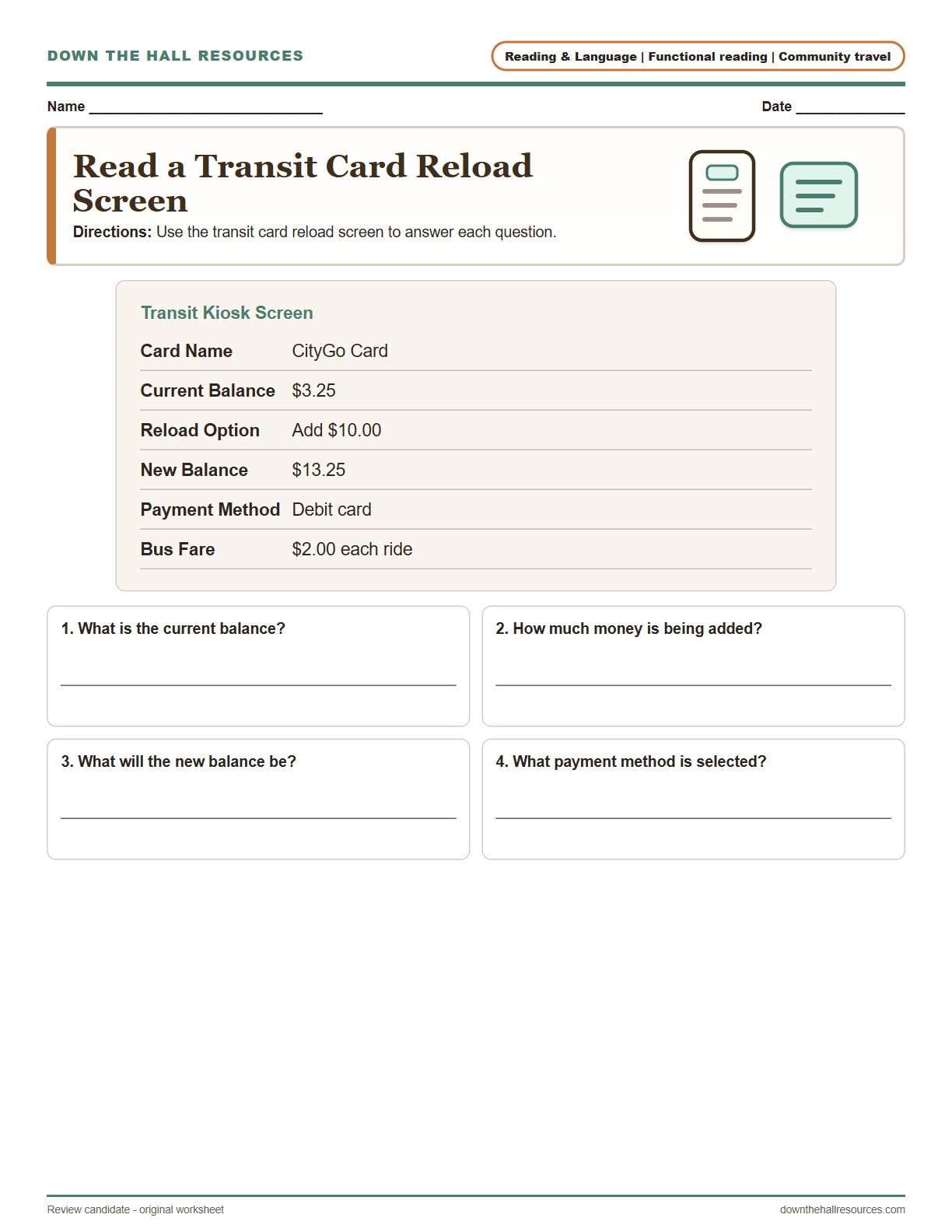
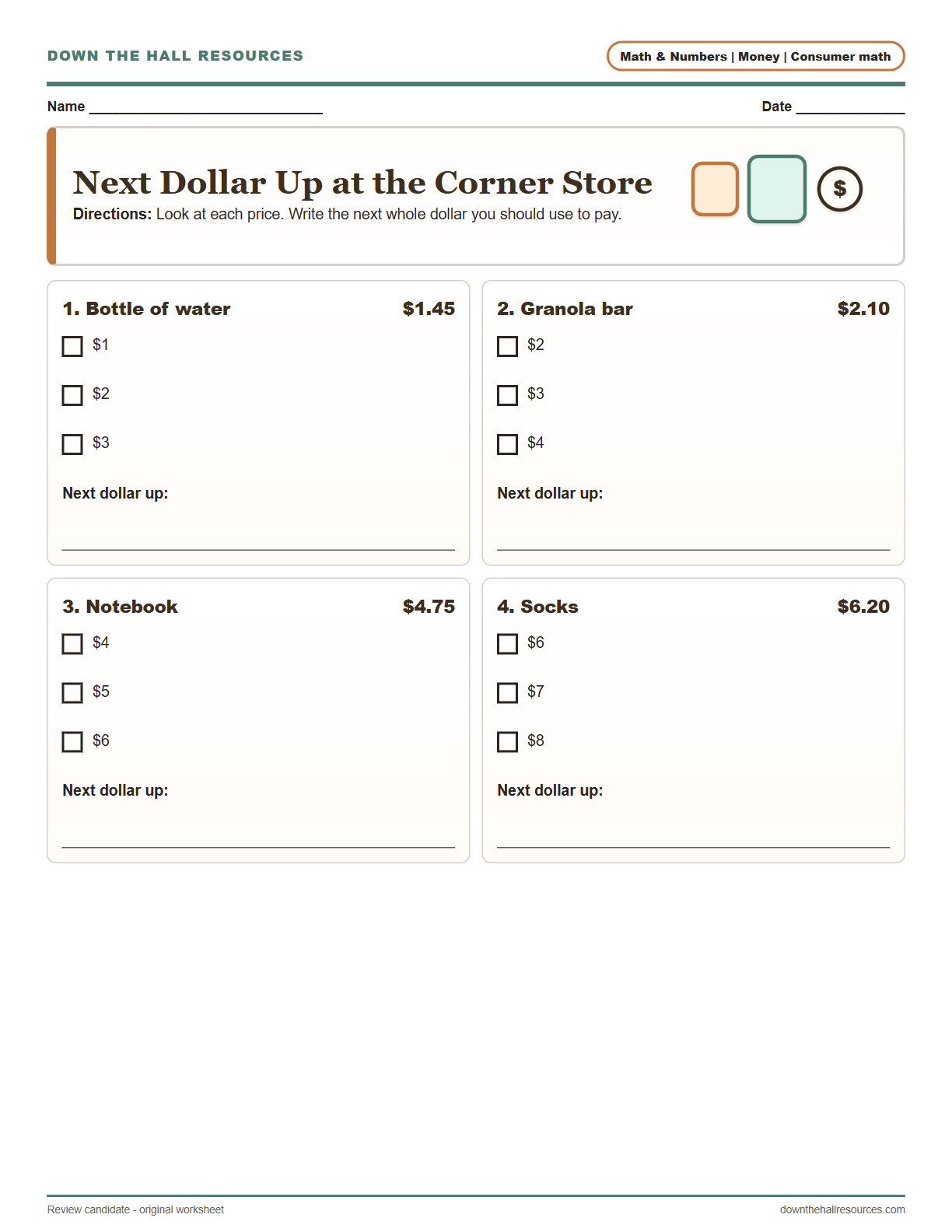
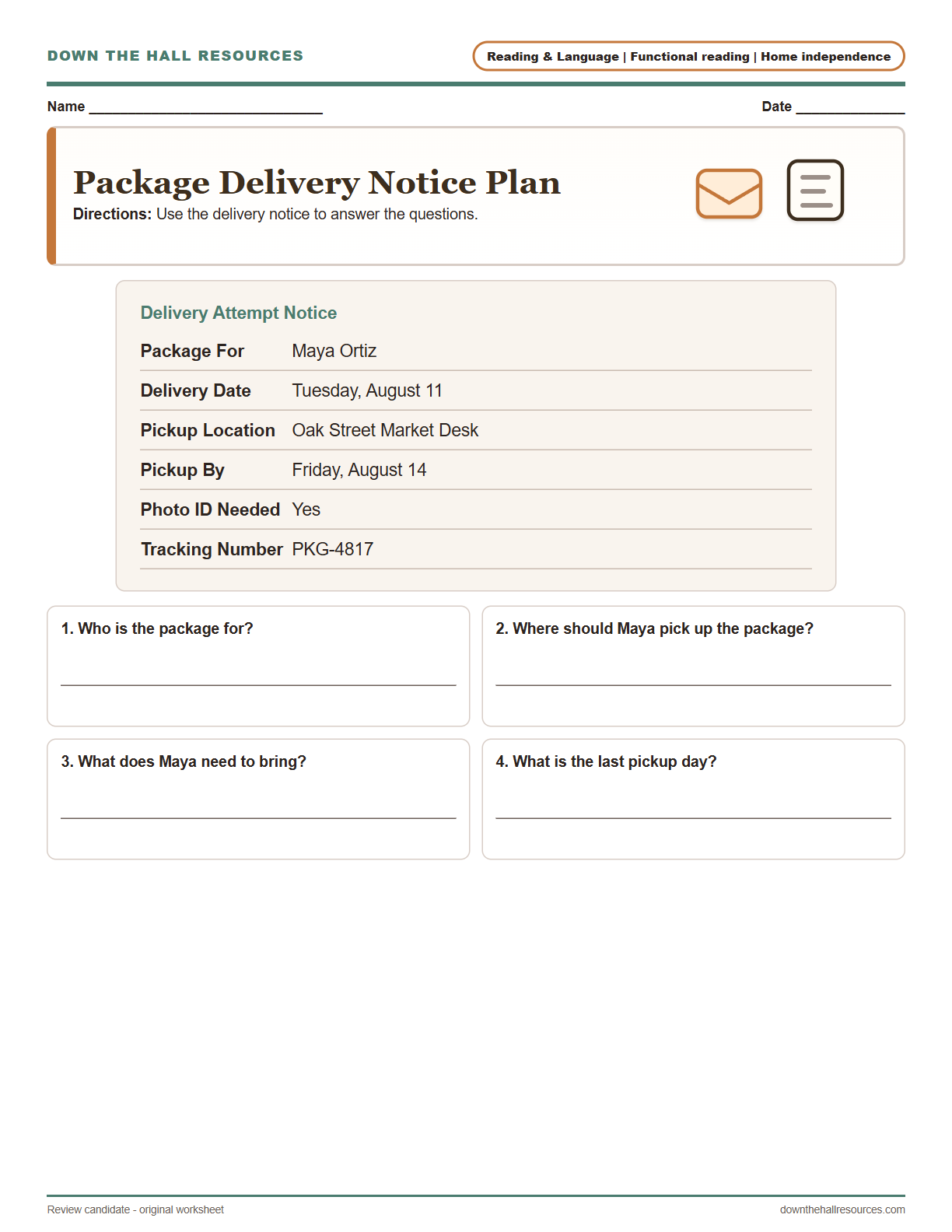
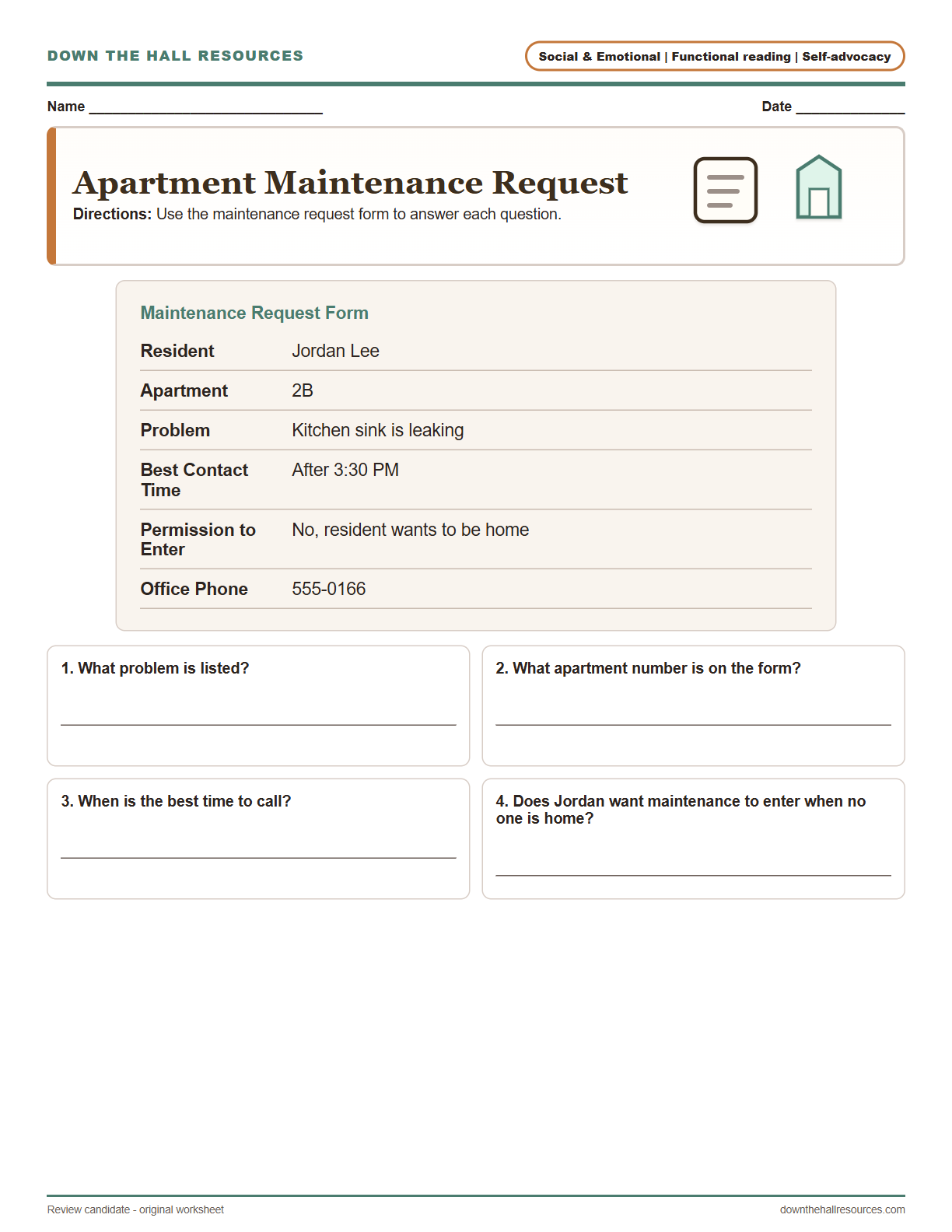
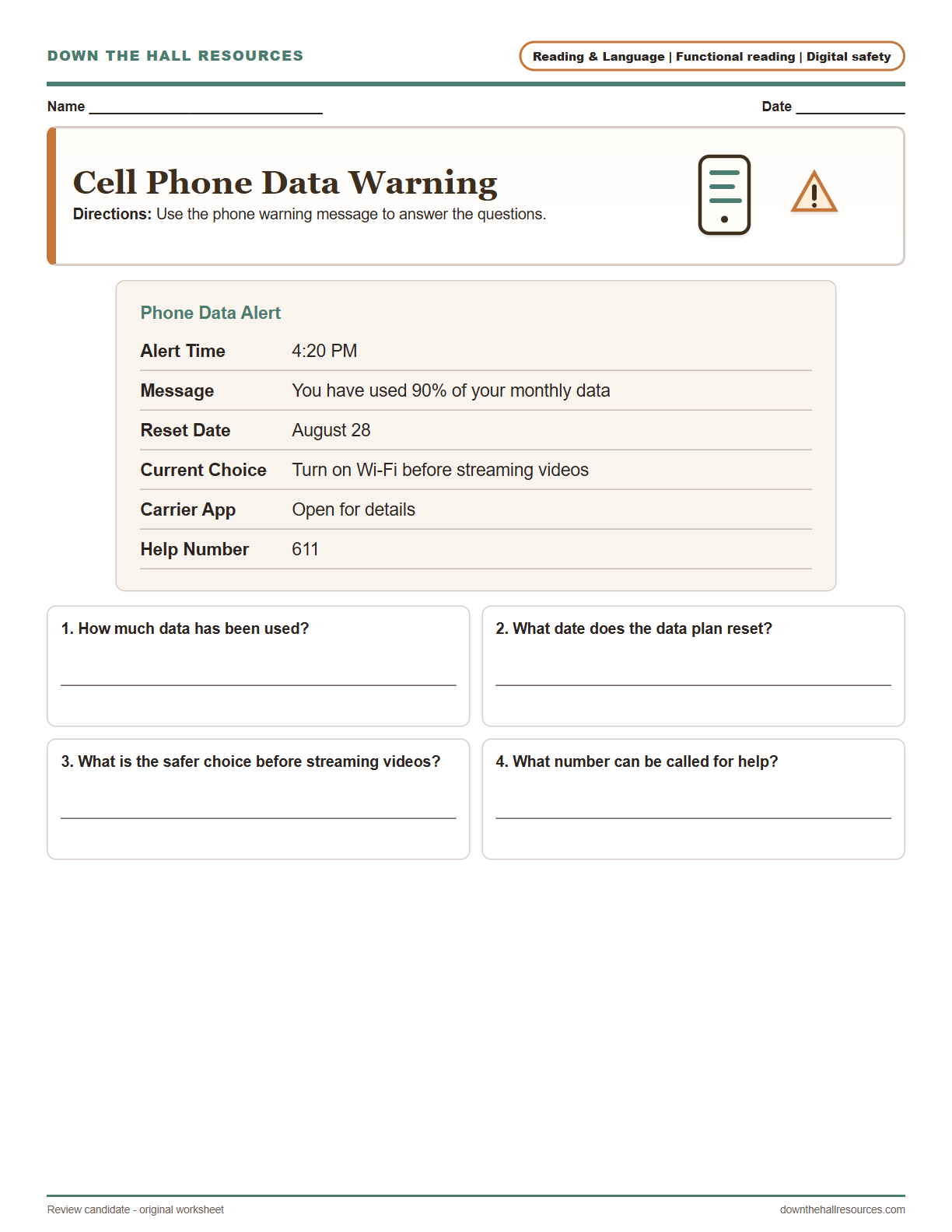
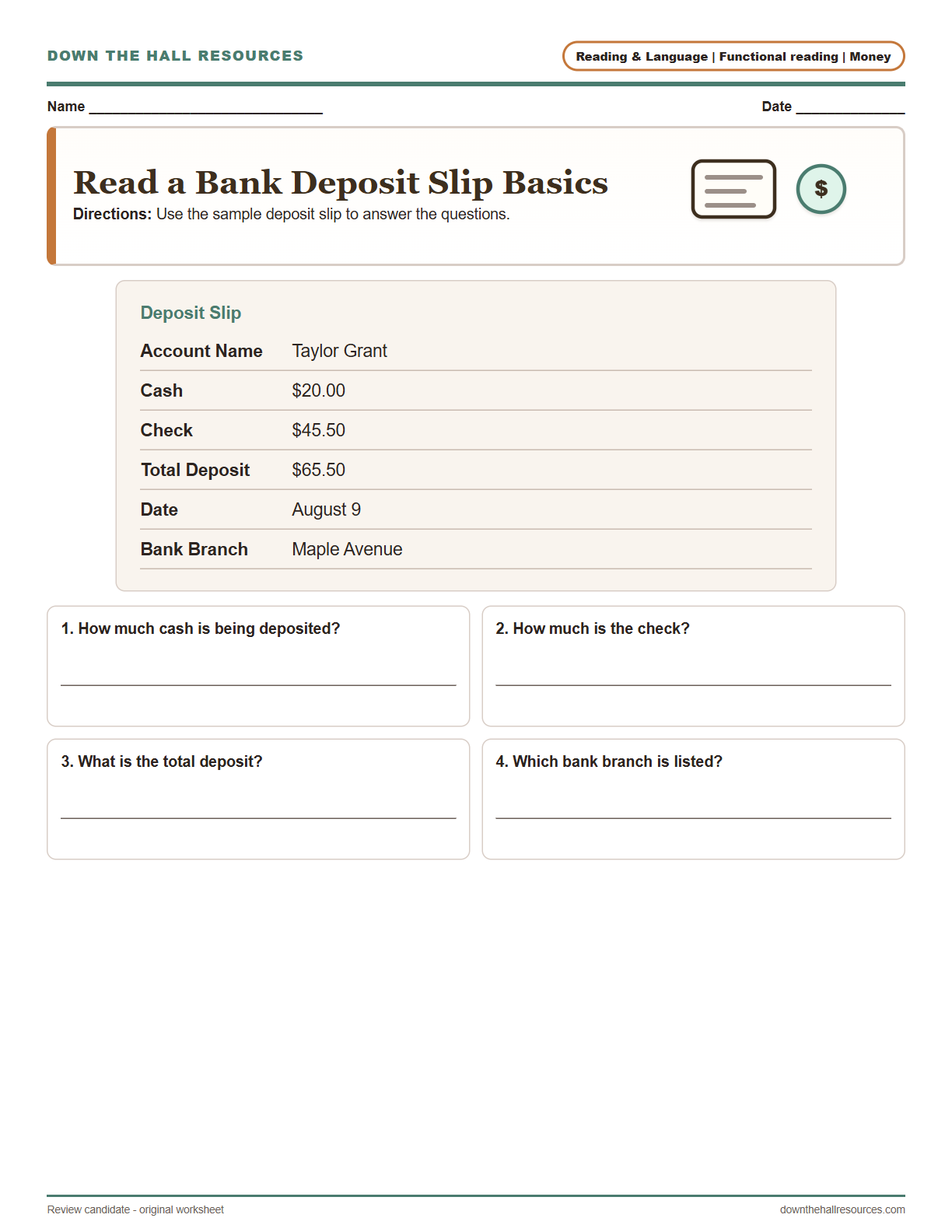
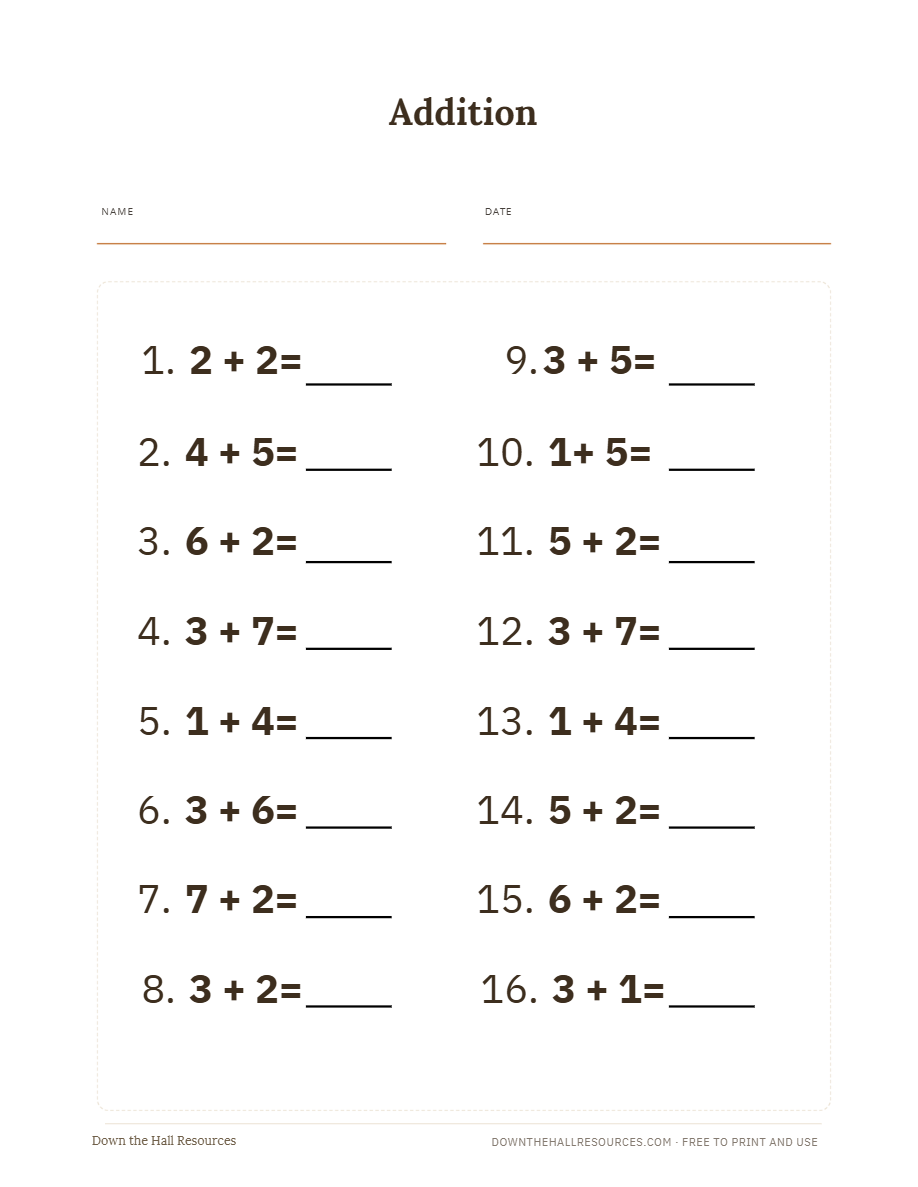
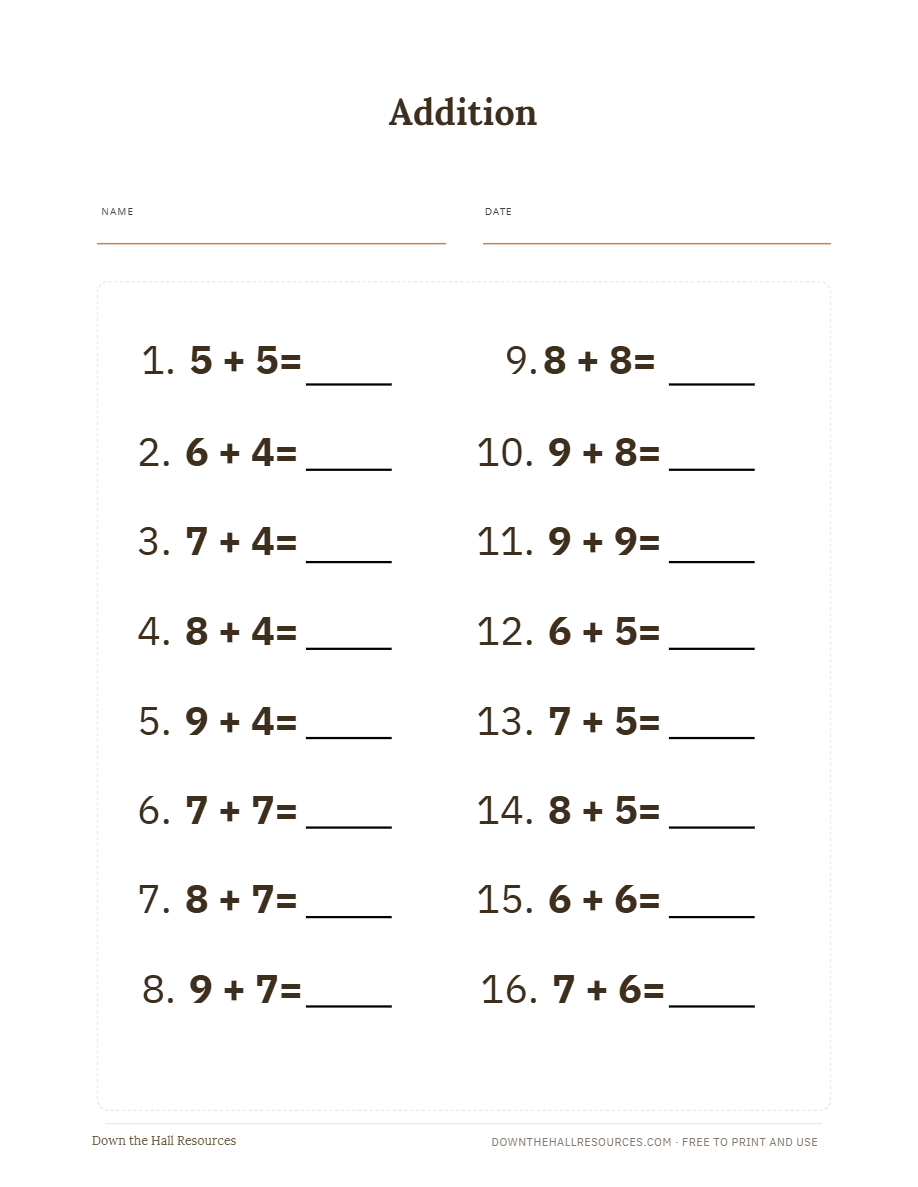
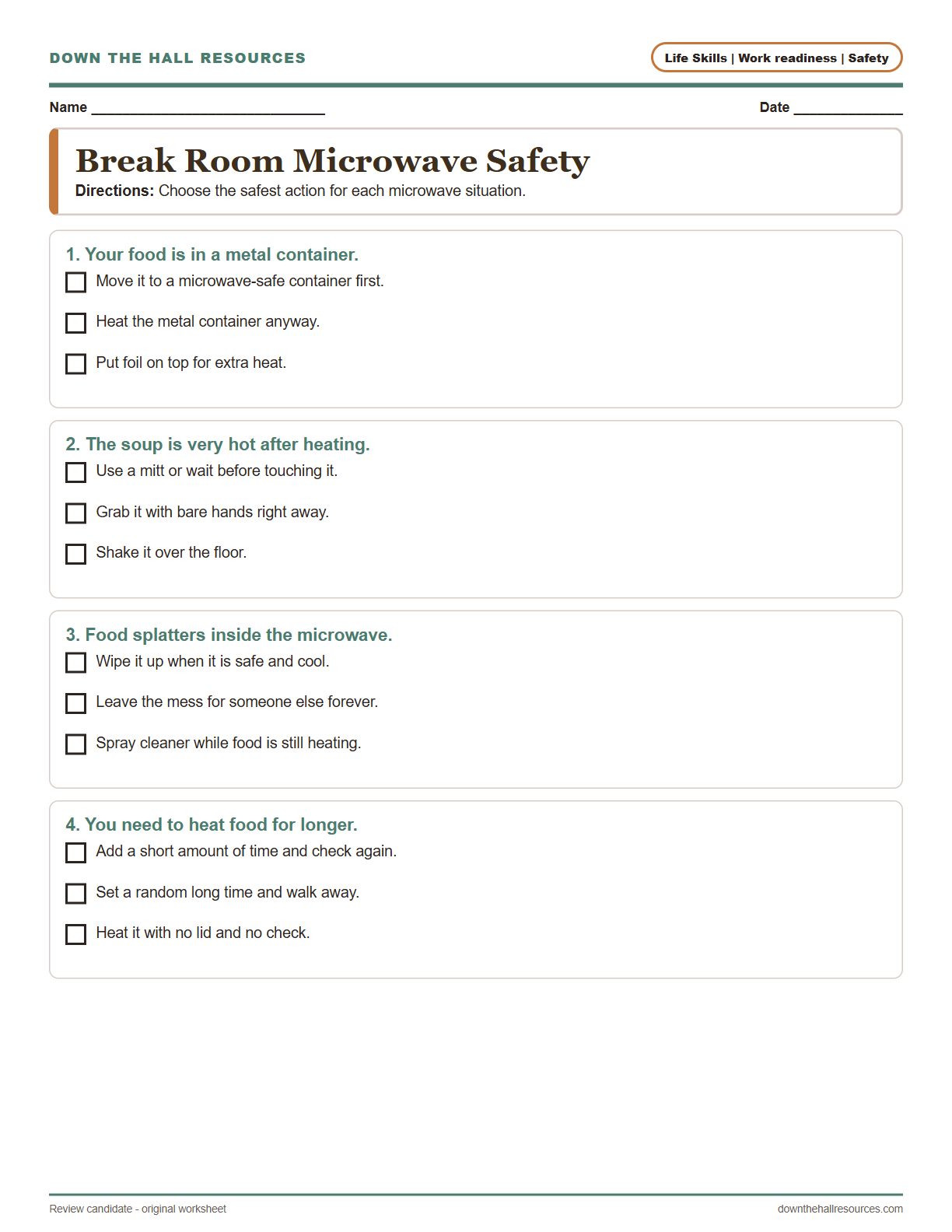
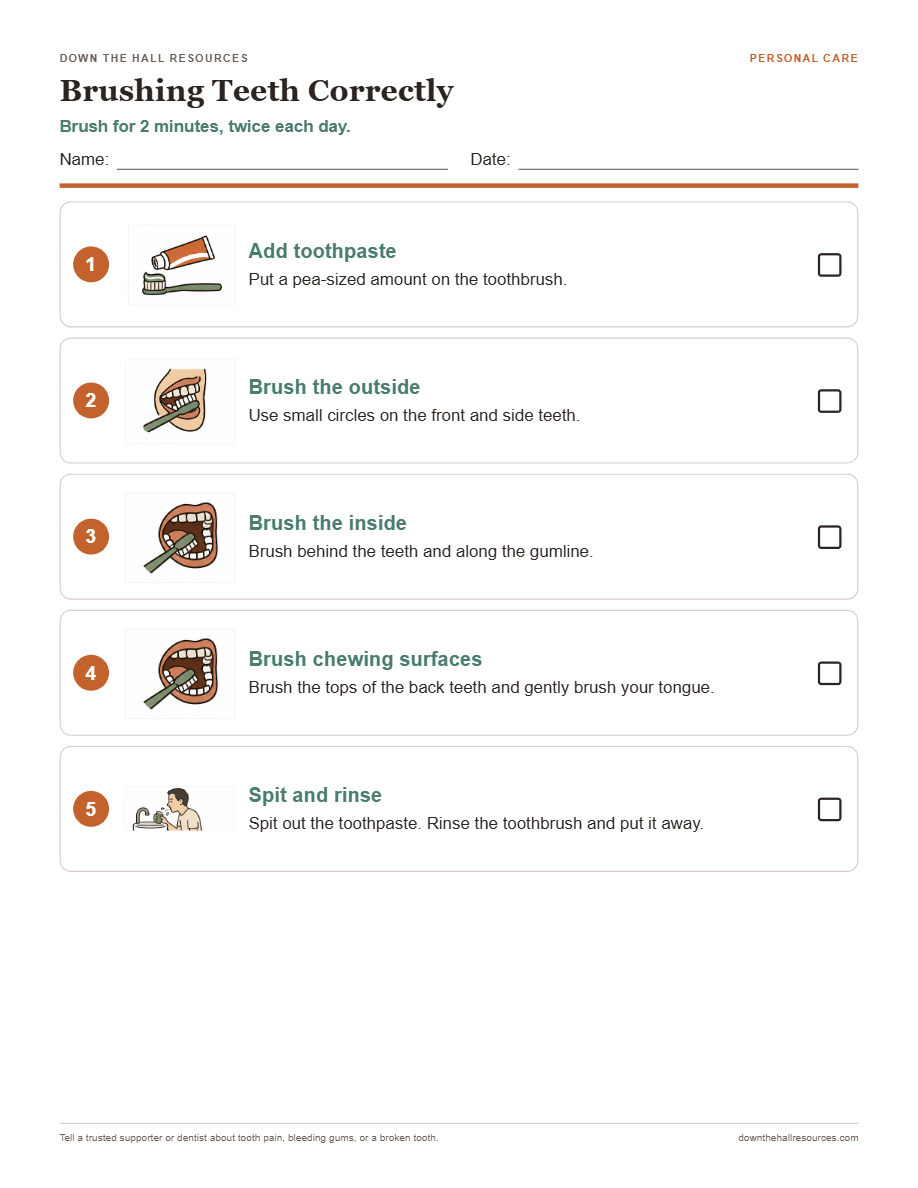
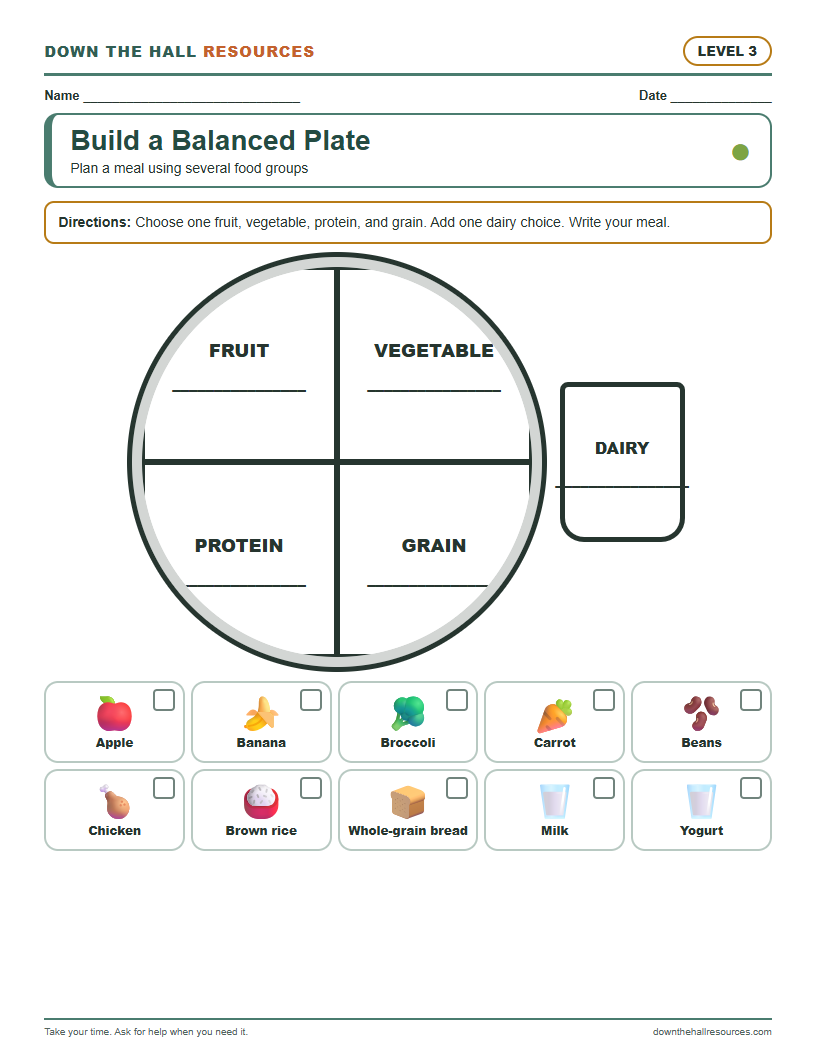
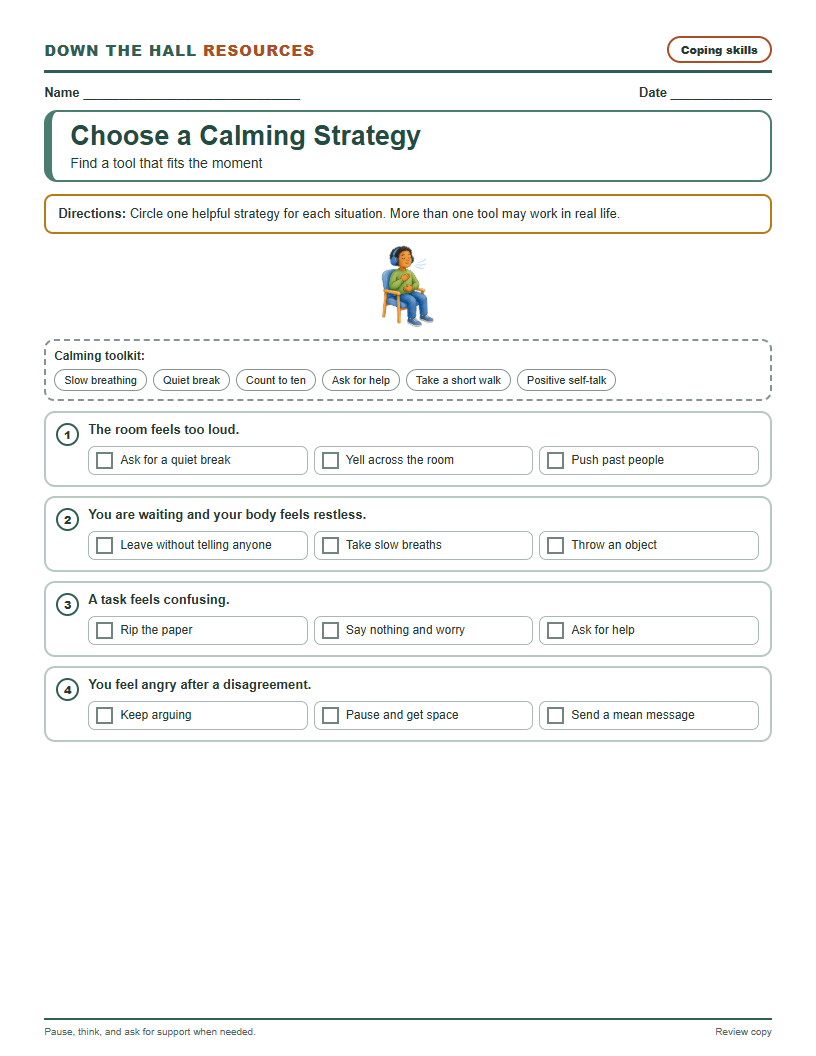
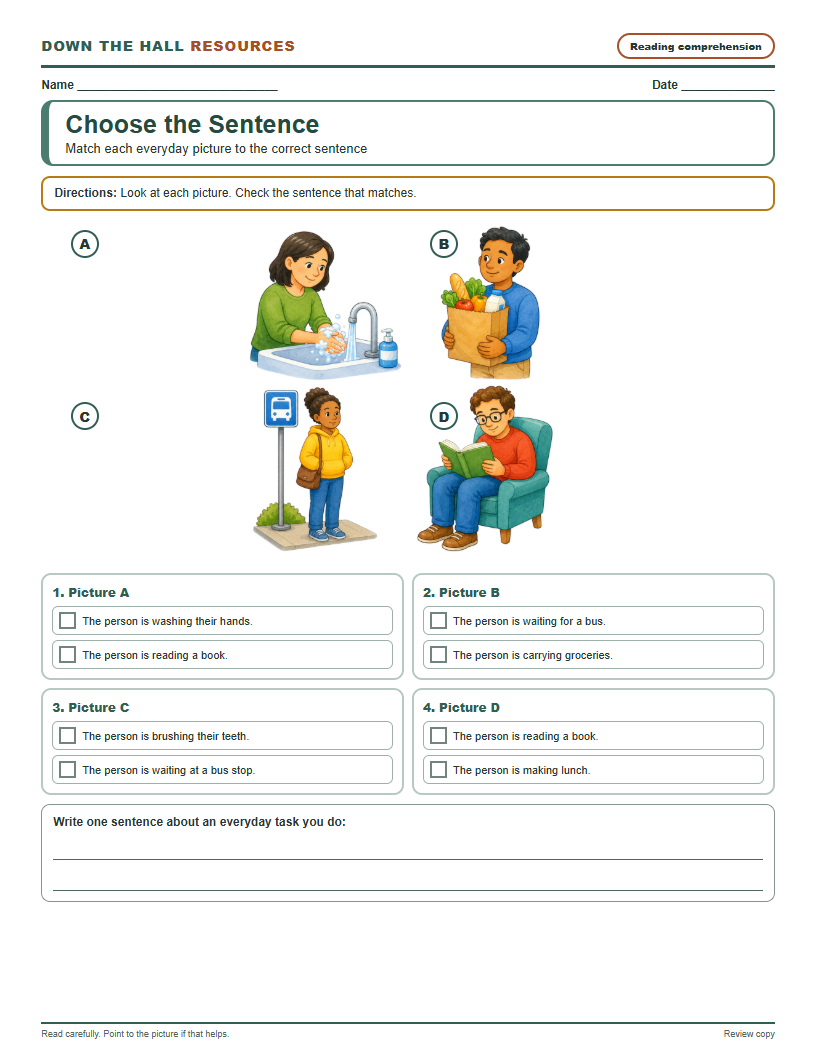
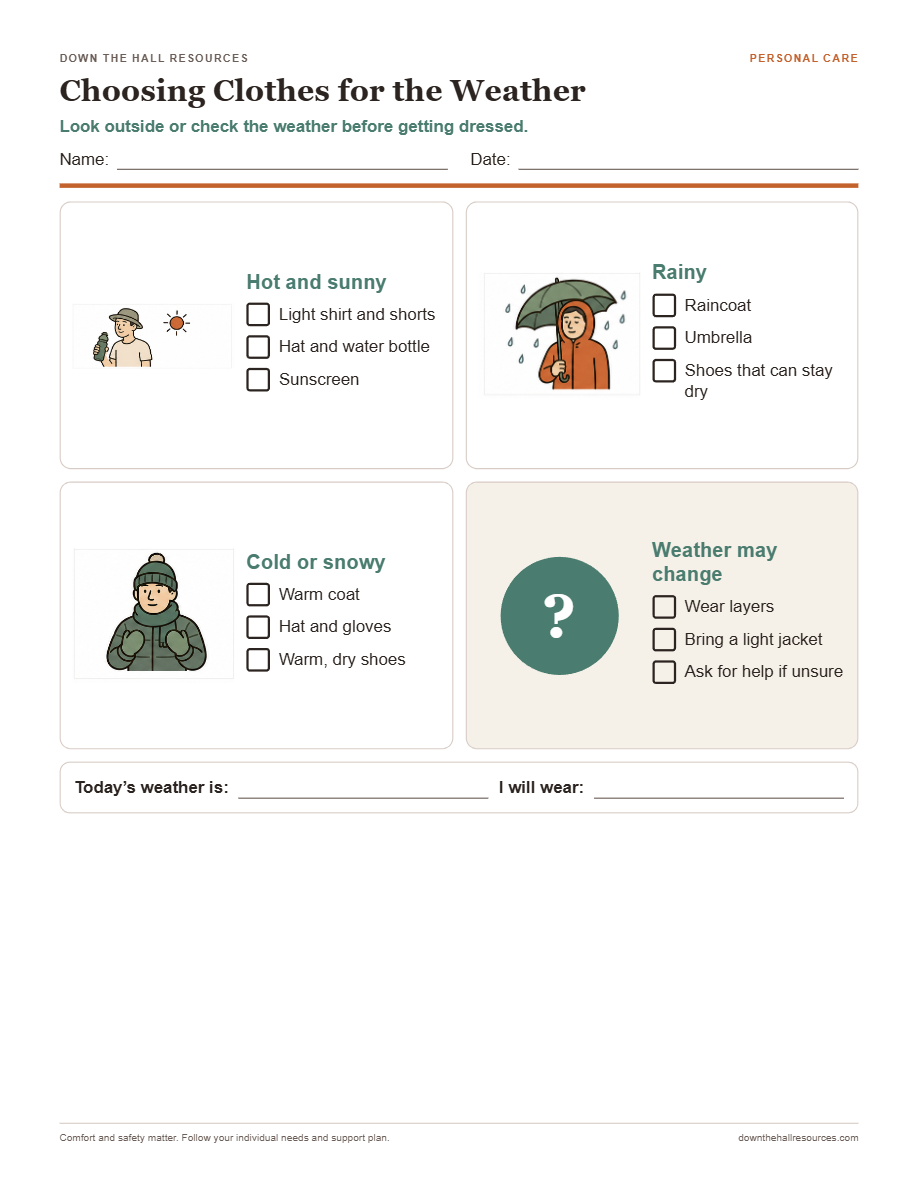
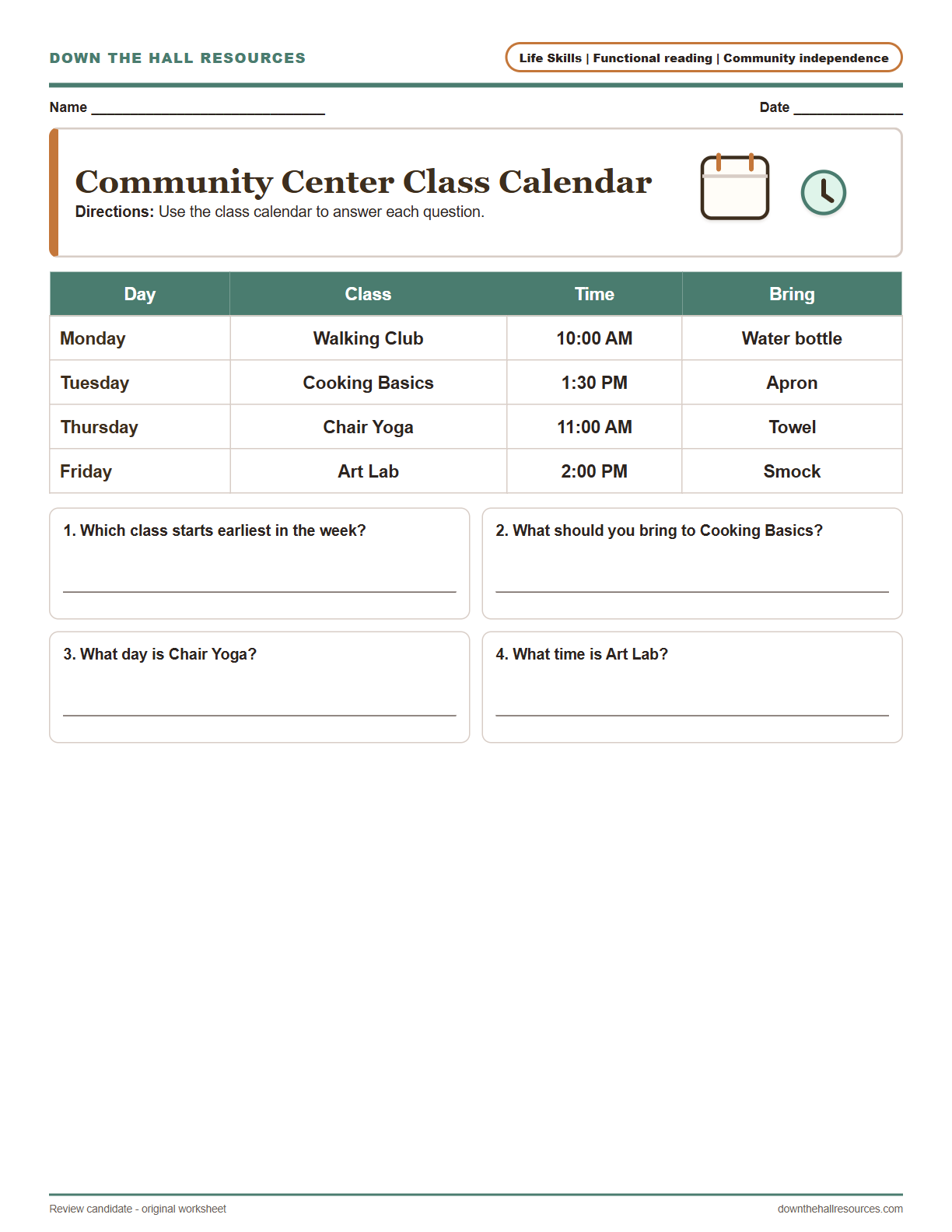
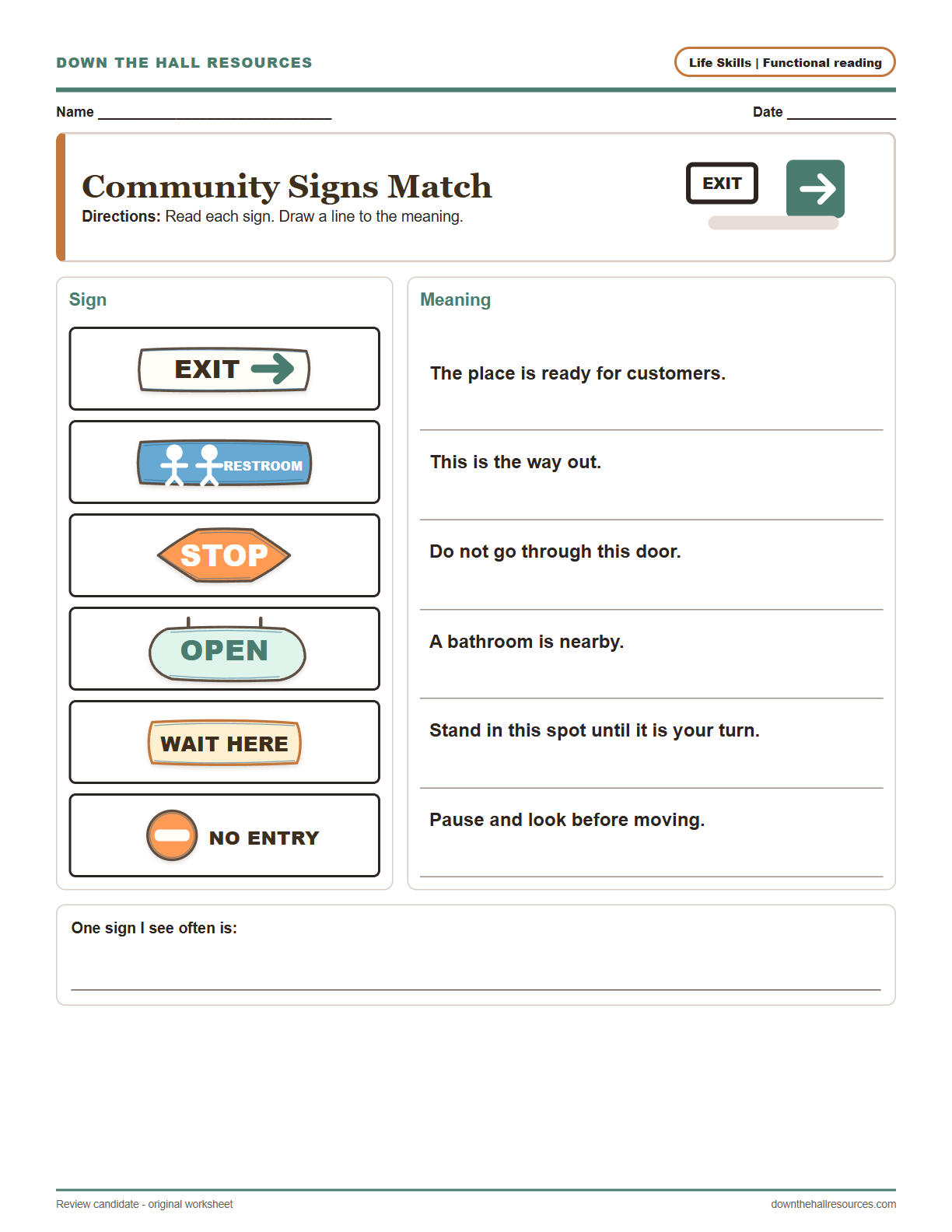
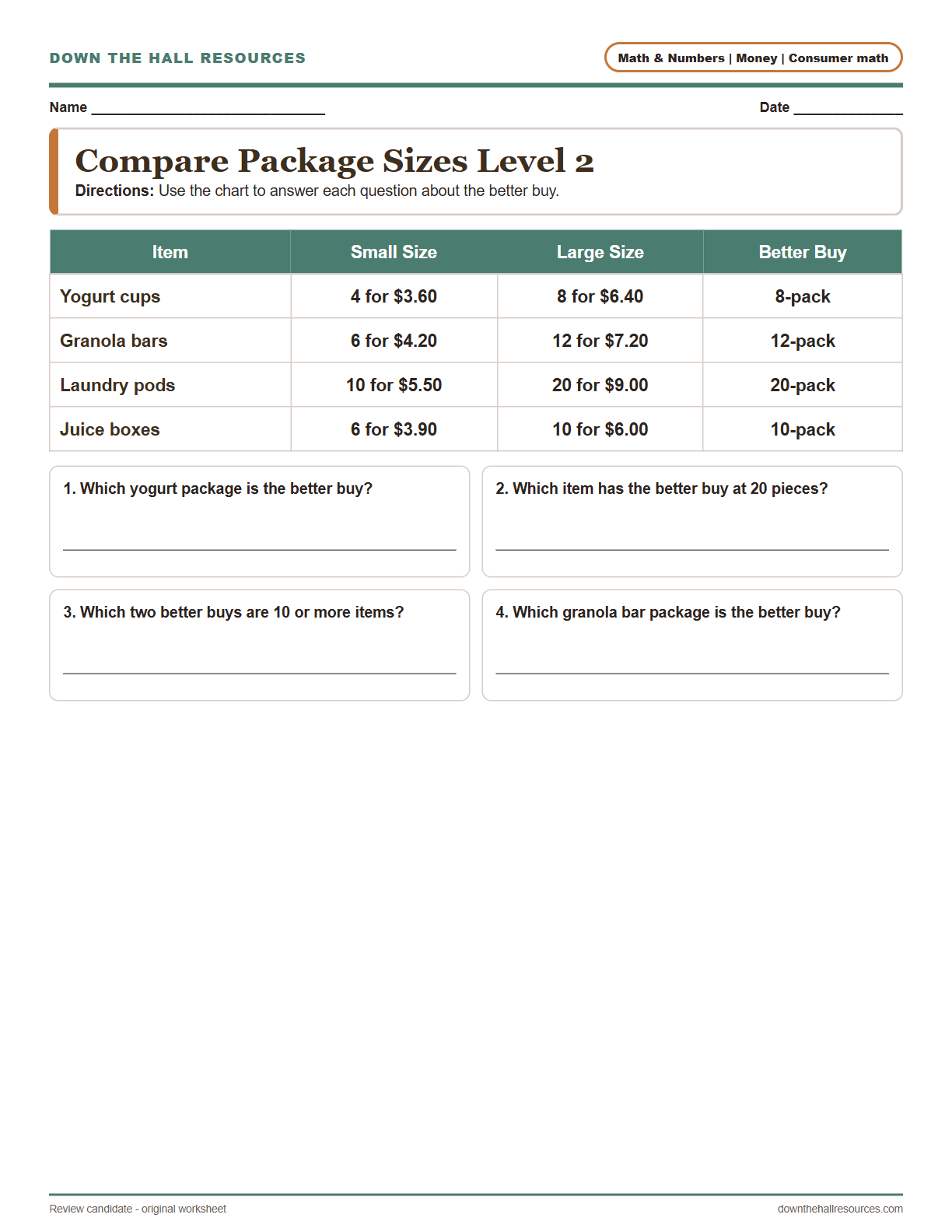
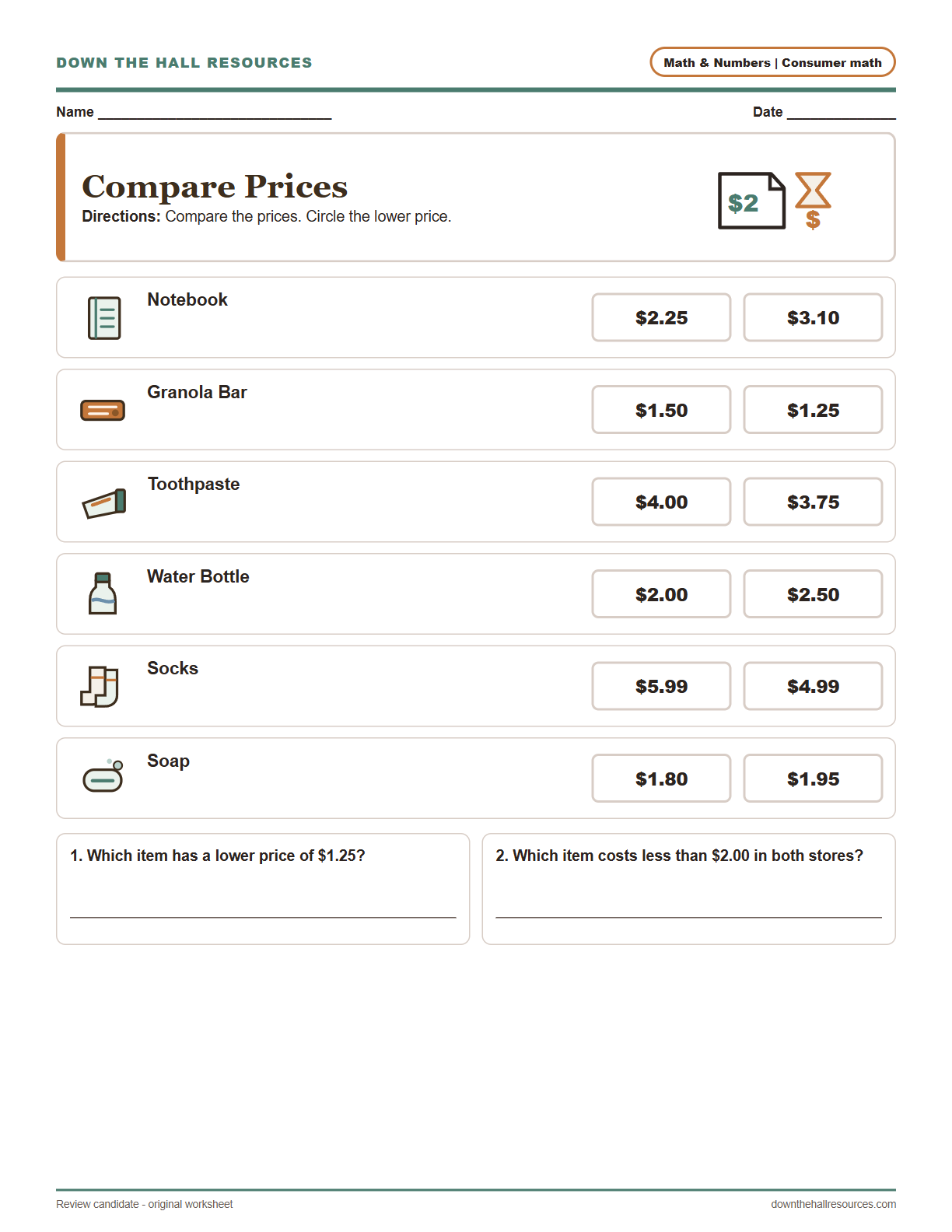
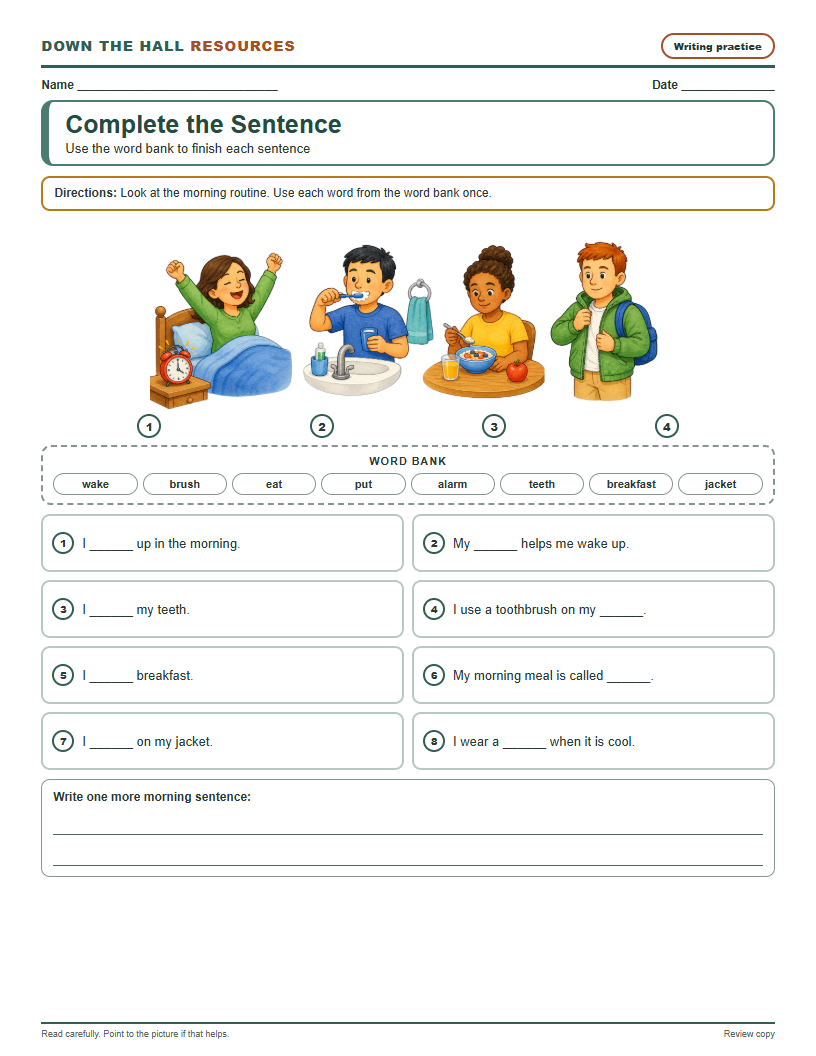
Start with one worksheet that matches the learner's current routine or goal. Read the directions together, model one example, and allow supports such as verbal choices, pointing, writing assistance, real objects, or fewer questions at one time.
- Use the same worksheet more than once if repetition helps the skill stick.
- Connect the printed activity to real routines, places, objects, or conversations whenever possible.
- Adjust the support level instead of assuming the worksheet is too easy or too hard.
Teaching goals for this topic
These worksheets are meant to support practical instruction, not replace the judgment of the teacher, direct support professional, therapist, caregiver, or program staff member who knows the learner. The goal is to make the skill easier to introduce, repeat, and apply.
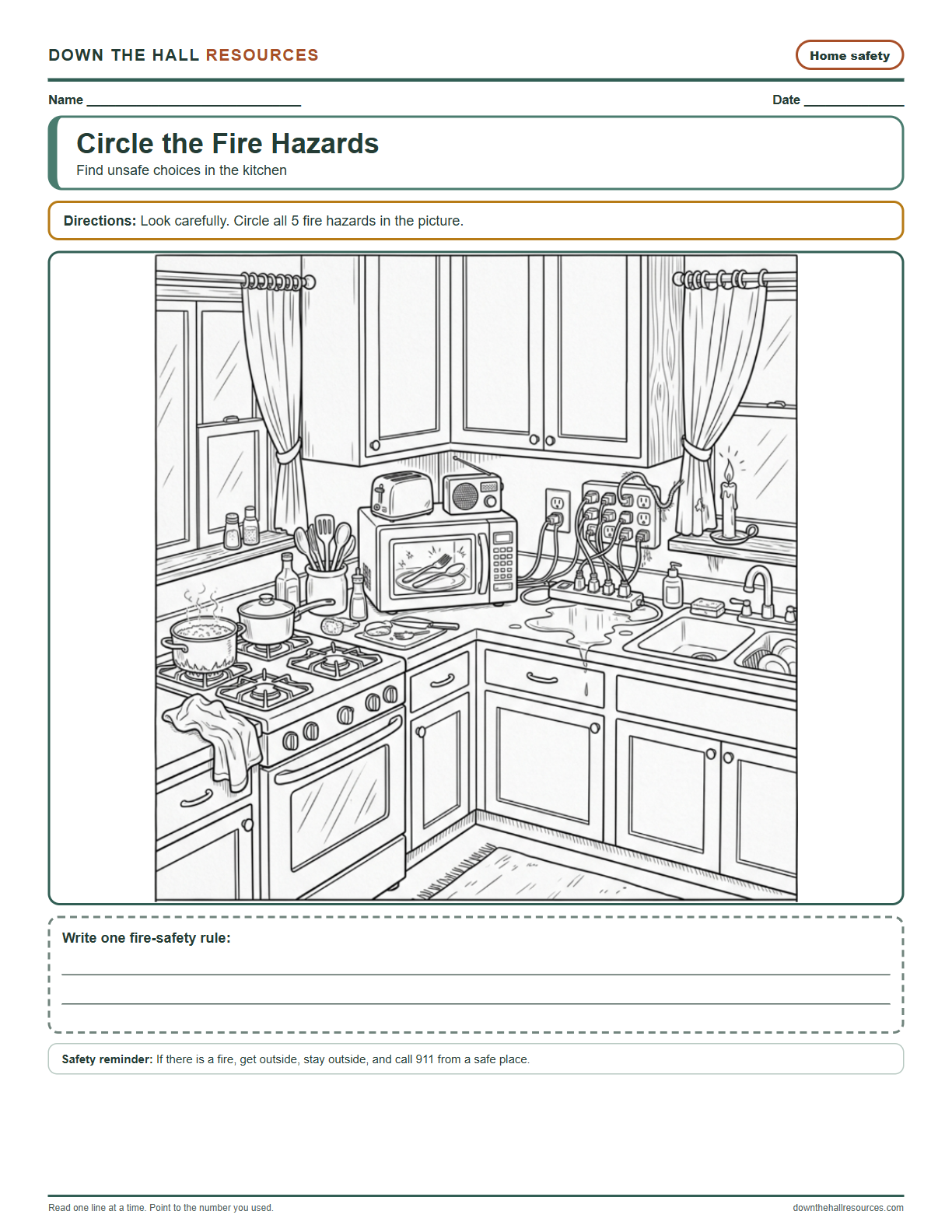
- Build practical independence through familiar routines such as personal care, safety, money, food, and community access.
- Give staff and caregivers a printable starting point for direct teaching, review, and conversation.
- Support learners who need clear wording, repeated practice, and flexible prompting.
Simple lesson plan idea
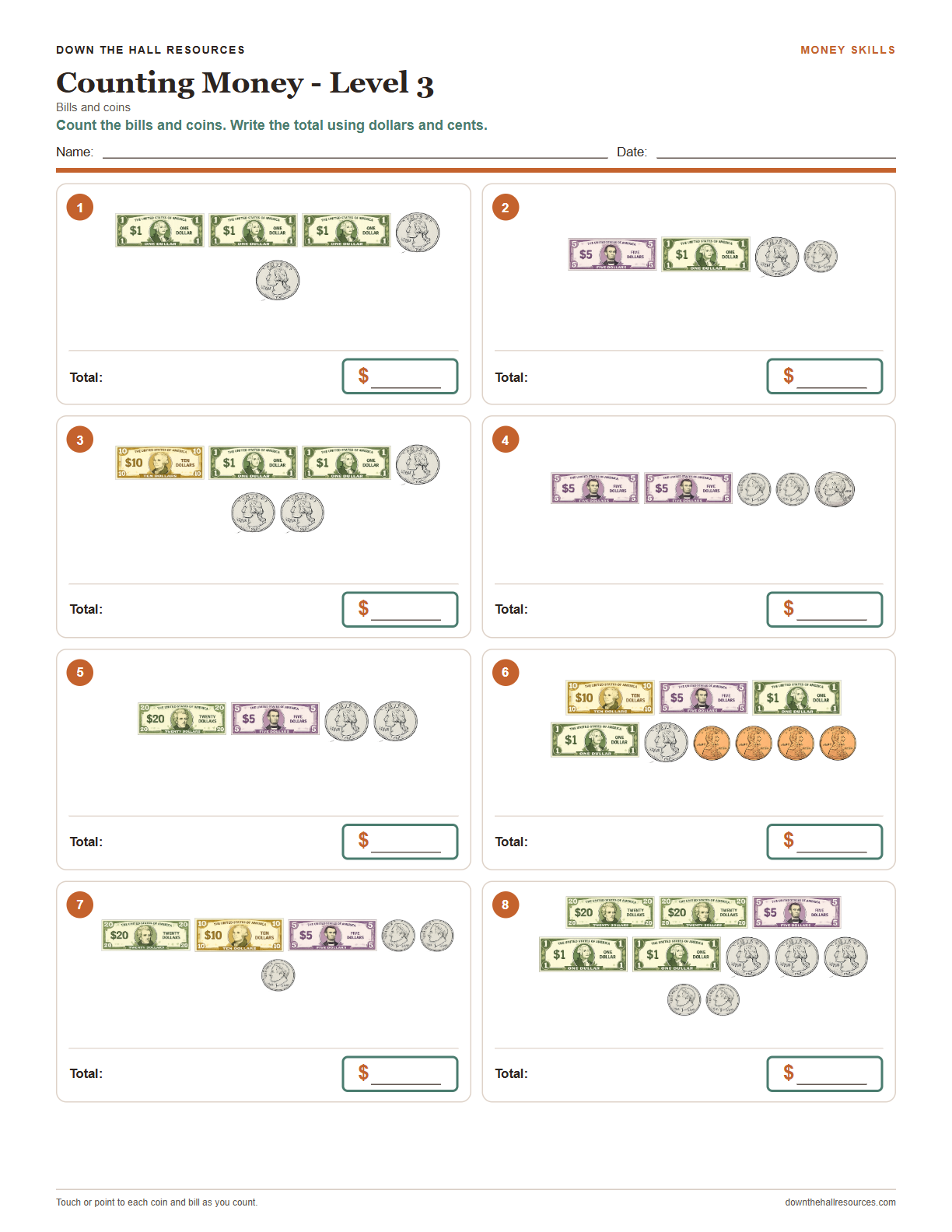
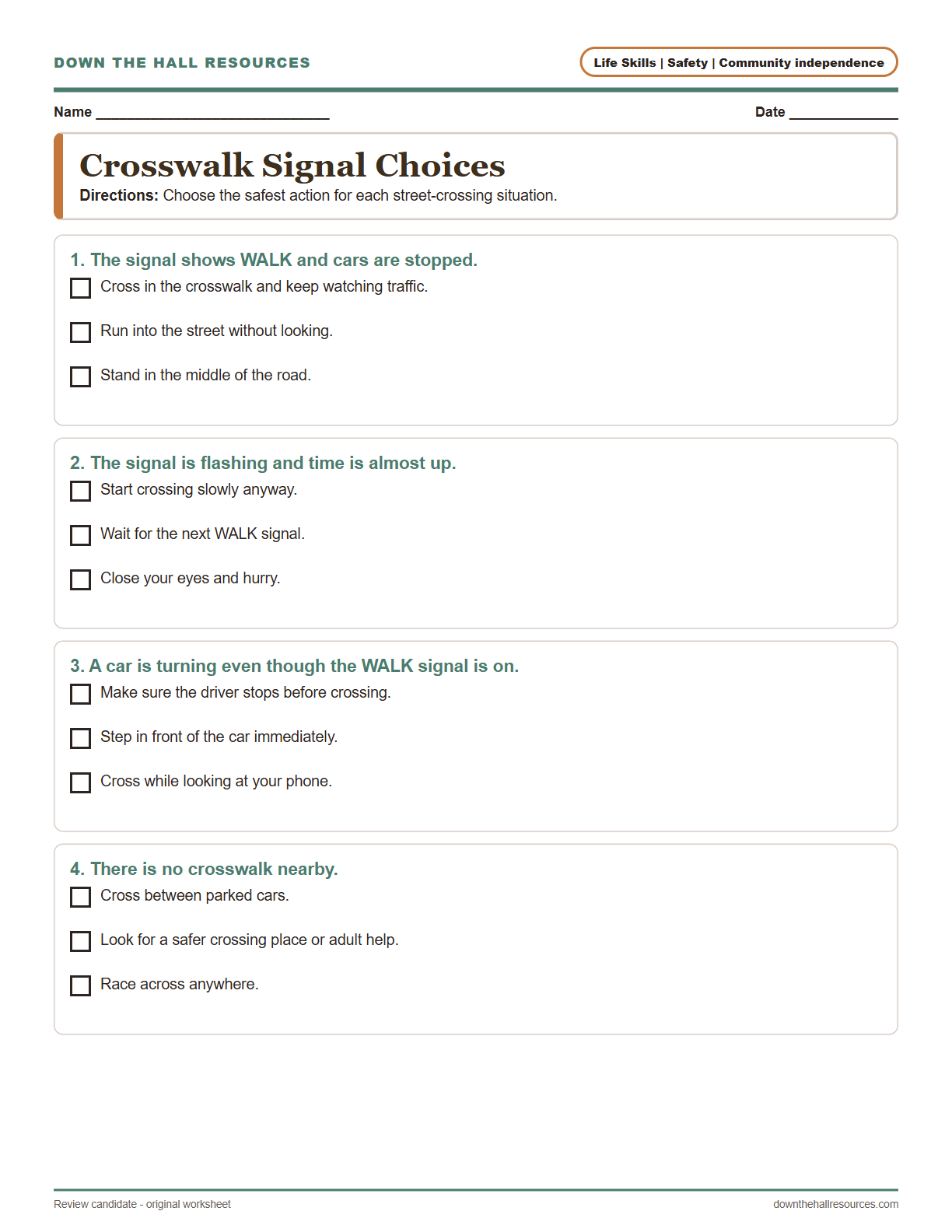
Choose one routine that matters this week, such as reading a schedule, identifying a safer choice, or practicing a money skill. Begin with a short discussion, complete the first item together, and then let the learner try the next item with the least support that still keeps the activity successful.
Ways to adapt the activity
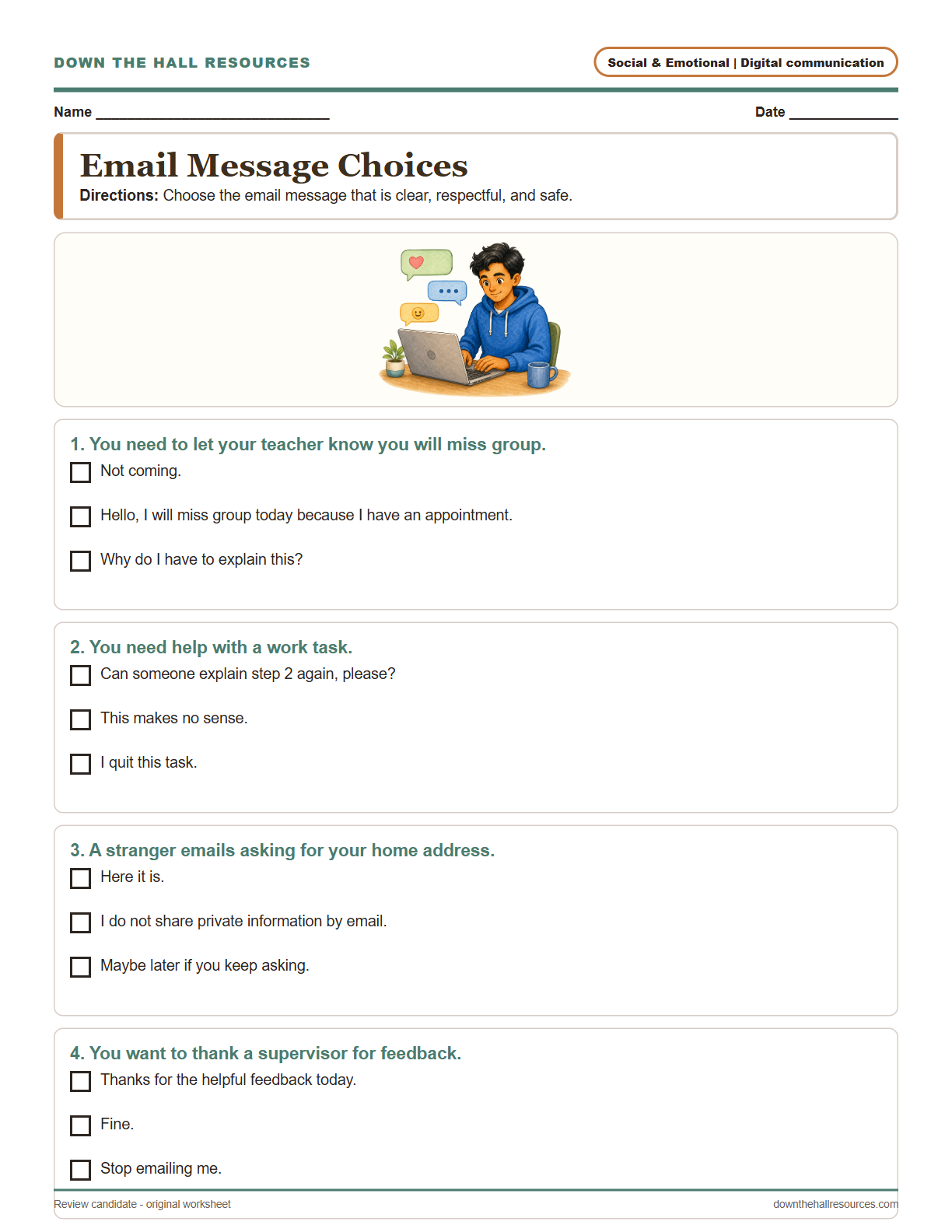
For learners who need more help, reduce the number of questions, read choices aloud, or use real objects from the routine. For learners ready for more challenge, ask them to explain their answer, role-play the situation, or apply the skill during a real community or home routine.