How to use these worksheets
Start with one worksheet that matches the learner's current routine or goal. Read the directions together, model one example, and allow supports such as verbal choices, pointing, writing assistance, real objects, or fewer questions at one time.
- Use the same worksheet more than once if repetition helps the skill stick.
- Connect the printed activity to real routines, places, objects, or conversations whenever possible.
- Adjust the support level instead of assuming the worksheet is too easy or too hard.
Teaching goals for this topic
These worksheets are meant to support practical instruction, not replace the judgment of the teacher, direct support professional, therapist, caregiver, or program staff member who knows the learner. The goal is to make the skill easier to introduce, repeat, and apply.
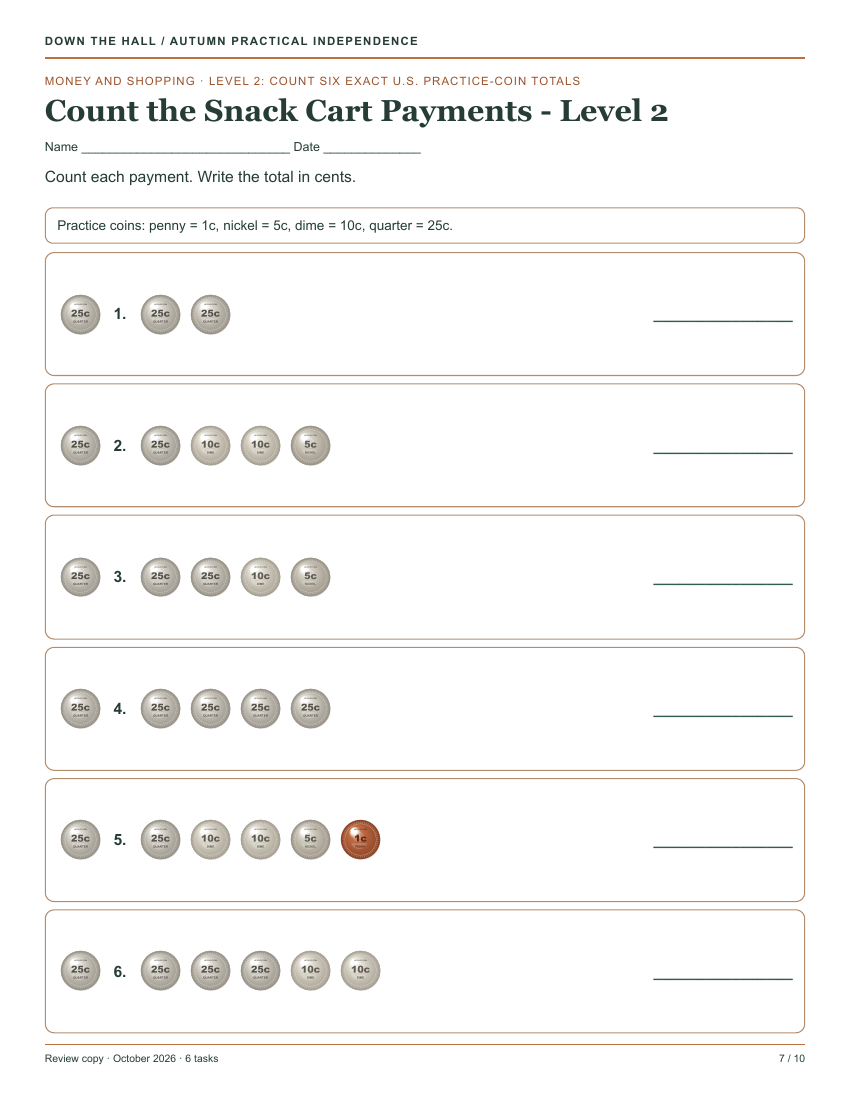
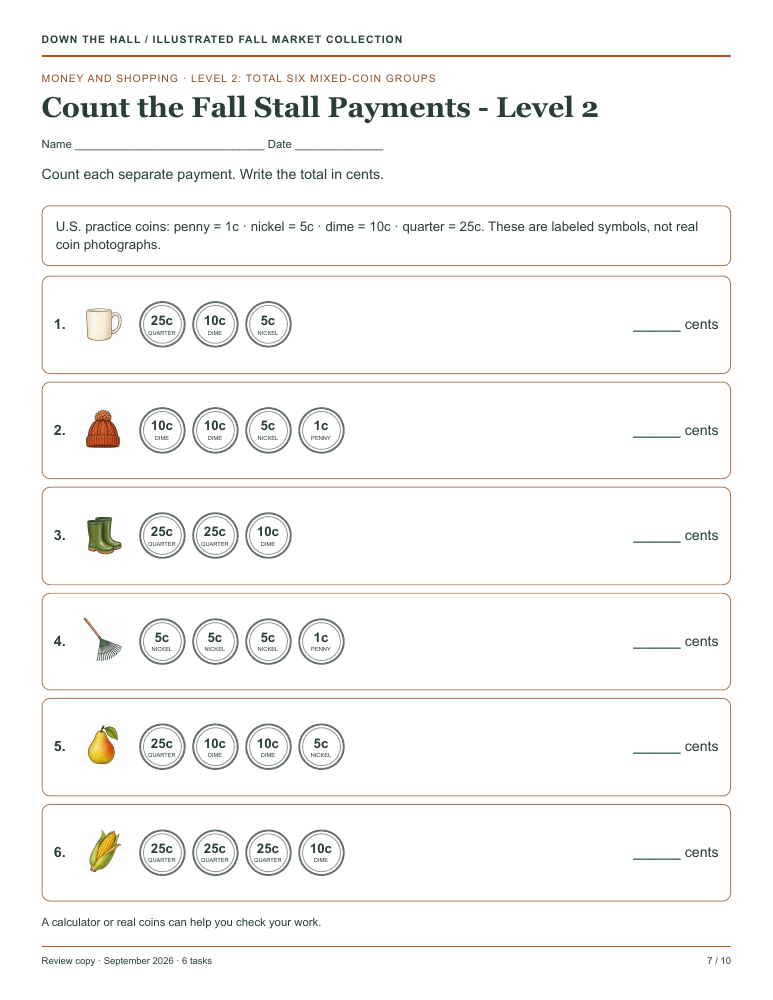
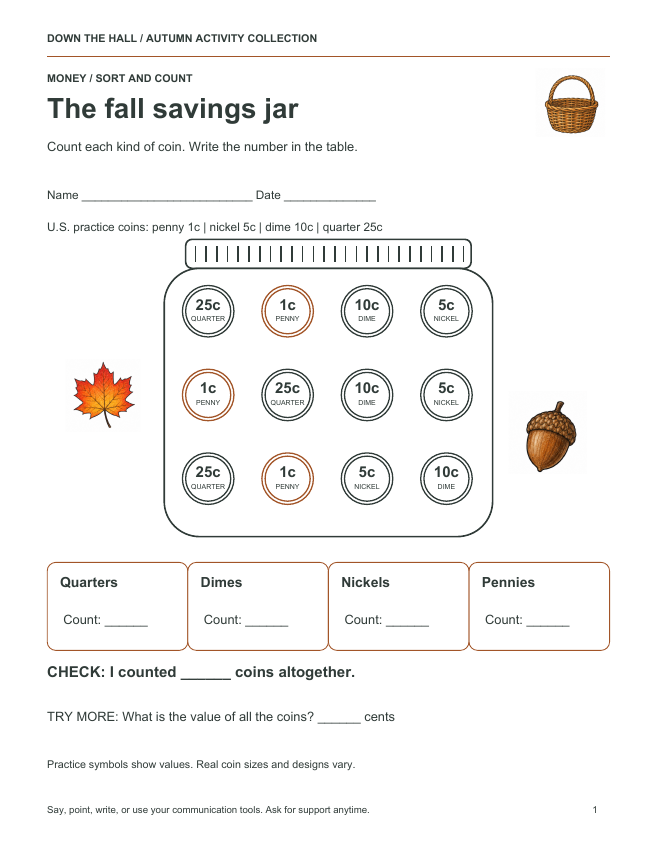
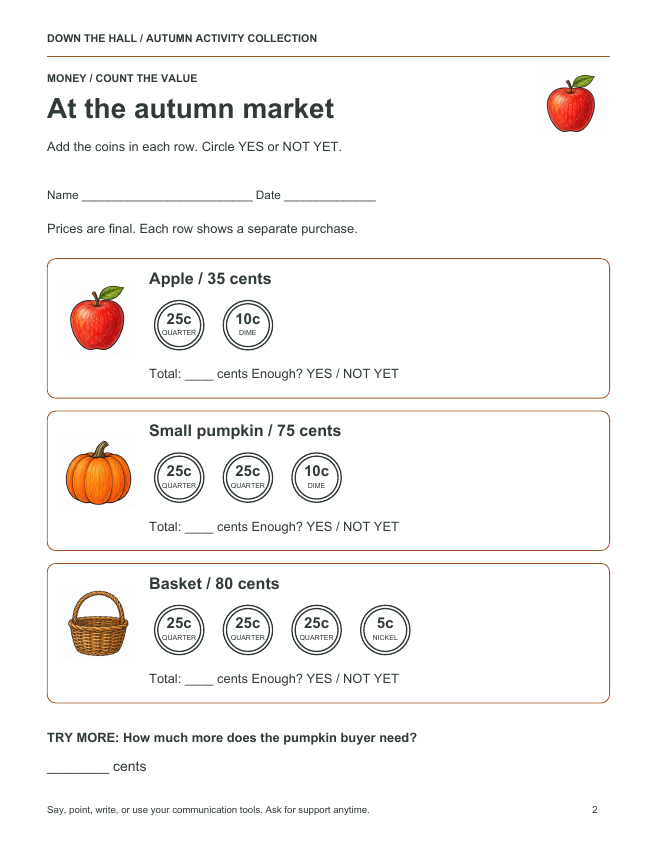
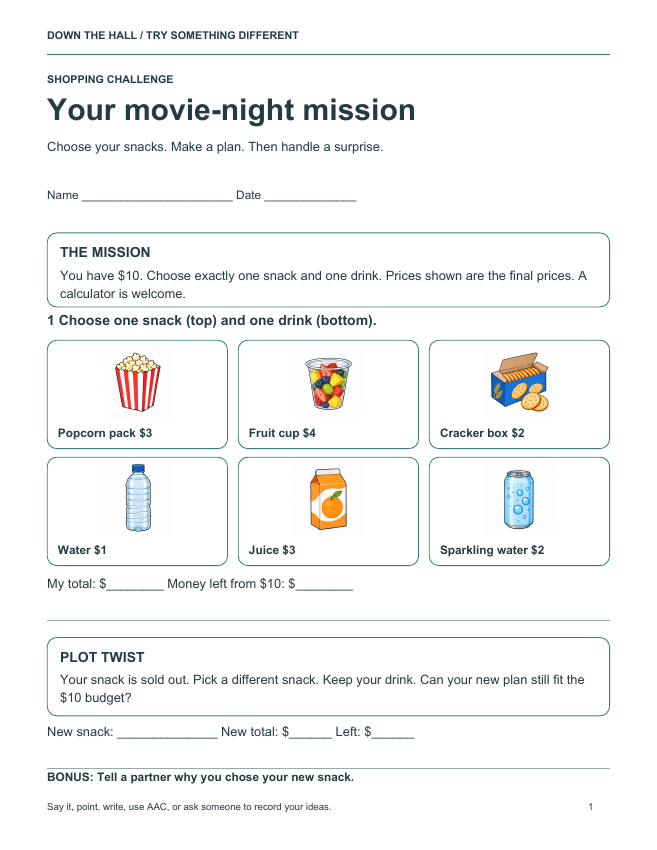
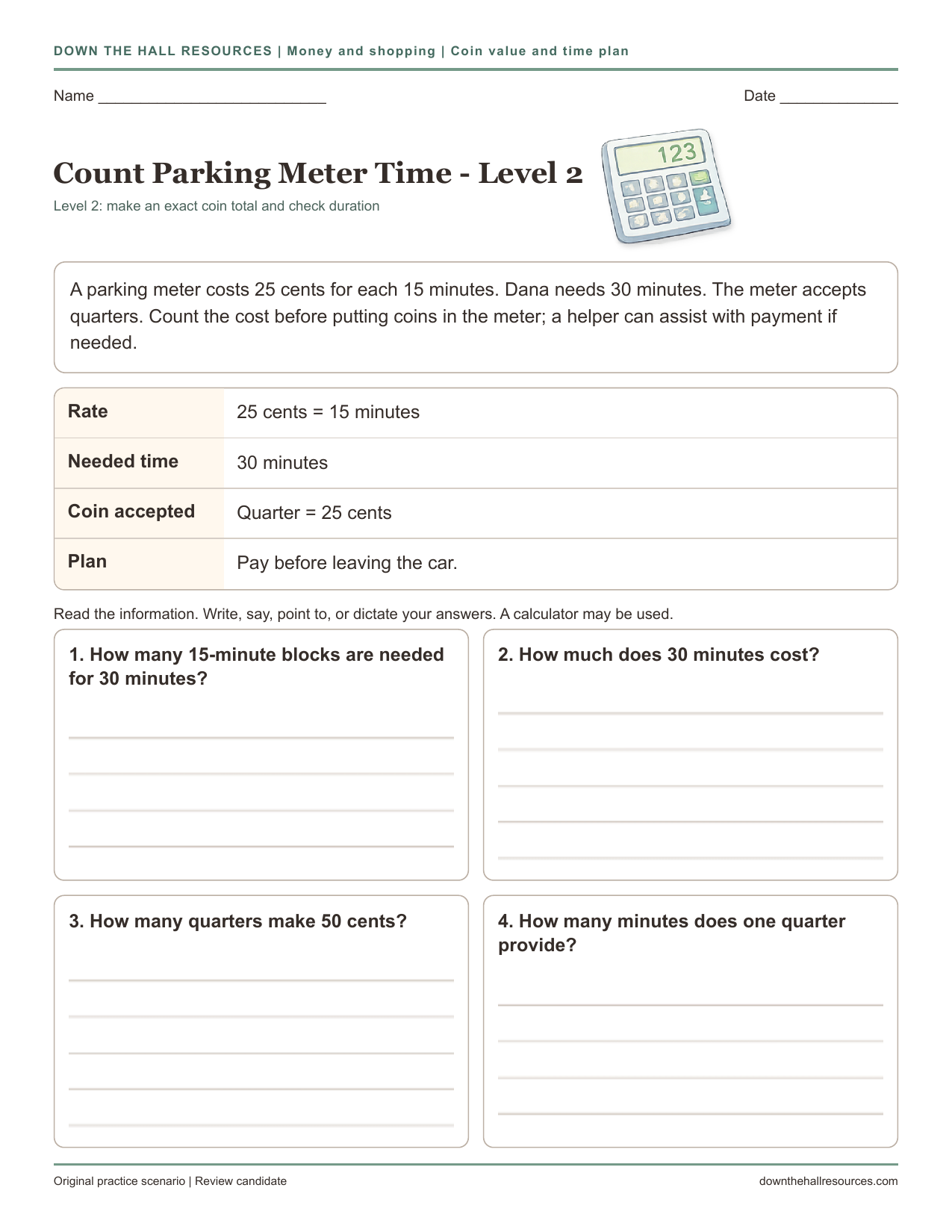
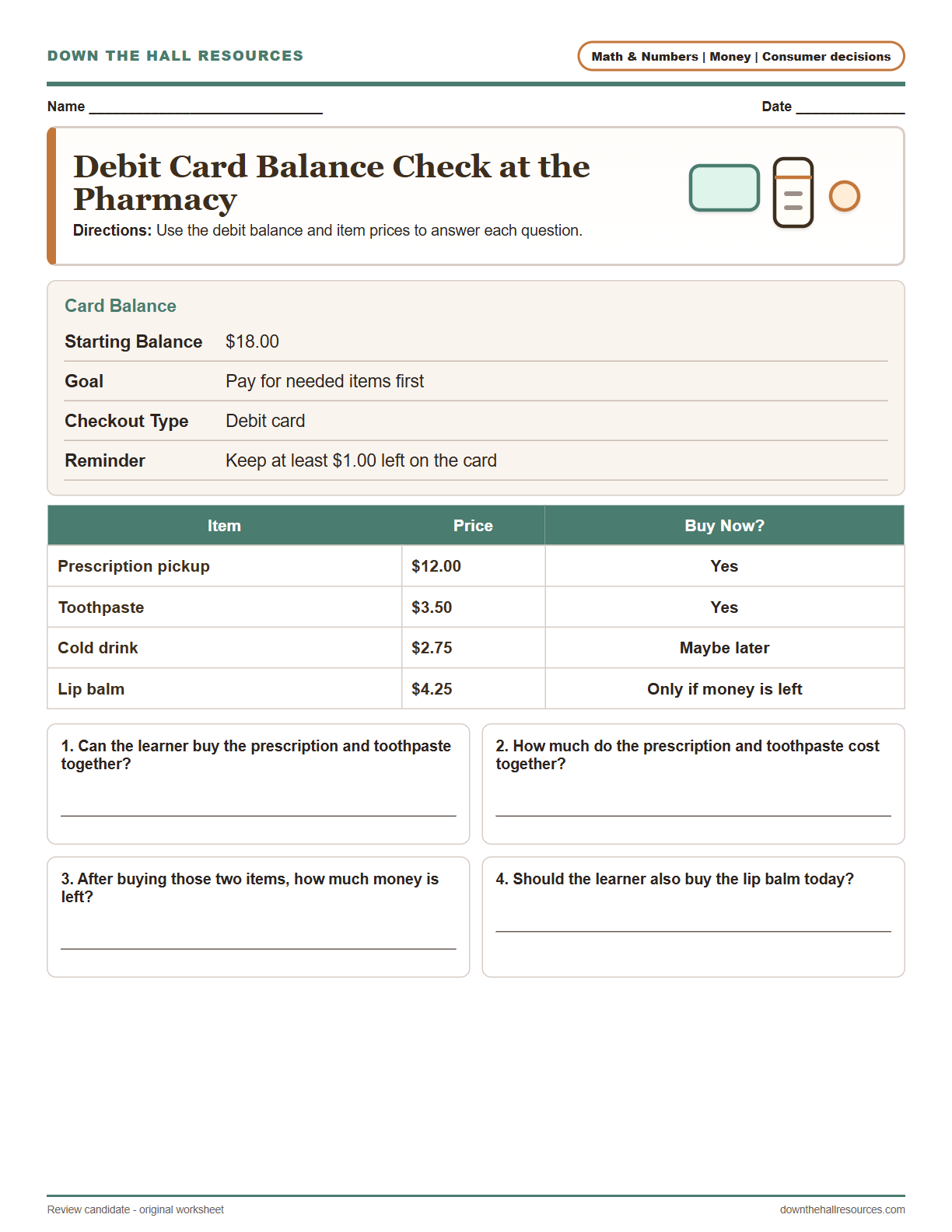
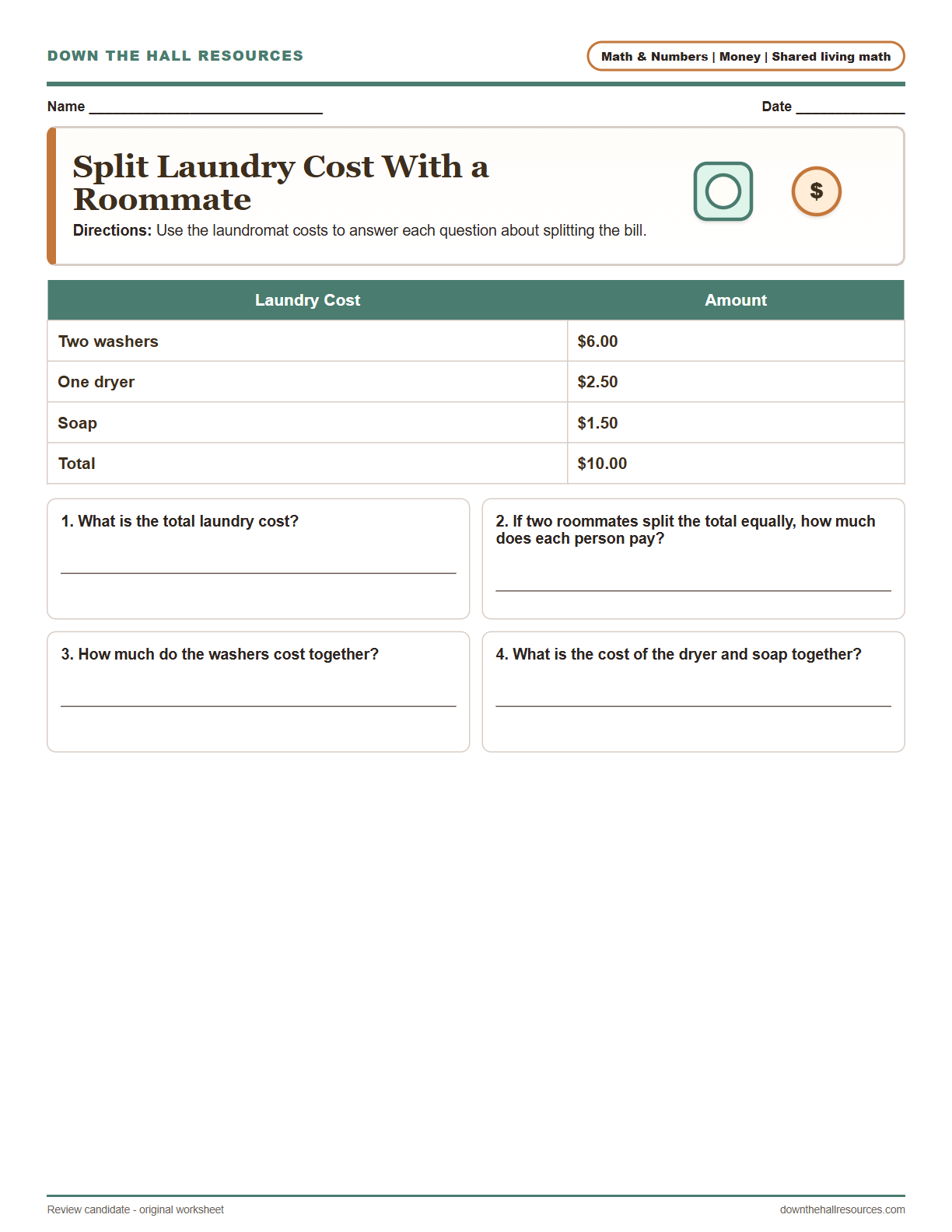
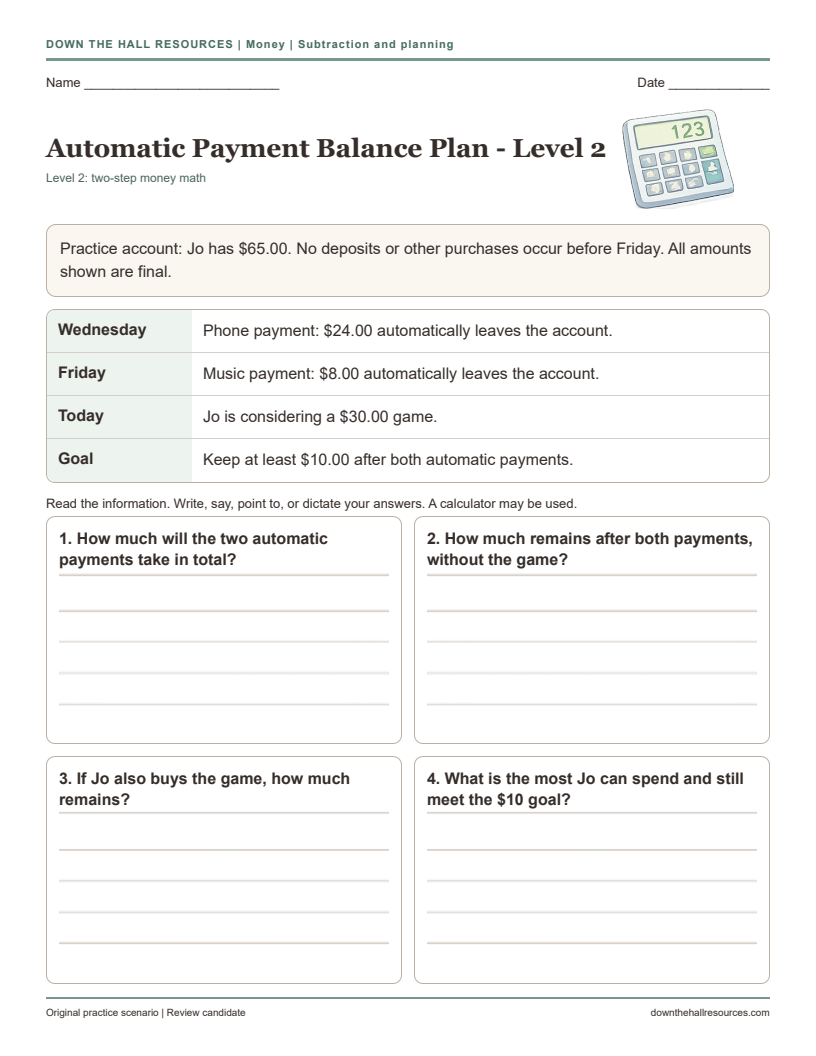
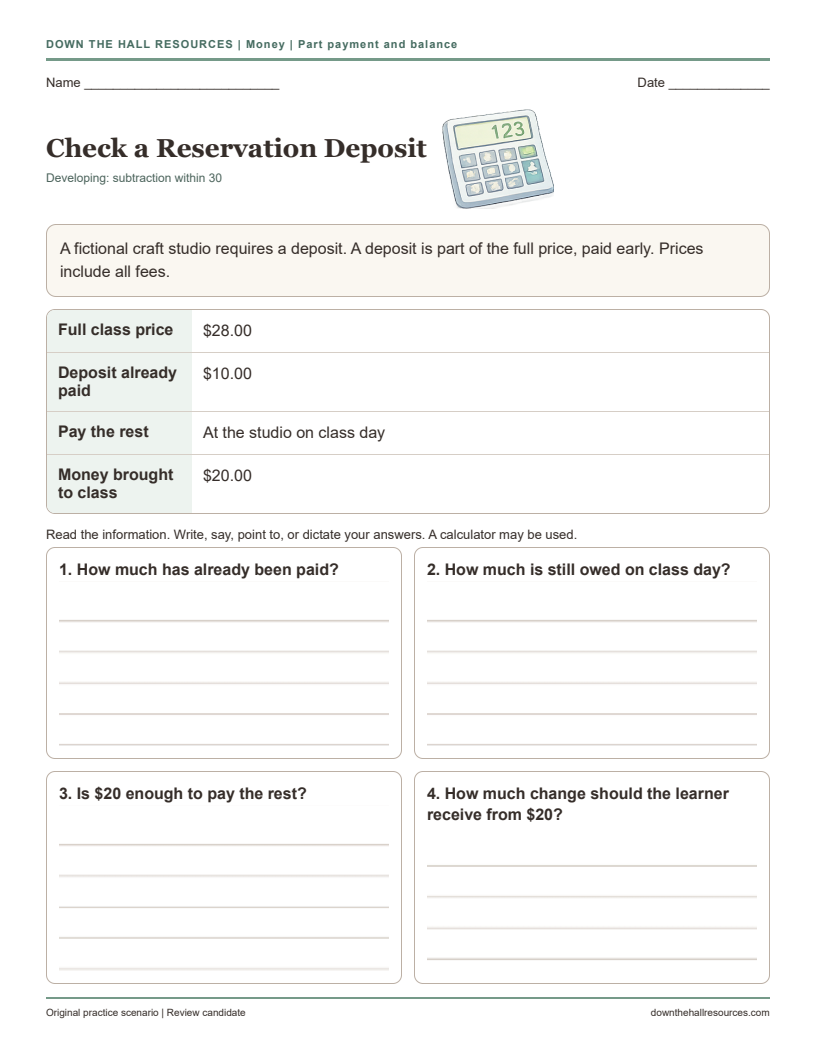
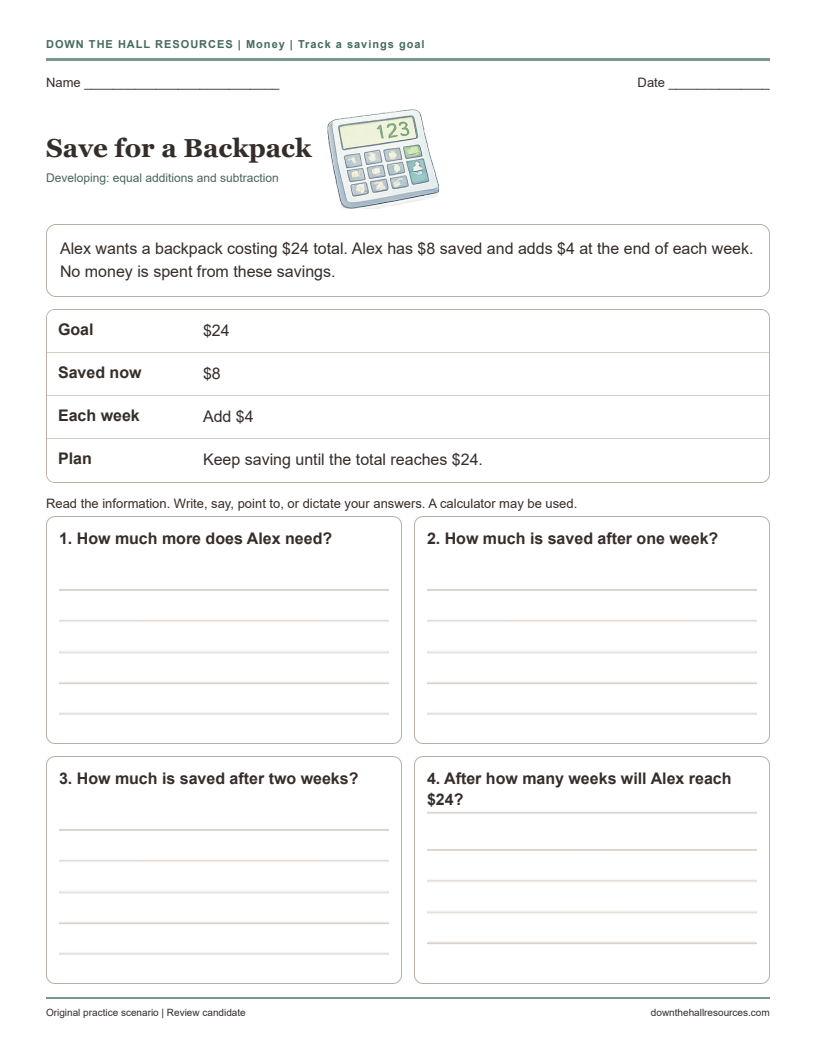
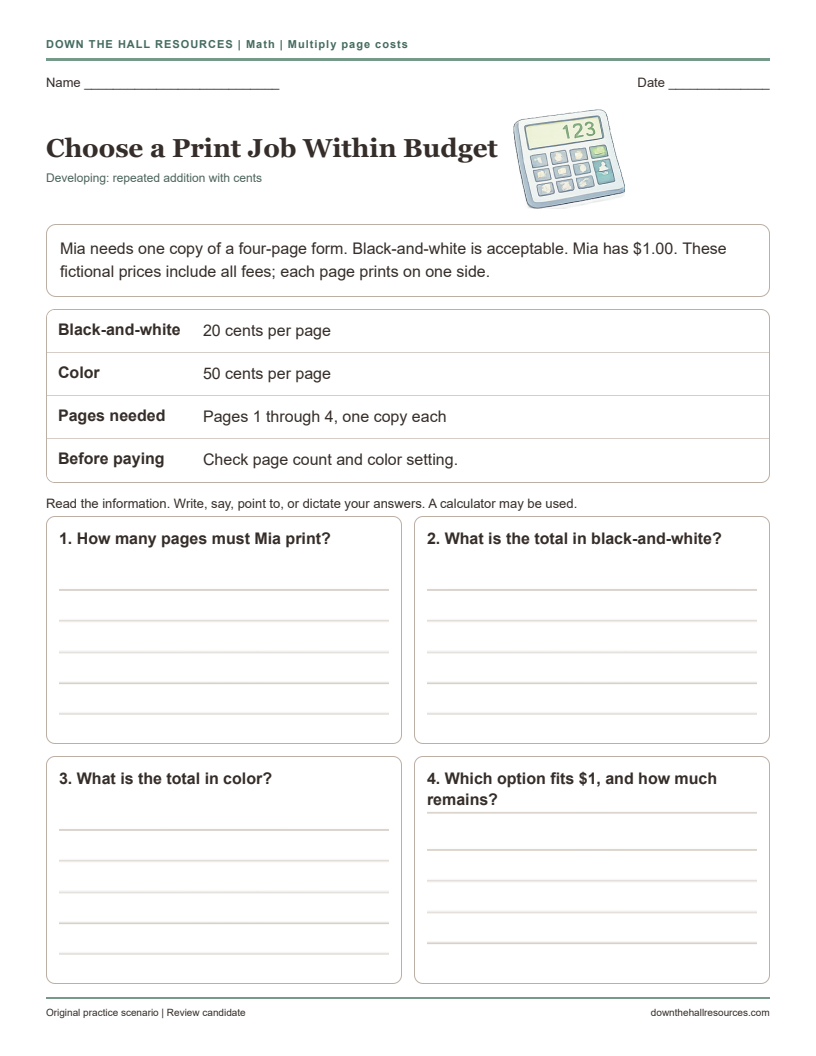
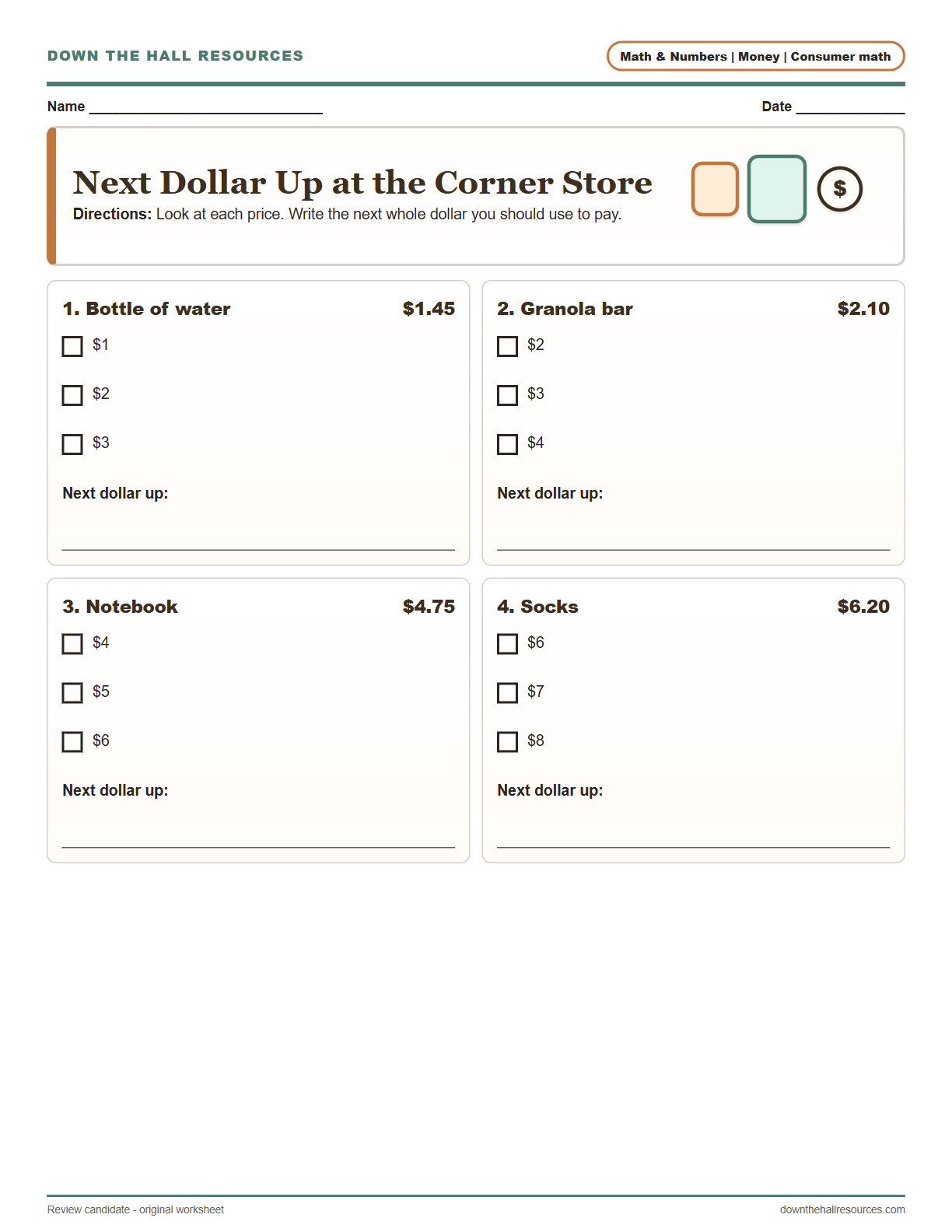
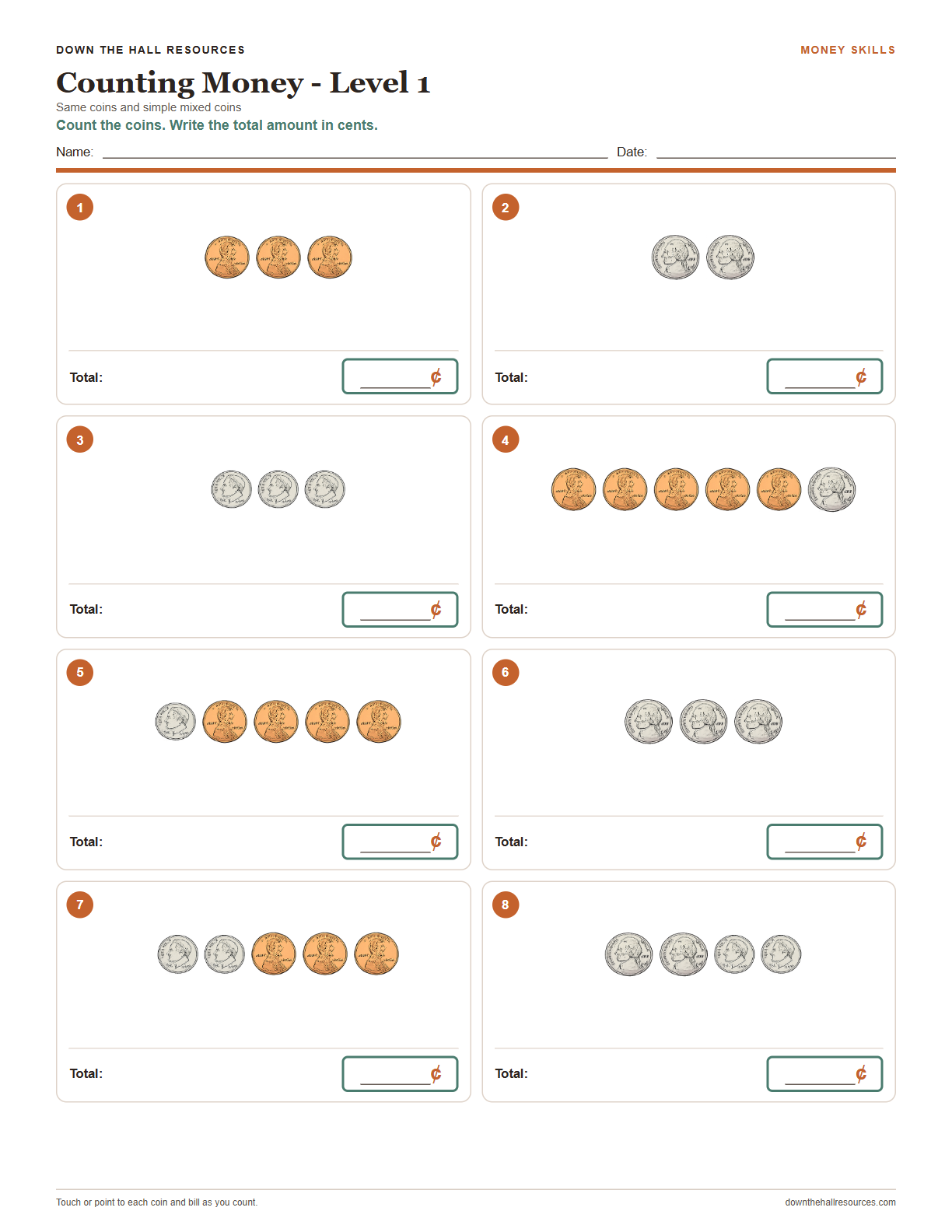
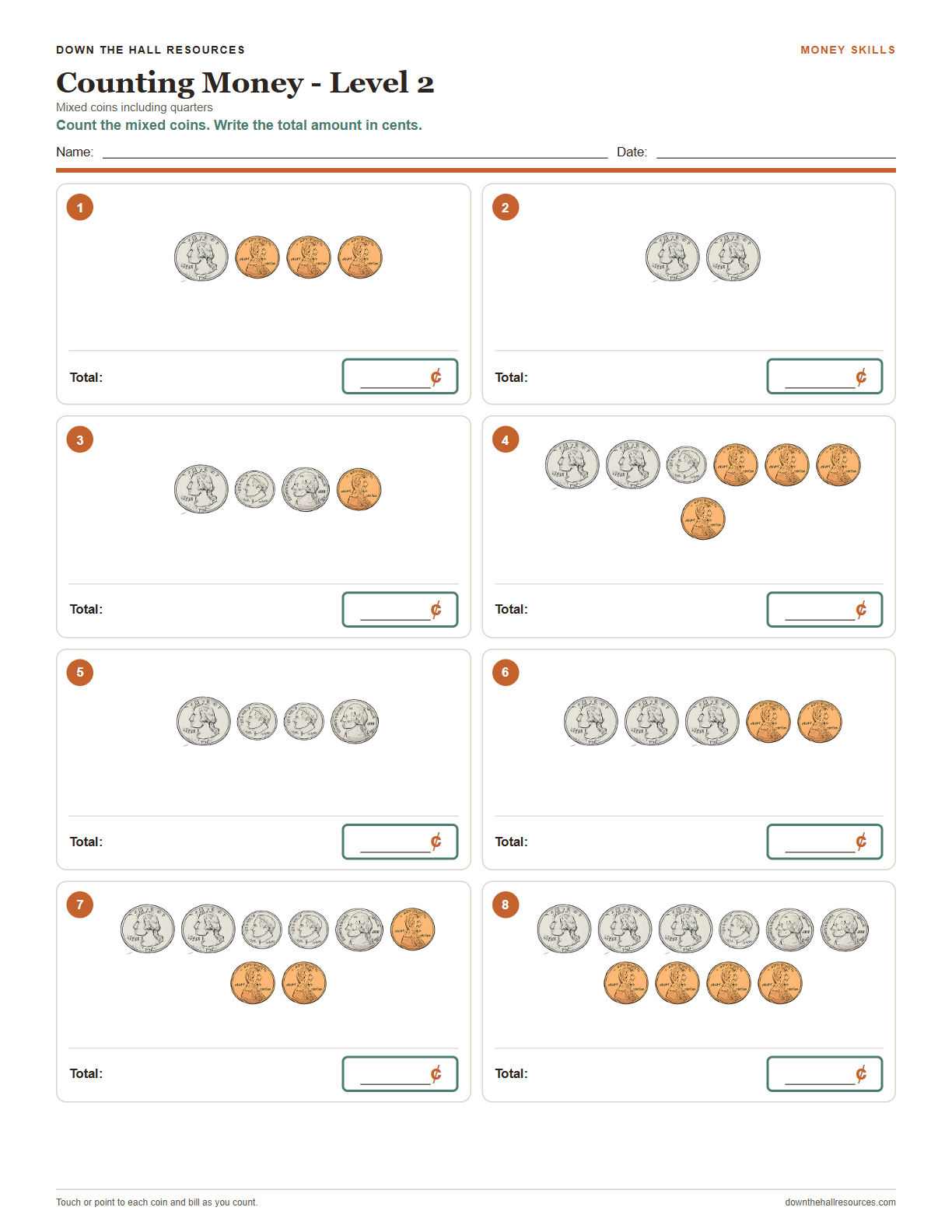
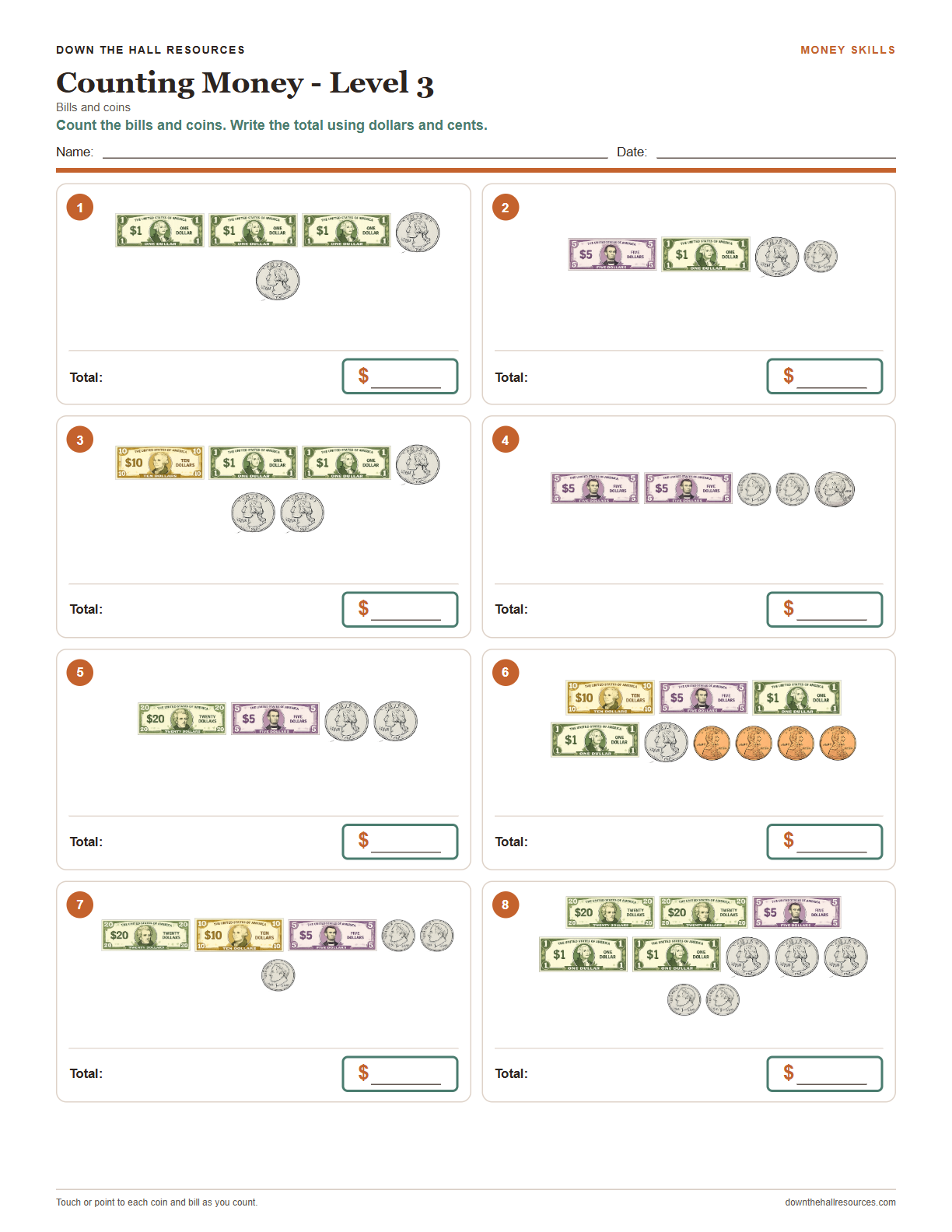
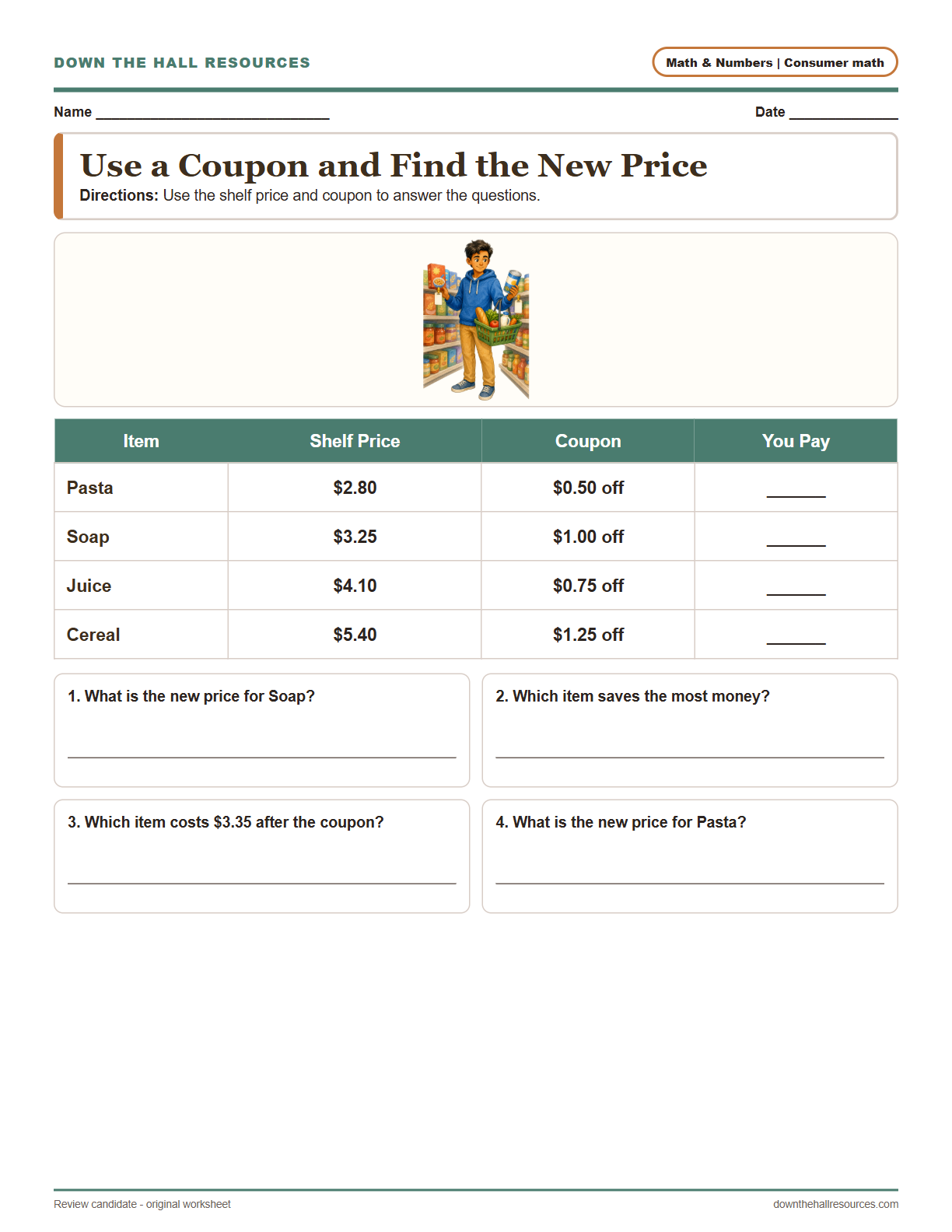
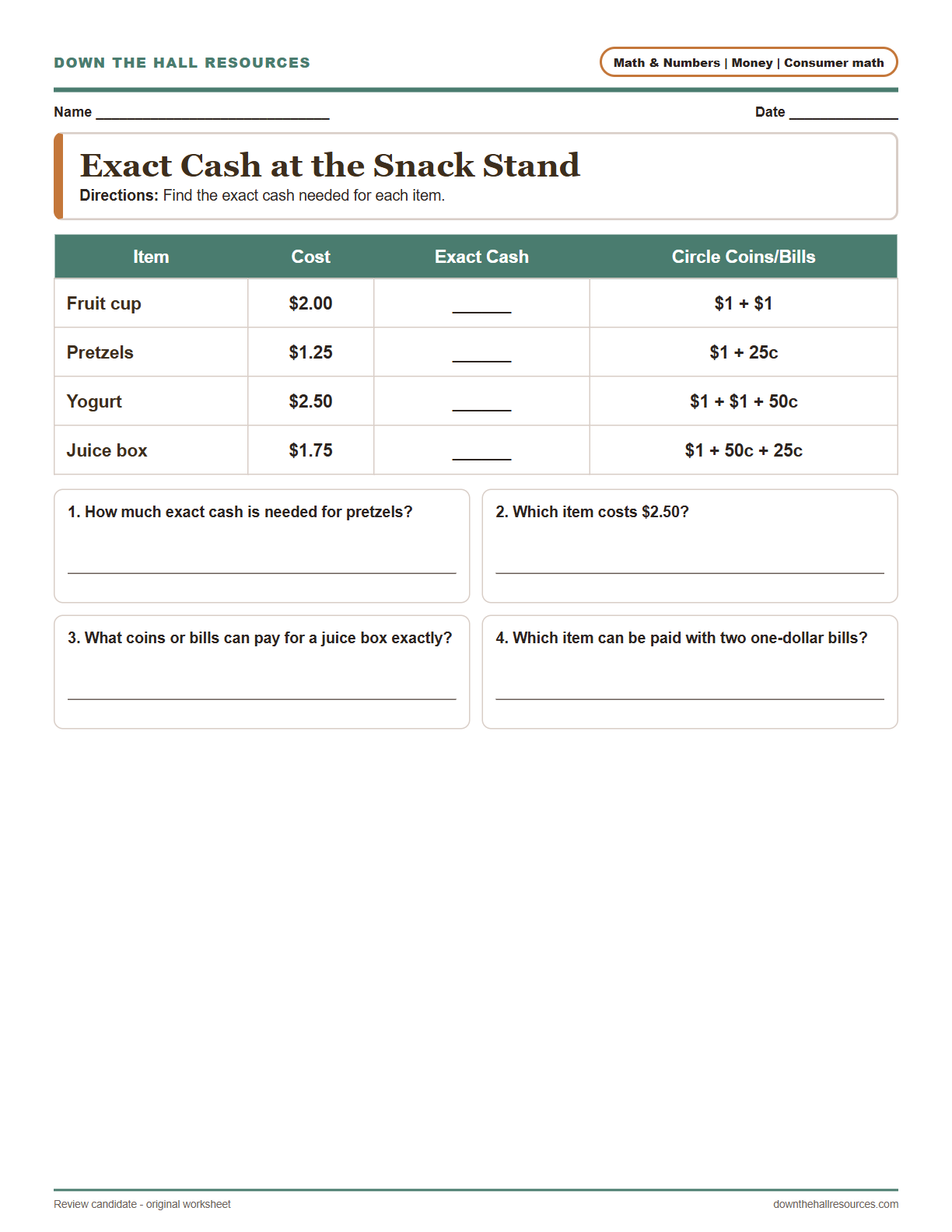
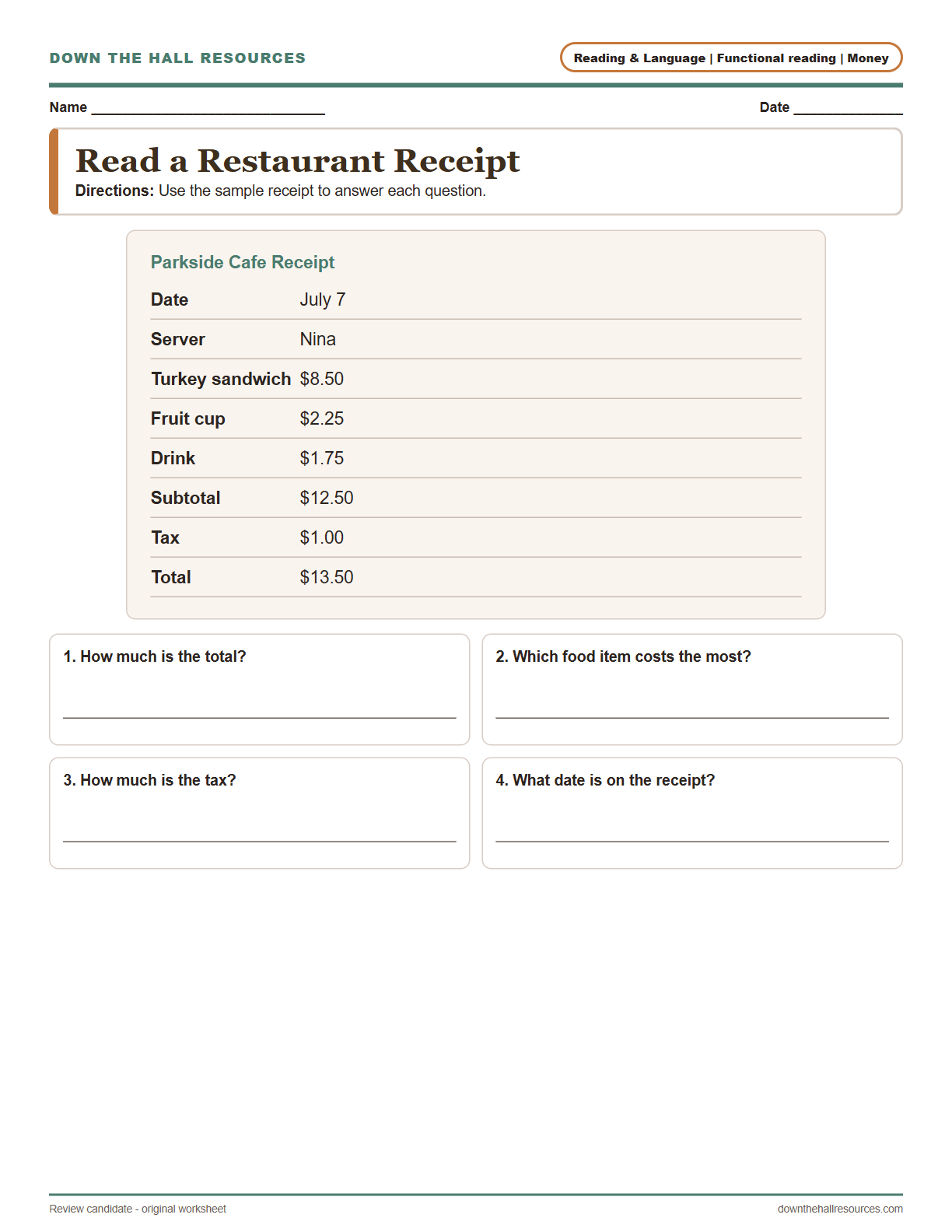
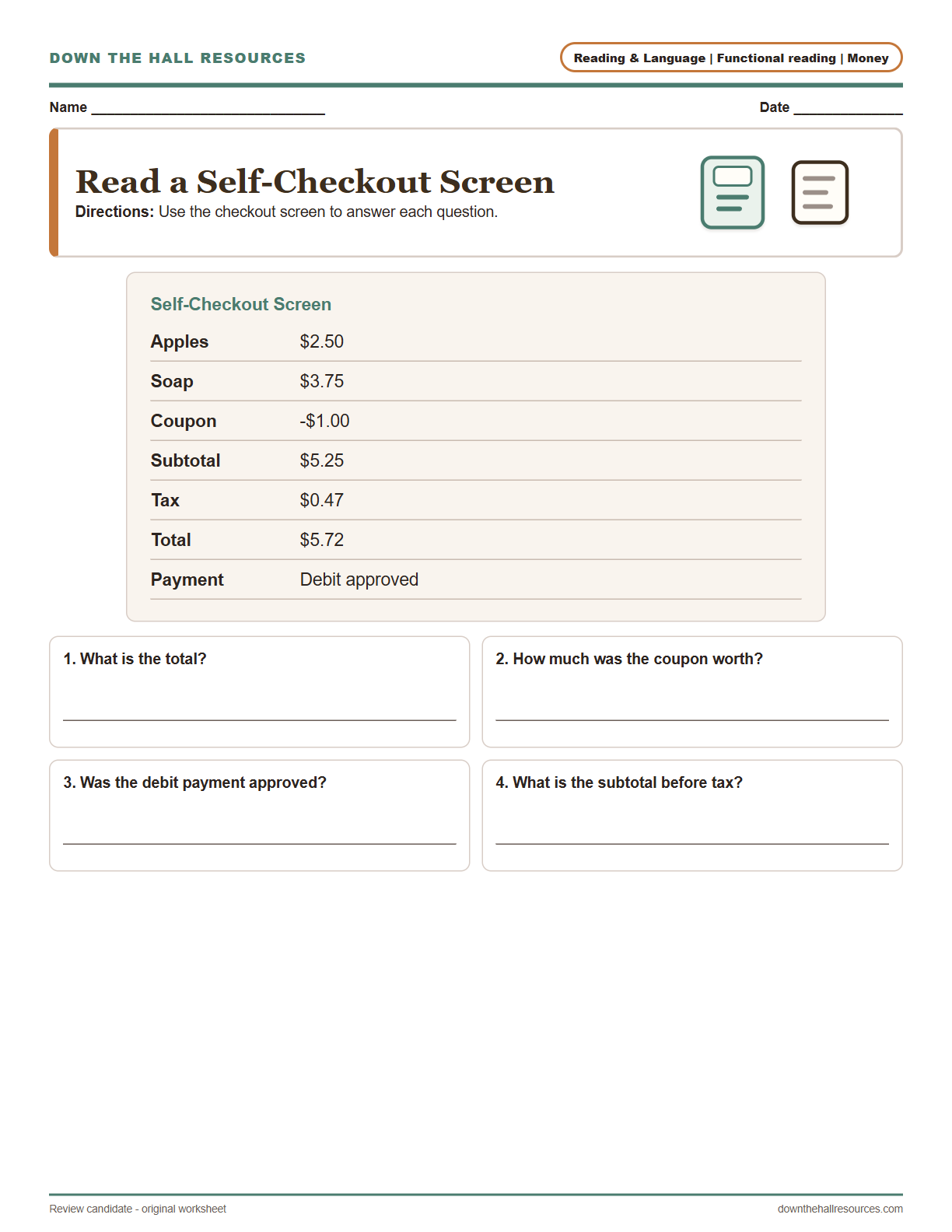
- Practice counting coins, bills, prices, coupons, and change in realistic shopping situations.
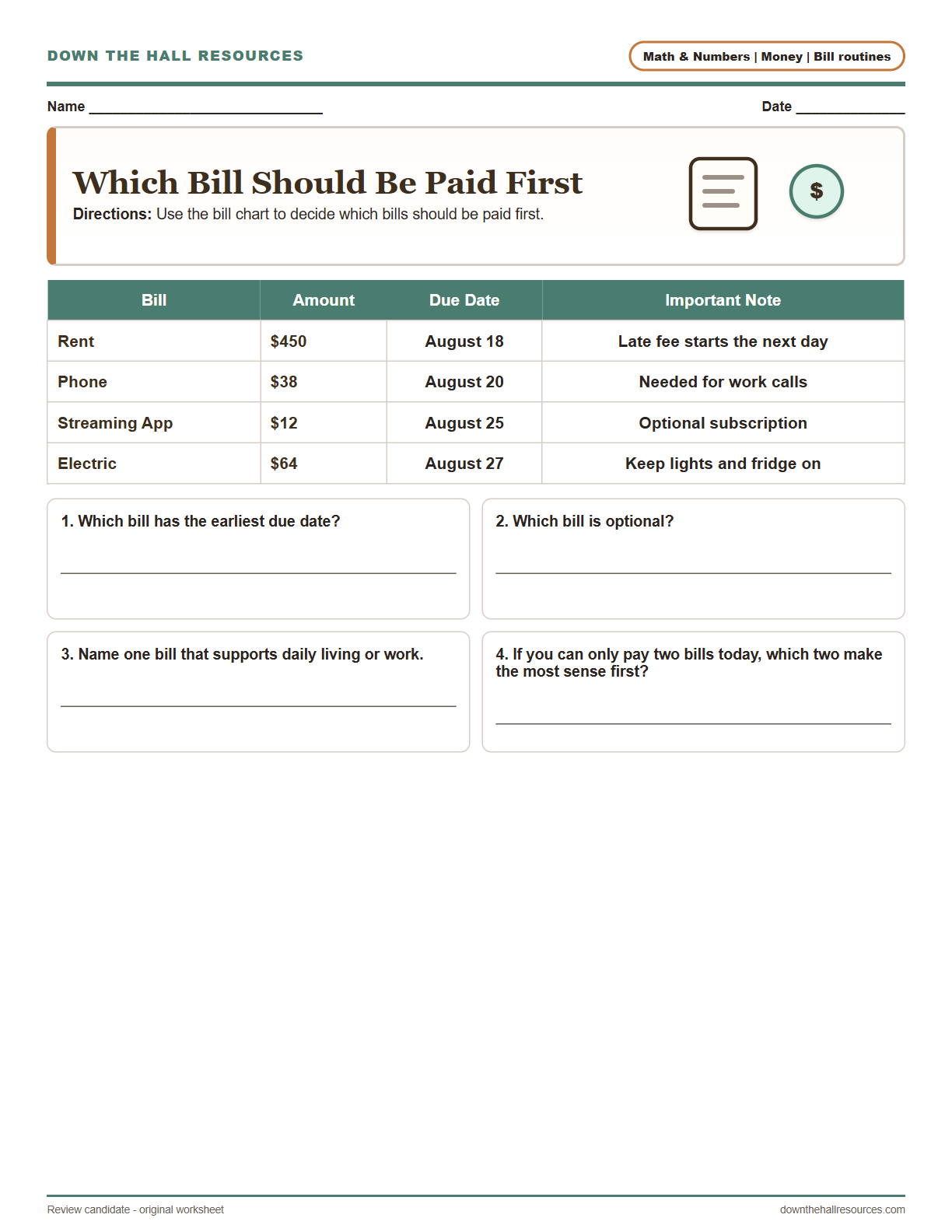
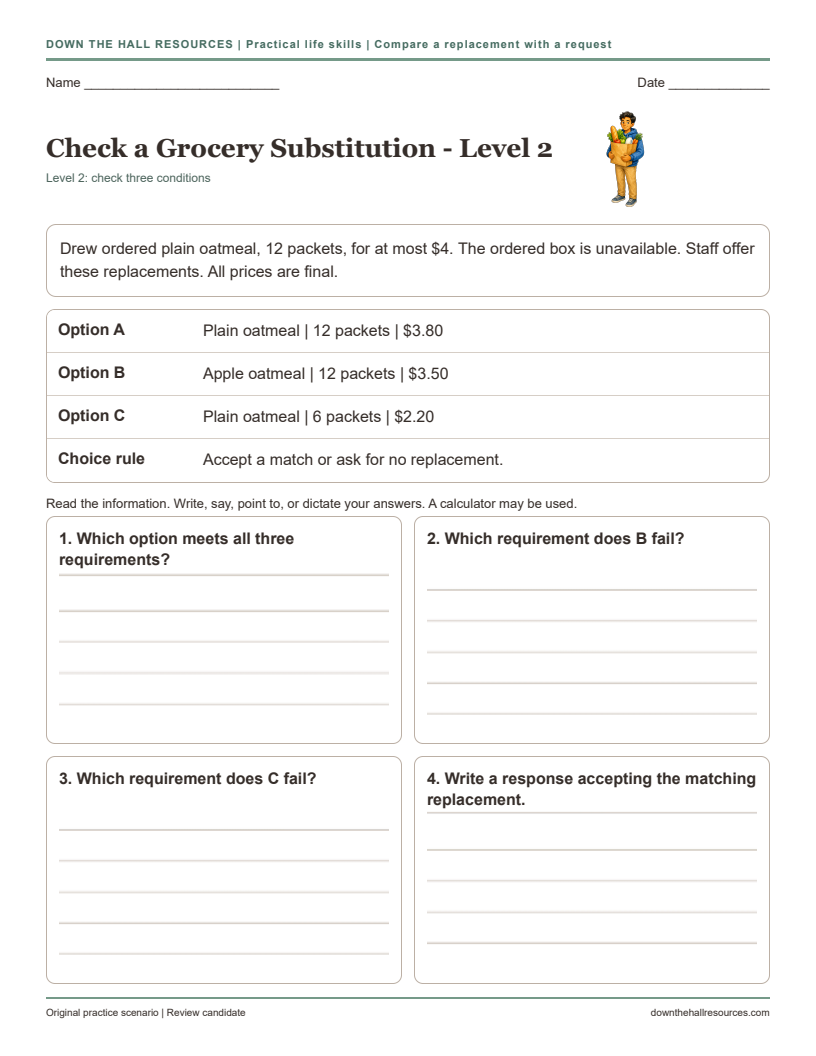
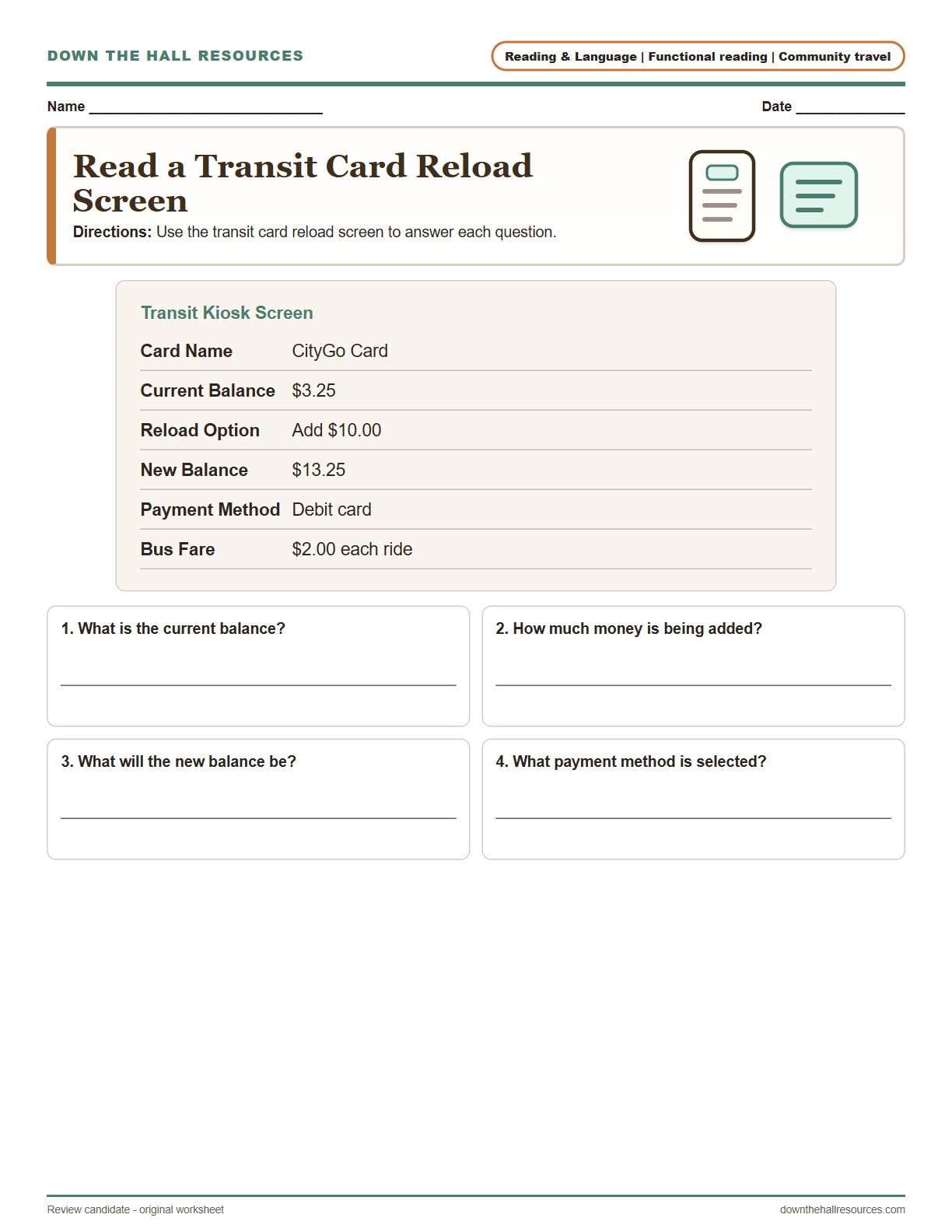
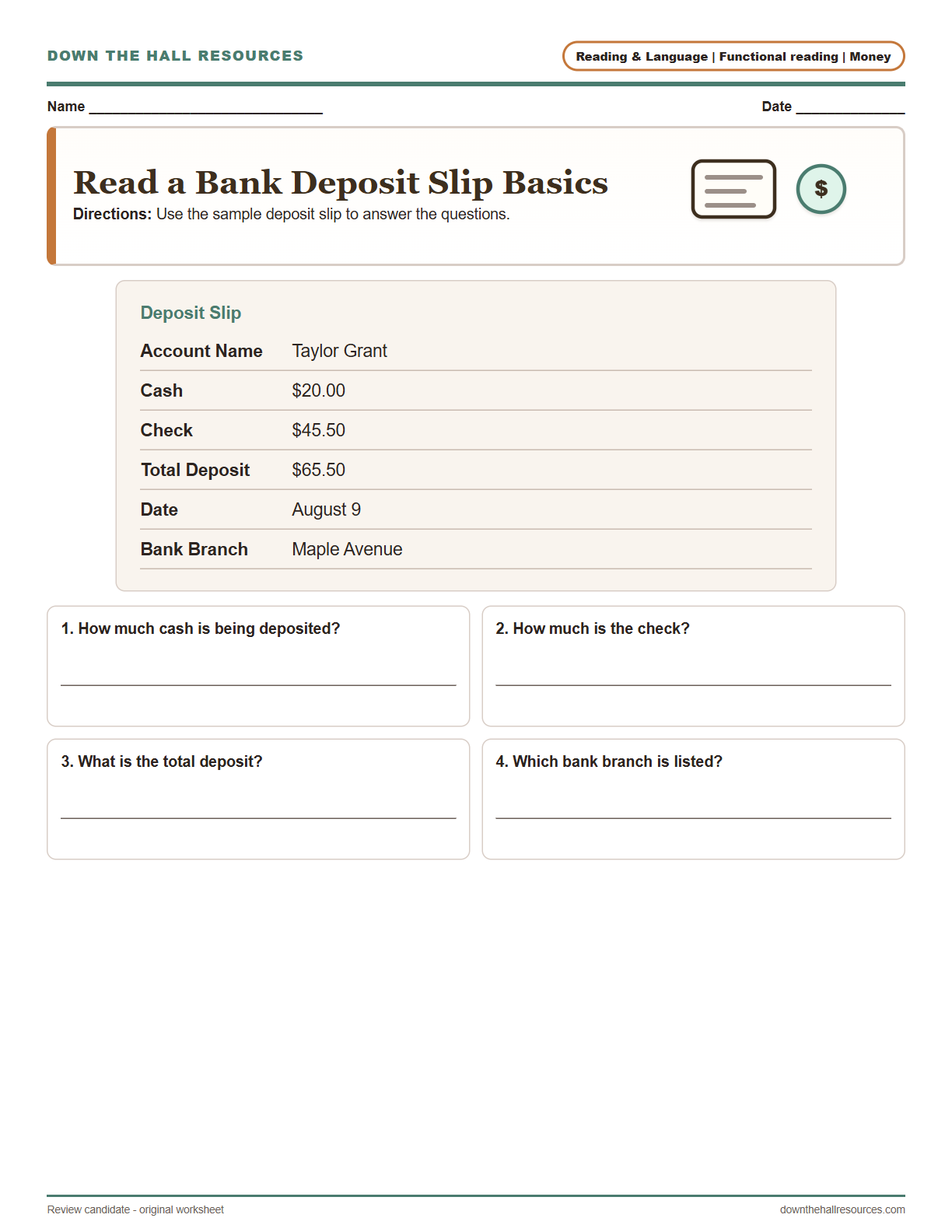
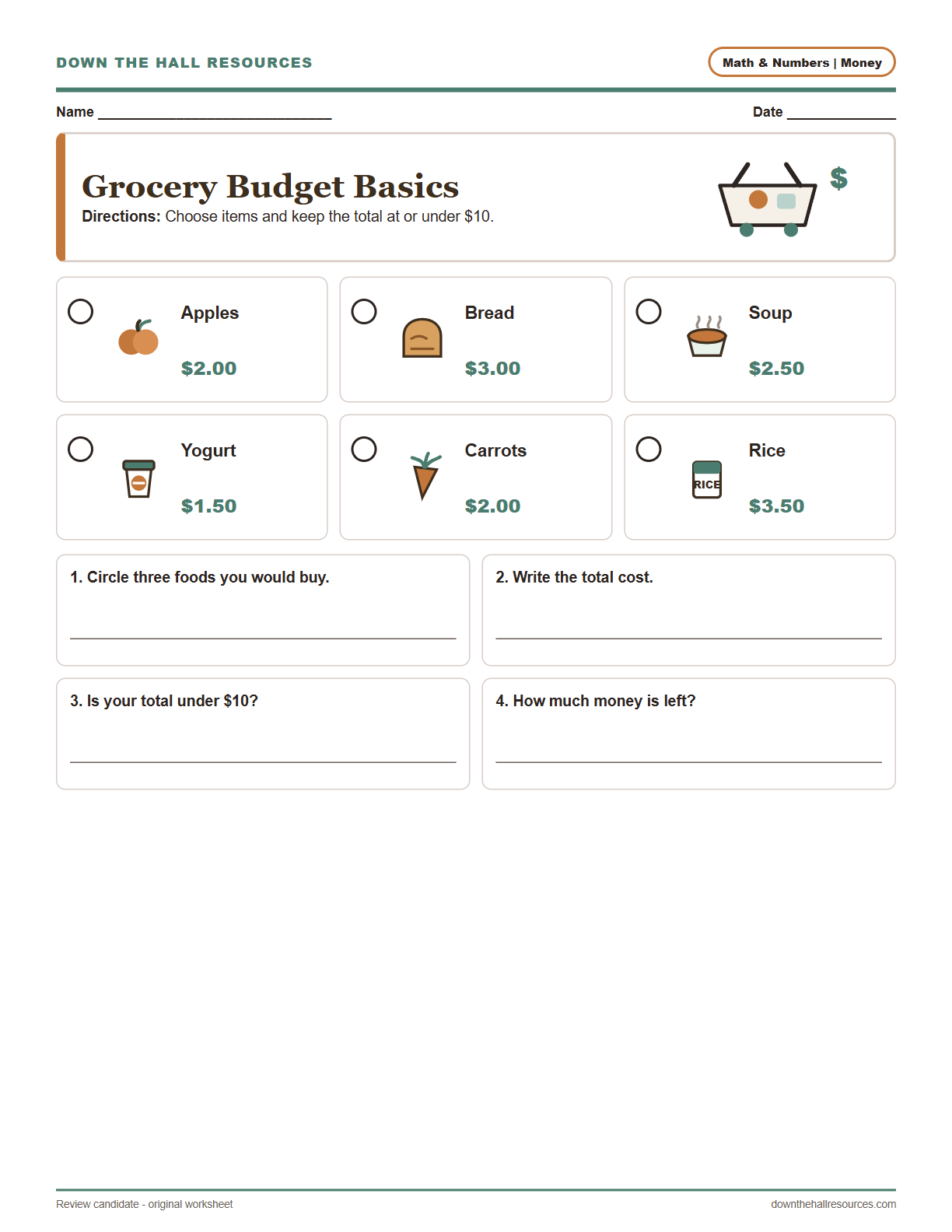
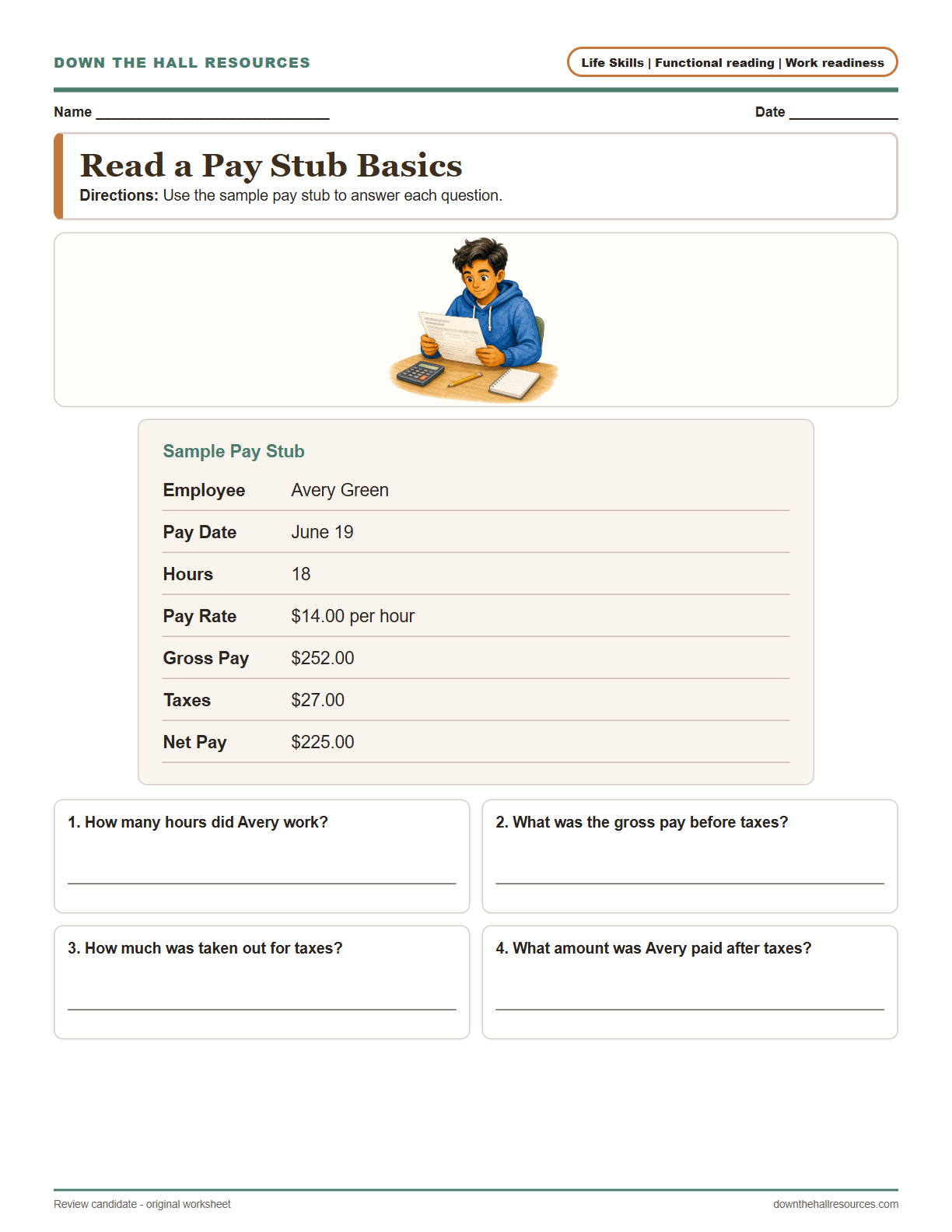
- Connect functional math to snacks, groceries, pay stubs, and small purchases learners may actually make.
- Build confidence before community-based instruction or supported shopping trips.
Simple lesson plan idea
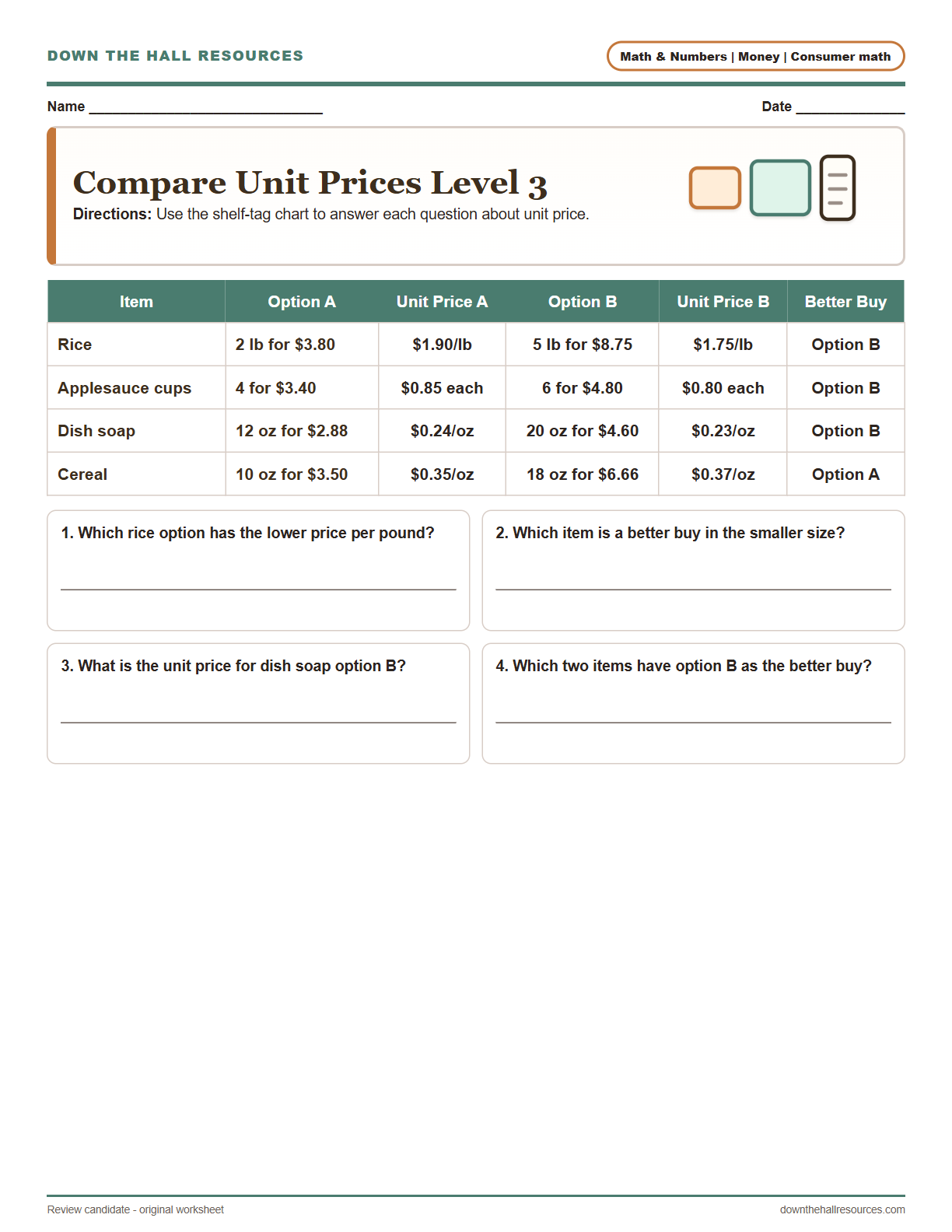
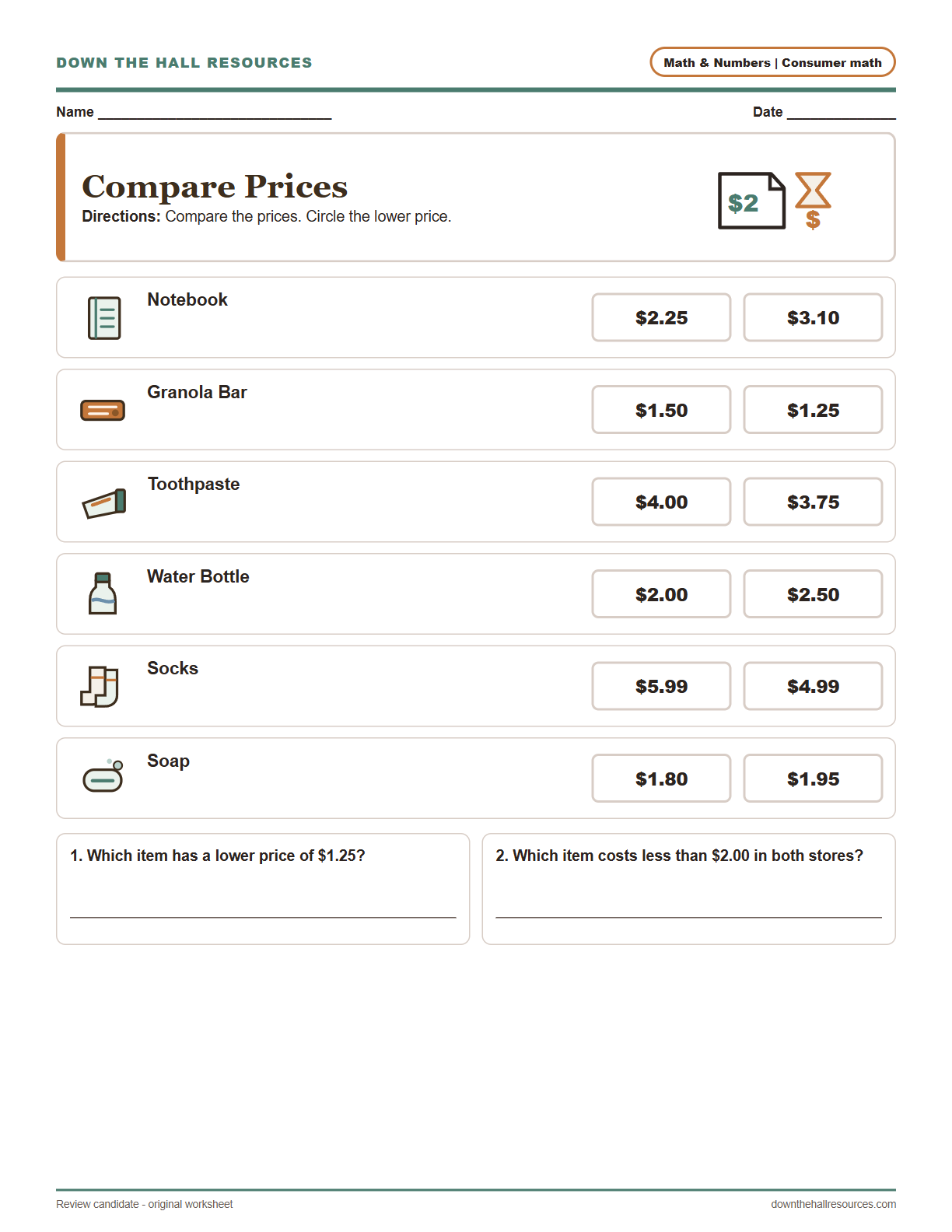
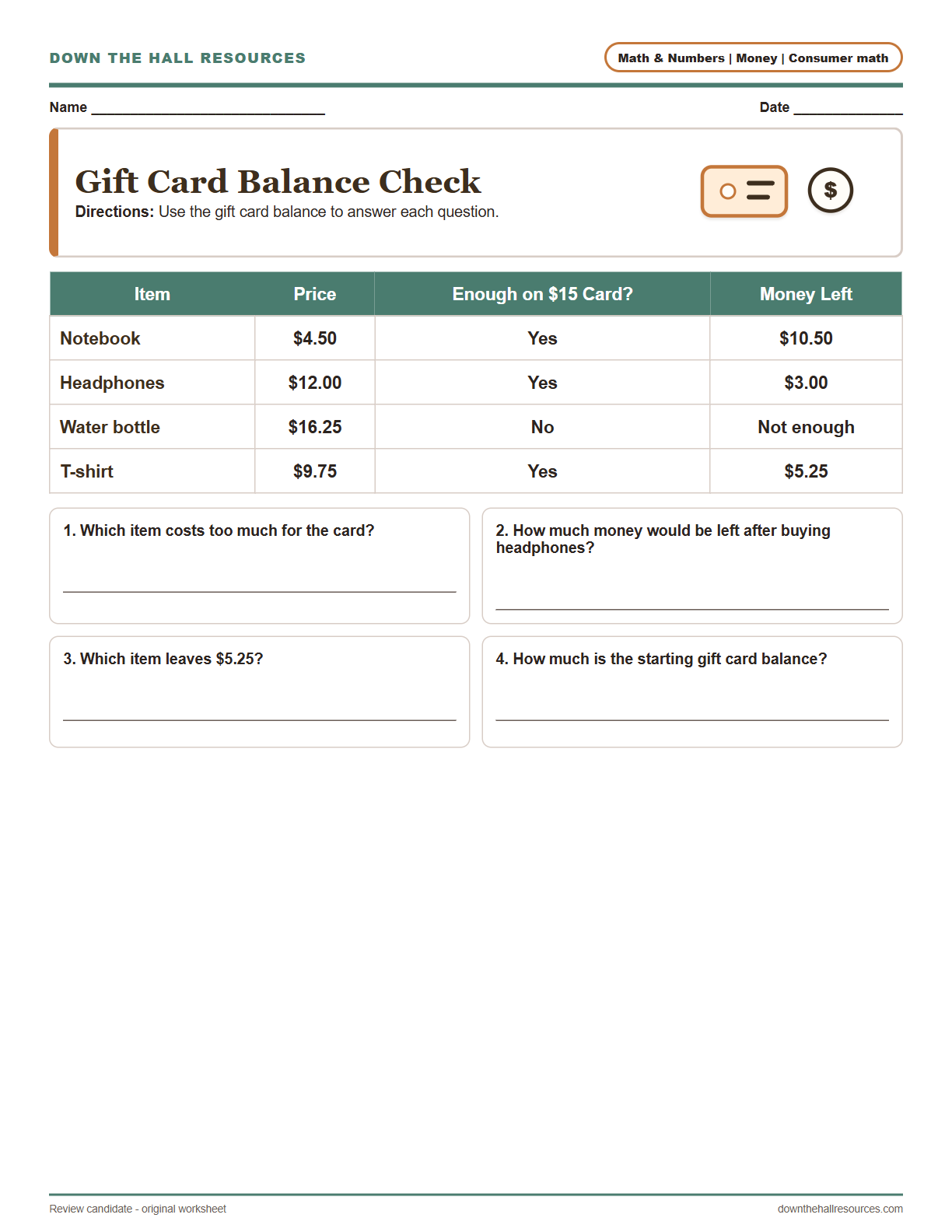
Use real or play money beside the worksheet when possible. Model how to count slowly, mark completed amounts, and check the total. After the worksheet, ask a practical question such as which item costs less, how much money is needed, or whether the learner has enough to buy something.
Ways to adapt the activity
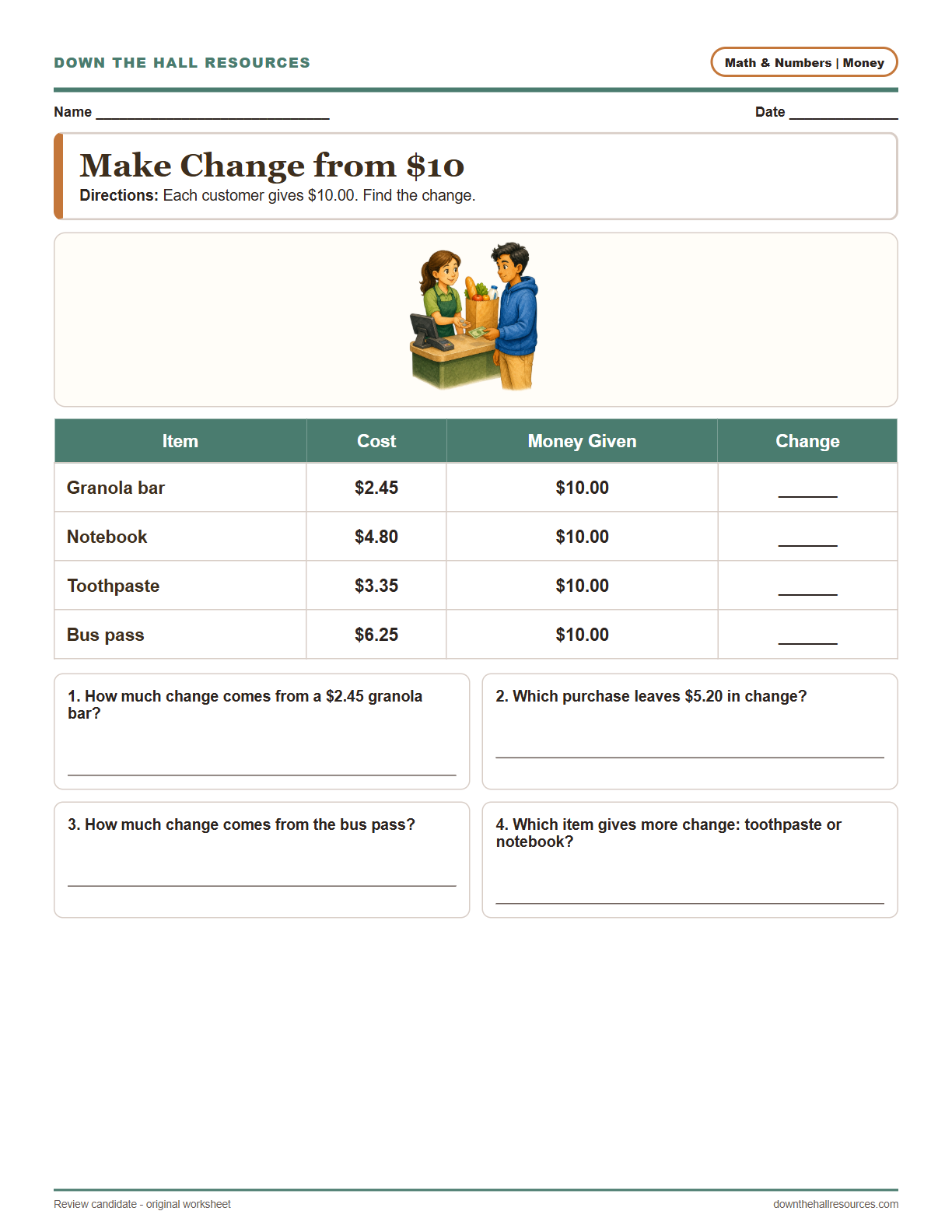
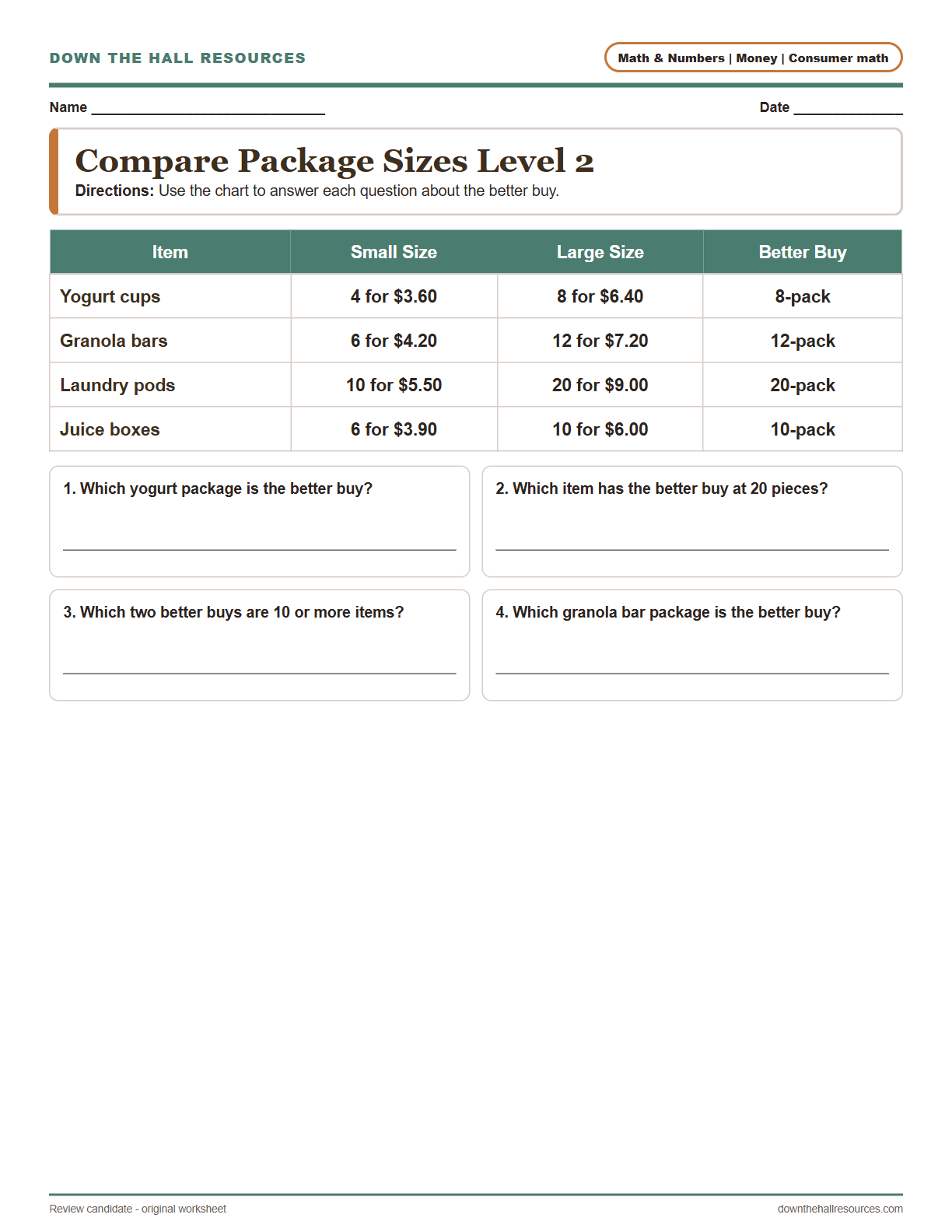
For extra support, limit the coin or bill types and let the learner use a counting mat. For more challenge, add a second-step question such as comparing two prices, choosing the better buy, or finding change from a rounded dollar amount.